
Pedestrian Accidents
Pedestrian Accidents in the Bronx: When to Seek a New York Lawyer and What to Prepare
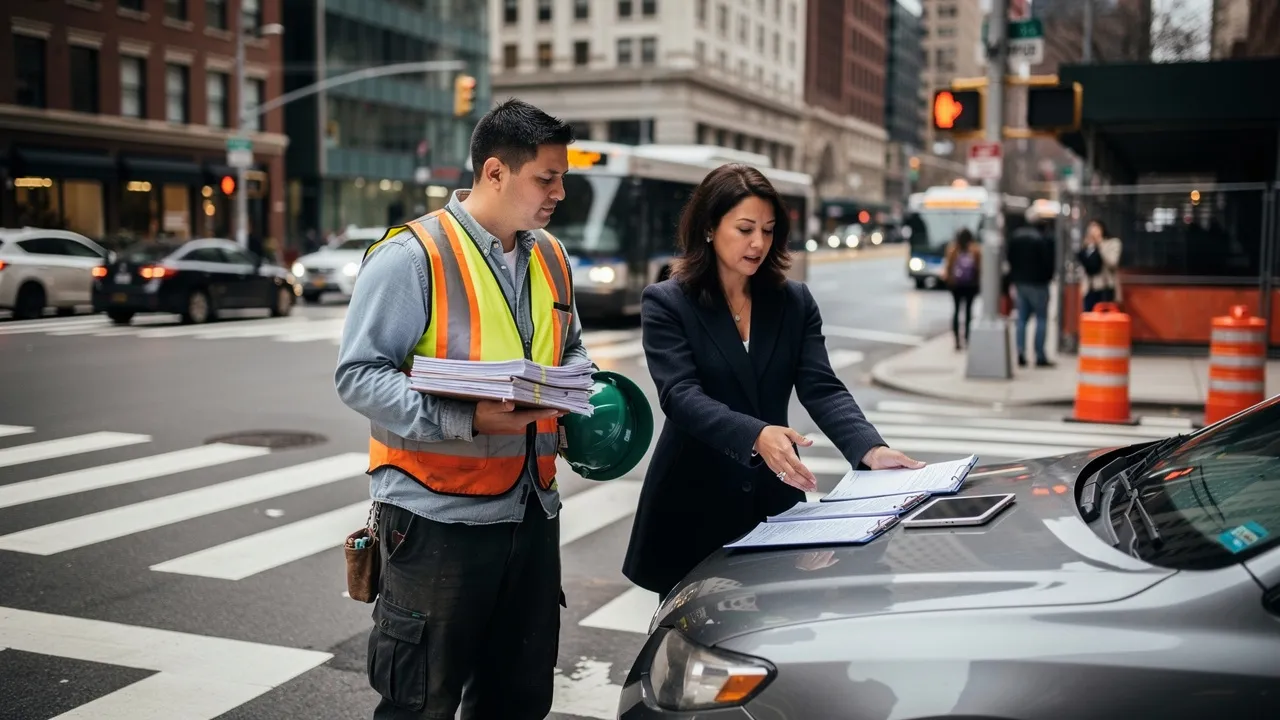
Start with a Bronx-first triage of the accident
A Bronx pedestrian-vehicle accident should be organized as a New York-specific triage problem before you try to predict what the claim may be worth or who will be responsible. Start with the facts that can change the next step: where the impact occurred, how the collision happened, what injuries followed, which vehicle was involved, what insurance may apply, and whether a public entity may be connected to the incident.
The first question is practical: do the circumstances justify prompt legal review? Serious or lasting injuries, uncertainty about the striking vehicle, conflicting accounts, insurance confusion, and possible government involvement all make an organized review more useful. None of those facts decides liability by itself. They tell you which records and questions should be placed in front of a New York lawyer.
The Law Offices of Evan W. Kohn handle pedestrian accident cases, including incidents in which someone is hit by a car while crossing the street or in a crosswalk. We also handle pedestrian accidents occurring on sidewalks, parking lots, driveways, and streets. That range matters in the Bronx because the location may affect which records, witnesses, traffic conditions, property interests, or vehicle information need to be identified.
Use the rest of this guide to build a clean fact pattern rather than a conclusion. Write down what you know, separate what you personally observed from what someone told you, and mark each missing fact for follow-up. The goal is a consultation file that makes the unresolved questions visible.
Handle immediate priorities before analyzing fault
Immediate priorities after a pedestrian collision are safety, medical attention, and a reliable account of what happened. If you are still dealing with urgent physical needs, address those before trying to reconstruct every legal detail. A collision on a Bronx street, sidewalk, driveway, or parking lot can leave you shaken, and memory can become harder to organize when pain, medication, or stress is involved.
Once the immediate situation is under control, create a short factual record while the sequence is still clear. Record the date, approximate time, exact location, direction of travel, traffic signals, crosswalk or sidewalk conditions, weather or lighting conditions you noticed, and the point of impact as you remember it. Keep the description factual. “The vehicle turned from the westbound lane” is more useful than a conclusion such as “the driver was completely at fault.”
A useful first-day checklist is:
- Write down the vehicle’s make, model, color, license plate, and direction of travel if you know them.
- Identify whether the driver remained at the scene and whether you exchanged insurance or contact information.
- List witnesses, nearby businesses, buildings, transit locations, or residences that may have seen the collision.
- Save photographs of the scene, your visible injuries, clothing, damaged belongings, road markings, signs, and the surrounding area when you can do so without creating another safety problem.
- Keep every medical record, discharge paper, prescription record, insurance letter, email, text message, and claim reference connected to the accident.
Do not fill gaps with guesses. Mark uncertain details as uncertain and bring both the known facts and the unanswered questions to legal review.

Use New York crosswalk rules as context, not a final liability answer
New York law generally requires a driver to yield to a pedestrian crossing in a crosswalk when traffic signals are absent or not operating, subject to the statutory exception for a pedestrian tunnel or overpass. The rule gives you a legal reference point, but it does not answer every question raised by a Bronx collision. The review still depends on the actual intersection, signal condition, crosswalk location, vehicle movement, visibility, and available testimony or video.
New York law also restricts a pedestrian from suddenly entering the path of a vehicle that is too close for the driver to yield safely. That language makes the timing and movement of both the pedestrian and the vehicle relevant. A crosswalk photograph alone may not show when each person entered the roadway, how fast the vehicle was moving, or whether a signal was operating.
Organize the facts that bear on those questions:
- Was the crossing marked, unmarked, or near an intersection?
- Were traffic-control signals present and operating?
- Where were you in relation to the curb, crosswalk, tunnel, or overpass?
- What did the vehicle do before and after contact?
- Did any witness, camera, police report, or photograph capture the sequence?
Use the crosswalk rule to identify what needs review, not to announce a final liability answer from a short description of the accident.
Route the first insurance question to the right source
New York’s No-Fault framework gives you a specific starting point after a pedestrian accident.
For a pedestrian accident in New York, the No-Fault claim generally goes to the insurer covering the vehicle that struck you. New York’s No-Fault definitions include a pedestrian injured through the use or operation of a qualifying motor vehicle as a covered person. These statements identify a general routing path; they do not determine your coverage, eligibility, or every filing requirement.
The statute also describes basic economic loss as including reasonable and necessary expenses up to twenty-five dollars per day for not more than one year from the accident, and an optional additional twenty-five thousand dollars of coverage after the initial fifty thousand dollars of basic economic loss has been exhausted, subject to statutory terms. Those figures are statutory reference points, not a calculation of what any particular person will receive or proof that a bill will be paid. Keep bills, receipts, treatment records, and insurer correspondence together. Separating the expense record from the liability account helps a reviewer examine the immediate No-Fault question without treating it as a final answer about fault, coverage, or any later claim.
Treat the insurance question as a short routing exercise:
- Identify the vehicle that struck you, if possible.
- Locate the vehicle’s insurer and policy information from the exchange at the scene, a police report, correspondence, or other available record.
- Record the accident date and the date of every notice, call, email, or letter.
- Preserve copies of what you sent and what the insurer sent back.
- Ask for legal review promptly if the insurer is unknown, the notice period is approaching or has passed, the facts are disputed, or the insurer questions the claim.
Do not assume that the first insurance conversation resolves every possible issue. The identity of the vehicle, the available policy, the injury record, and the nature of any later claim can require separate analysis.
Branch the process when the vehicle is unknown or uninsured
An unknown or uninsured striking vehicle creates a different insurance branch. New York DFS identifies the auto insurer of a household family relative who had an automobile policy at the time as a possible route when the striking vehicle is unknown or uninsured. If no household auto policy existed, New York DFS identifies the Motor Vehicle Accident Indemnification Corporation, or MVAIC, as another possible claim pathway.
That pathway depends on facts you may need to establish. Write down whether the vehicle fled, whether anyone captured a license plate or description, whether a police report was made, whether you or a household relative had an automobile policy, and what information the insurer or another organization gave you.
Use this branch when you cannot confidently identify an insurer:
- Preserve every description of the vehicle and driver, even if the description is incomplete.
- Keep the incident or police report number and the names of witnesses.
- Gather the declarations page or basic identifying information for any household automobile policy available to you.
- Keep written notices, claim numbers, denial letters, and requests for additional information.
- Ask a New York lawyer to review the possible household-policy or MVAIC route before you assume that no insurance option exists.
The existence of a possible pathway does not establish that a particular claim qualifies or that a particular insurer must accept it. The factual record determines what must be checked next.
Separate ordinary vehicle cases from public-entity complications
A pedestrian collision involving a city, state, public authority, or another public corporation deserves an early timing and notice review. The public entity may not be the driver, vehicle owner, or only responsible party, so begin by identifying every organization connected to the vehicle, roadway, facility, or event. Keep the exact agency name, vehicle markings, employee information, location, and any report or communication that identifies the public connection.
For a potential claim against a public corporation, New York law directs courts considering an extension of notice time to examine whether the public corporation, its attorney, or its insurer acquired actual knowledge of the essential facts within the statutory period or a reasonable time afterward, along with other relevant circumstances. That rule is a reason to obtain focused legal review quickly, not a reason to assume that a late notice will be excused.
A New York Court of Claims decision illustrates why the facts and defendant must be identified carefully. In Reyes v. State of New York, the court found the State 100% liable for the pedestrian accident and attributed no comparative fault to the claimant. The decision concerned its own record and trial findings; it does not decide what will happen in your case.
If a government vehicle or public location appears in your account, place that fact at the top of your consultation summary. Bring the agency name, the date and location, photographs, witness information, medical records, and every notice or response you have. Do not wait for a general car-accident timeline to answer a public-entity question.
Treat timing as a verification issue, not a calendar assumption
The New York Courts statute-of-limitations timetable lists a three-year period from the accident date for car-accident civil claims, but it also explains that deadlines can differ depending on the claim and defendant. That distinction matters when the vehicle was owned by a public entity, the responsible party is uncertain, or the legal theory does not fit the ordinary car-accident category.
Use the accident date as the first line in your file, then record the date of every notice, insurance communication, medical evaluation, and consultation request. Do not treat the three-year reference as a personal deadline calculation. A timing review may depend on the defendant, claim type, public-entity status, and other facts that cannot be resolved from the accident date alone.
Seek focused legal review sooner rather than later if the accident is not recent, if you are approaching a date you do not understand, or if a public corporation may be involved. Bring the date you believe applies and explain what is uncertain. The useful question is not simply “How much time do I have?” It is “Which deadline or notice rule applies to this defendant and this type of claim, and what must be done next?”
Build the consultation file from original records
A consultation becomes more focused when your records show the accident, the injury course, the insurance trail, and the unanswered questions in one place. We investigate cases by gathering police reports, photos, witness statements, and medical records. You can begin organizing those same categories before the consultation without trying to decide what each item proves.
Create a folder, whether paper or electronic, with these sections:
- Accident account: your written timeline, location details, traffic-control information, vehicle description, and contact information for witnesses.
- Scene evidence: photographs, videos, clothing photographs, property-damage photographs, and information about nearby cameras or businesses.
- Official records: police report details, incident numbers, agency names, and any public-entity correspondence.
- Medical records: emergency or clinical records, diagnoses, referrals, prescriptions, bills, work restrictions, and dates of follow-up care.
- Insurance file: policy information, claim numbers, notices, letters, emails, recorded dates of calls, and requests for additional documents.
Keep original files in their original form and make a separate working copy for notes. Label photographs with the date, location, and what each image shows. Write down who gave you each document and when you received it. If you have only a partial record, bring the partial record instead of waiting for a perfect file.
Prepare a one-page timeline with four columns: date, event, record, and open question. For example, an entry might identify the collision date, the medical visit that followed, the record supporting that visit, and the insurance question still unresolved. This format lets you see missing links quickly and gives you a practical agenda for the consultation.
Identify the facts that make legal review especially useful
Injuries such as broken bones, head trauma, spine damage, and long recoveries can make the record more involved because the immediate event and the later medical course may need to be connected carefully. We handle pedestrian cases involving those injuries and long recoveries. Bring the complete medical timeline, not only the first emergency record, when symptoms or limitations continued.
The accident location also matters. We handle pedestrian accidents occurring on sidewalks, parking lots, driveways, and streets. Identify the precise place rather than describing it only as “near the Bronx” or “outside a store.” Note the address or nearest intersection, the direction you were traveling, the vehicle’s path, signs and signals, lighting, surface conditions, and any property owner or public facility connected to the location.
Focused legal review is especially useful when several facts remain unsettled:
- You and the driver give different accounts of the collision.
- The striking vehicle left, cannot be identified, or may not have been insured.
- A city, state, public authority, or other public corporation may be involved.
- The injury is serious, persistent, or still being evaluated.
- An insurer has denied, delayed, redirected, or questioned the claim.
- You do not know which notice or timing rule applies.
These warning signs do not predict a result. They identify reasons to assemble the file and ask specific questions instead of relying on a quick assumption. More than one warning sign can appear at once; list each separately so the review does not focus only on the most obvious issue.

Build a Bronx pedestrian accident file before legal review
Create a four-part pedestrian accident file before seeking legal review. The file preserves what was observed, what was documented, and what still needs verification; it does not decide fault, coverage, eligibility, or a deadline.
1. Preserve the event account. Write down the accident date, time, Bronx location, whether the crossing was marked or unmarked, whether traffic signals were present and operating, where you were in relation to the curb, and what the vehicle did before contact. Add available photographs, police or incident reports, witness names and contact information, and available video. Keep your description of what happened separate from later conclusions about responsibility.
2. Assemble the coverage record. Put the available vehicle information, insurer information, accident date, and every notice or response in one place. For a New York pedestrian accident, the No-Fault claim generally goes to the insurer covering the vehicle that struck the pedestrian. If the vehicle is unknown or uninsured, preserve its description, plate information if available, the police or incident report, witness details, and information about any household automobile policy. New York DFS identifies a household relative’s auto insurer, or MVAIC if there is no household auto policy, as possible claim pathways; those possibilities do not establish that a particular claim qualifies.
3. Mark public-entity and timing issues. If a city, state, public authority, or other public corporation may be connected to the vehicle, roadway, facility, or event, record the exact organization, vehicle markings, location, employee information, and communications showing the possible connection. For a potential claim against a public corporation, New York law directs courts considering an extension of notice time to examine actual knowledge of the essential facts and other relevant circumstances. Also record the accident date, the defendant if known, the claim type if known, and every notice or insurance communication. The New York Courts timetable lists a three-year period from the accident date for car-accident civil claims, but deadlines can differ depending on the claim and defendant.
4. Add the medical record. Attach emergency records, later evaluations, prescriptions, bills, work restrictions, and notes about continuing symptoms or limitations. Broken bones, head trauma, spine damage, and long recoveries may require a timeline that extends beyond the first treatment record. Keep the medical account in date order and avoid turning it into a prediction about the result.
Keep copies of the records and communications you already have, and bring the organized file to a consultation. If a record is unavailable, note that fact rather than filling the gap with an assumption.
Use the completed file as a preservation tool rather than a liability scorecard. The sequence protects different parts of the review: the event account anchors the physical facts, the coverage record identifies the information needed for an insurance inquiry, the public-entity and timing section highlights issues that may require prompt attention, and the medical record shows how the injury developed.
The event account should retain the conditions that may matter under New York law. New York generally requires a driver to yield to a pedestrian crossing in a crosswalk when traffic signals are absent or not operating, subject to the statutory exception for a pedestrian tunnel or overpass. New York law also restricts a pedestrian from suddenly entering the path of a vehicle that is too close for the driver to yield safely. Those rules provide context; they do not turn a short description of the crossing into a final liability answer. Signal condition, location, movement, testimony, photographs, and available video still need to be considered together.
The coverage section keeps an insurance inquiry from being confused with the question of who caused the collision. An identified striking vehicle may provide the general No-Fault starting point, while an unknown or uninsured vehicle may require examination of a household relative’s automobile policy or MVAIC. The available vehicle information, policy information, notices, and responses should remain together so that the applicable path can be checked rather than assumed.
The public-entity and timing section serves a separate purpose. A city, state, public authority, or other public corporation can make notice and timing questions particularly important. New York law identifies actual knowledge of essential facts and other relevant circumstances as matters courts consider when evaluating an extension of notice time. The general three-year reference for car-accident civil claims therefore should not be treated as a personal deadline, because the defendant and claim type can change the analysis.
The medical section completes the account without predicting compensation or a case result. It places treatment, expenses, work restrictions, symptoms, and limitations beside the accident description. Together, the four parts give a consultation a reliable starting record: what occurred, what coverage information exists, whether a public-entity or timing concern is present, and how the injury has been documented.
Request a Bronx consultation when travel or recovery is difficult
General information cannot determine whether your individual facts support a claim, which insurer should respond, or which timing rule applies. A qualified New York lawyer can review those questions with the accident, medical, witness, insurance, and public-entity information available to you.
The Law Offices of Evan W. Kohn offer free consultations and operate 24/7. Our office is located at 2000 White Plains Road in the Bronx. We serve clients in the Bronx and can arrange home or hospital visits when travel is difficult. Bring the records you have, even if the file is incomplete, and identify the question that feels most urgent.
If a Bronx pedestrian accident left you injured, uncertain about insurance, or unsure whether a public entity or another party must be examined, organize the facts now and take the next step with that file in hand.
Questions to resolve before seeking pedestrian-accident legal review
Do I need to prove who was at fault before contacting a New York pedestrian accident lawyer?
No. You do not need a final liability conclusion before seeking review. Bring your account of the crossing, signal, vehicle movement, location, witnesses, photographs, medical records, and any conflicting information. A lawyer can help identify which facts and records still need to be verified without assuming the outcome.
What should I do if the vehicle that struck me fled or had no insurance information?
Preserve every detail you have about the vehicle and driver, along with the police or incident report number and witness information. In New York, a household relative’s automobile insurer may be a possible route when the vehicle is unknown or uninsured; if there is no household auto policy, MVAIC may be another pathway. Eligibility and filing requirements require prompt, fact-specific review.
What if more than 30 days have passed since the pedestrian accident?
Seek legal and insurance review promptly rather than assuming the claim is lost. New York DFS says No-Fault notice should generally be submitted within 30 calendar days, but written proof may justify late filing when it clearly and reasonably explains the delay. Keep copies of all notices and explain the reason for the delay.
Does an accident involving a city vehicle or public location require a different review?
It can. Identify every public agency, authority, vehicle owner, roadway, or facility connected to the incident and place that information at the top of the file. Potential claims against a public corporation may involve separate notice issues, so do not rely only on the ordinary car-accident timeline.
What can I bring if my pedestrian accident records are incomplete?
Bring what you have rather than waiting for a perfect file: a short timeline, photographs, witness details, police or incident information, medical records, prescriptions, bills, insurance letters, and claim numbers. Mark missing or uncertain information clearly. The Law Offices of Evan W. Kohn state that they can arrange home or hospital visits for Bronx clients who cannot travel.
Hurt like this?
We handle Pedestrian Accidents cases in the Bronx.
Evan W. Kohn, Esq. — more than 35 years of Bronx personal-injury practice. Reading about it only goes so far; a free consultation tells you what actually applies to your case.