
Wrongful Death
Wrongful Death Lawsuit in New York: A Bronx Family Roadmap
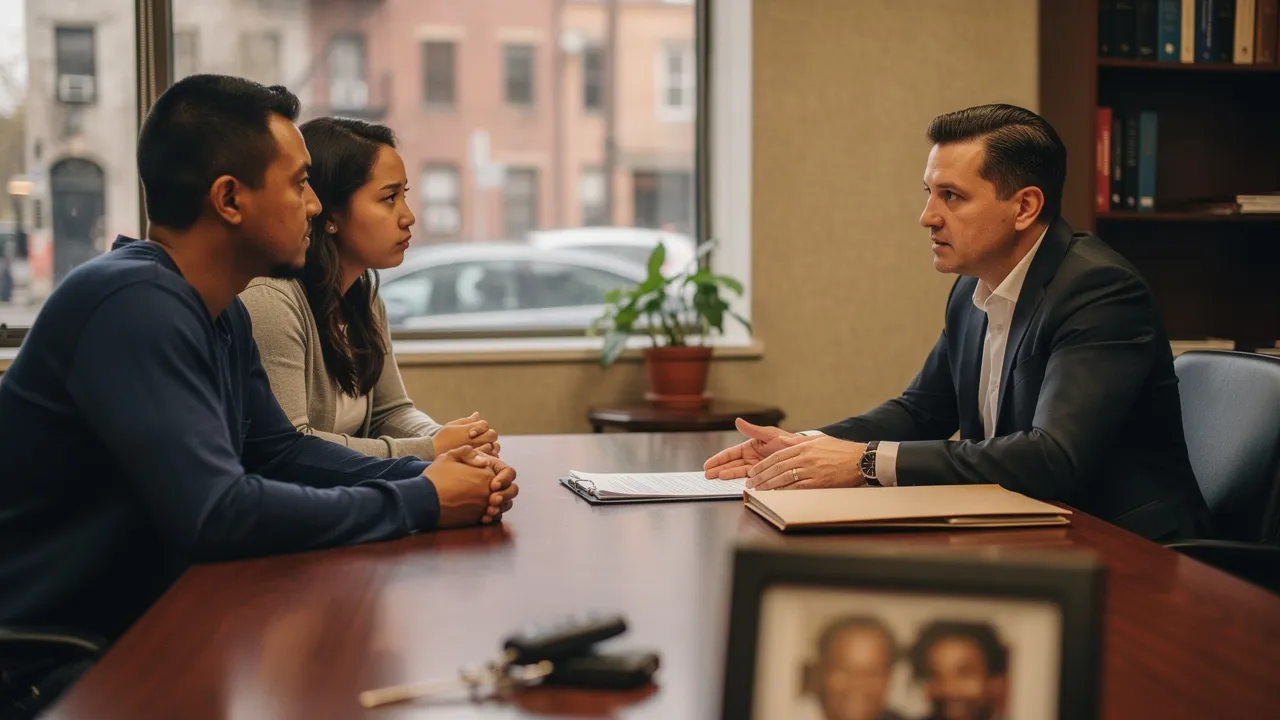
What should you do first after a death connected to an incident in the Bronx?
After someone dies following a crash, fall, worksite incident, or other event in the Bronx, you may be arranging funeral matters while trying to understand what legal step comes next. A wrongful-death lawsuit is a civil case for money damages and can proceed separately from a criminal prosecution.
Start by organizing three questions: what happened, who has authority to act for the estate, and which deadline or notice rule applies. Those questions help you choose a next step without trying to decide legal eligibility on your own.
A criminal investigation does not replace the civil process. A prosecutor handles a criminal case for the government, while a wrongful-death action seeks civil money damages through the person authorized to bring the claim.
Use this roadmap to organize the loss, preserve records, identify the people and entities involved, and prepare for a prompt review of the specific facts. Write down the date and location of the incident, the names of people or organizations involved, and the contact information for witnesses while the information is available.
Do not wait for every document before starting that list. Record what you know, mark what remains uncertain, and keep new information with the same timeline.
Take these first practical steps:
- Write the date of death, incident location, and a short sequence of events.
- Save police, hospital, funeral, insurance, and estate paperwork in one folder.
- List possible defendants, witnesses, agencies, and medical providers.
- Avoid deleting messages, photographs, videos, or letters connected to the incident.
- Seek qualified New York legal review promptly when a deadline or public defendant may be involved.
These steps preserve organization while leaving the legal determination to a review of your family’s facts.
What conduct and estate role can support a New York wrongful-death claim?
A New York wrongful-death claim centers on conduct that would have made the defendant liable to the deceased if death had not occurred. Under New York law, a duly appointed personal representative may bring the action when the deceased is survived by distributees and the defendant would have been liable for the wrongful conduct.
The personal representative is the person authorized to act for the estate in the lawsuit. That role is separate from the family members who may have suffered financial or other losses. The estate appointment, the identity of the defendant, and the people who survived the deceased can all affect the legal path.
That condition is not automatically resolved by deciding who is the closest relative. Estate documents and current New York law must be reviewed together.
Do not assume that being a close relative automatically gives you authority to file. Gather the will, probate or administration papers, and information about surviving family members so an attorney can examine who may act and for whose benefit.
Compensation from a wrongful-death claim goes to family members who suffered the loss, such as a spouse, children, or parents. The proper claimant and the way proceeds are handled still depend on the estate structure and the applicable New York rules.
Prepare a simple family list with names, relationships, addresses, and financial connections to the deceased. Include anyone who depended on the deceased for support, but do not treat the list as a final determination of eligibility.
Also note whether the deceased had a will, whether an executor or administrator has been appointed, and whether any family member has already contacted an insurer or public agency. Those details can help counsel identify the estate role and possible defendants at the beginning of the review.
What losses may a wrongful-death claim address?
A wrongful-death case can help pay for funeral and burial costs, medical bills from the deceased’s final care, and lost support and income for the family. These categories connect the legal claim to the financial effects of the death.
Create a loss folder with funeral invoices, burial expenses, final-care bills, wage or income records, benefit information, and documents showing household support. Keep originals in a safe place and give copies to counsel when requested.
Separate each expense by date, amount, payer, and connection to the death. Keep records showing the support the deceased provided, such as household contributions or regular payments, rather than relying on a general estimate.
The available records do not need to be perfectly complete before you seek help. A clear list of what you have, what is missing, and who may hold each record gives the initial review a useful starting point.
Funeral expenses paid by a plaintiff may not be recoverable in a wrongful-death lawsuit when the plaintiff was not an estate beneficiary and the deceased did not stipulate that the expenses would be paid from the estate. The person who paid an invoice and the person’s relationship to the estate therefore matter.
Keep every funeral and burial receipt, identify the payer, and note whether estate funds were used. Ask for a legal review before assuming that an expense will be included in a claim.
Do not discard invoices because another family member arranged the funeral. Preserve the payment records and explain who made each payment when the claim is reviewed.
How is a survival action different from wrongful death?
A survival action is separate from wrongful death and may compensate for what the deceased personally experienced, including conscious pain and suffering before death. A wrongful-death claim addresses losses suffered by surviving family members, while a survival action preserves a claim connected to the deceased’s own experience before death.
The distinction affects what evidence matters. A wrongful-death review may focus on family support, income, final-care expenses, and funeral costs. A survival-action review also asks what happened between the injury and the death and what proof shows the deceased’s conscious experience during that period.
Gather medical records and other records from the final care promptly. Proof of conscious suffering can become harder to establish as time passes.
Wrongful-death proceeds go to family members directly, while survival-action proceeds pass through the estate first. Survival-action proceeds can be reached by estate creditors in a way that wrongful-death proceeds generally cannot.
That difference makes the estate’s debts, beneficiaries, and administration relevant to the evaluation. Keep estate papers and creditor notices with the incident records instead of treating every potential recovery as the same type of money.
Separate the two categories in your notes. Mark which records relate to family loss and which records describe the deceased’s experience before death.
Wrongful-death and survival claims can often be filed together in one lawsuit by the same personal representative. The two claims remain distinct even when they appear in the same case.
Bring the timeline of the injury, treatment, and death so the review can address whether evidence supports a separate survival claim.
Do not choose between the claims based only on the name of the lawsuit. The estate role, available records, losses, and events between injury and death all belong in the review.
What evidence should you preserve before it becomes harder to find?
Evidence about the incident, the deceased’s final care, and the family’s losses should be gathered and preserved promptly. Evidence for a New York survival action should be gathered quickly because proof of conscious suffering can be harder to establish as time passes.
Start with a short preservation list:
- Police or incident reports, including report numbers and the agency involved.
- Photographs or videos of the location, vehicles, equipment, injuries, or other relevant conditions.
- Names, phone numbers, and written accounts from witnesses.
- Hospital, ambulance, hospice, and other medical records from the final care.
- Funeral, burial, income, support, insurance, and estate documents.
- Text messages, emails, letters, and other communications connected to the incident or the loss.
Do not throw away physical items that may relate to the event. Keep digital files in their original form when possible, and write down where each item came from and when you received it.
At The Law Offices of Evan W. Kohn, we investigate cases by gathering police reports, photos, witness statements, and medical records. You can make that work easier by collecting the records already in your possession and identifying the people or agencies that may have additional material.
Do not wait for every record before seeking help. Give counsel a timeline first, then add documents as they become available.
Preserve the original version of photographs and messages instead of rewriting them into a summary. If you make notes, label them as notes and keep the underlying record with them. This gives the review both the source material and your explanation of why it matters.

What usually happens from consultation through negotiation or litigation?
A wrongful-death matter usually begins by organizing the incident, the estate role, the surviving family, the possible defendant, and the available records. The personal representative is the person who brings a New York wrongful-death action for eligible survivors, so the estate’s status belongs near the beginning of the review.
A practical process map looks like this:
- Explain the incident and death. Give a clear timeline, names, locations, agencies, businesses, and medical providers.
- Identify the estate role. Bring the will, letters of administration, probate papers, or other available estate documents.
- Organize the proof. Sort police reports, photographs, witness information, medical records, financial records, and communications.
- Identify the claim and defendant. The review should distinguish wrongful death from a possible survival action and should identify whether a municipality, New York State, or another public entity is involved.
- Check procedure and timing. Ordinary filing rules and public-entity notice requirements can control what must happen first.
- Decide how to proceed. The matter may move toward negotiation or litigation after the claim, evidence, estate role, and procedural requirements are evaluated.
Keep a written timeline and update it when a new record arrives. Ask who will handle estate questions, which records still need to be requested, and which deadline or notice rule requires immediate attention.
The process does not begin with a promise about a settlement or case result. It begins with a disciplined review of authority, proof, losses, the defendant, and timing.
You can organize the information now while leaving the legal determination to a qualified New York attorney after the specific facts are examined. Keep questions in the same file as your records so you can address them during the consultation.
Negotiation and litigation are different stages or paths that can require different preparation. Negotiation involves discussions about resolution, while litigation uses the court process and formal filings.
Do not give a detailed response to a proposed resolution or sign a release before a qualified New York attorney reviews which claims it addresses, who would sign or approve it, and whether estate issues remain open. Before a court filing, identify the defendant, required notices, filing deadline, and person authorized to act for the estate. Keep requests and communications with your records. If in doubt about how to respond to a claim-related request, contact a qualified professional promptly.

What is the ordinary New York deadline for starting a wrongful-death action?
A New York wrongful-death action generally must be commenced within two years after the deceased’s death.
Write the date of death at the top of your timeline and seek a prompt review of the filing deadline. Do not use the two-year rule as a complete answer when a public entity, criminal case, estate issue, or other special circumstance is involved.
Calendar the date without assuming that filing papers will be a simple final step. The person authorized to act, the correct defendant, and any required notice may need attention before the lawsuit can proceed.
When a criminal action against the same defendant concerns the event underlying the claim, the personal representative has at least one year from the criminal action’s termination to maintain the wrongful-death action, even if the ordinary deadline has expired or has less than one year remaining.
Record the criminal case number, defendant, prosecutor’s office, and any notice of termination. Do not assume that every investigation or criminal matter triggers this rule; the same defendant and the same underlying event are material conditions.
What changes when the defendant is a municipality or New York State?
A wrongful-death lawsuit against a municipal or public entity can require a Notice of Claim before the lawsuit is filed when the claim alleges negligence or a wrongful act by the entity or its officers, agents, or employees. This rule can matter when the possible defendant is a New York City agency, school district, county, town, village, or another public body.
For a wrongful-death claim against a municipal entity, the 90-day Notice of Claim period runs from the appointment of the deceased’s estate representative. After a proper and timely Notice of Claim against a municipal entity, at least 30 days must elapse before the lawsuit can be commenced.
Identify the defendant before treating the ordinary wrongful-death deadline as the only date that matters. Save contracts, agency letters, incident reports, and names of public employees connected to the event.
A lawsuit against New York State for money damages may be filed only in the Court of Claims, and a Notice of Claim must be filed with the State first. The State route is different from a claim against a municipal government, so the name of the public defendant matters from the start.
Write down whether the possible defendant is New York State, New York City, a county, a school district, or another public entity. Bring that information to an attorney promptly rather than sending papers to an office based only on a general agency name.
If more than one public body may be involved, list each one separately. Do not assume that a notice directed to one entity covers a different entity.
What must a public-entity Notice of Claim contain and how is it served?
A municipal Notice of Claim must be written and sworn before a notary public. It should identify each claimant and attorney, describe the nature of the claim, state when and where the event occurred, explain how it arose, and identify the claimed injuries or damages and dollar amount to the extent practicable.
For a wrongful-death claim against a municipal entity, the 90-day notice period runs from appointment of the estate representative. The notice must be served first, and at least 30 days must pass before the lawsuit can be started under the municipal procedure.
Prepare the factual details carefully. Use the most precise location, date, time, sequence of events, agency or entity name, and available damage information. If a detail is not yet known, mark it for legal review rather than guessing.
A municipal Notice of Claim must be served by personal delivery or registered or certified mail on an authorized recipient or an attorney who regularly represents the public corporation. The delivery method and recipient are therefore part of the procedure, not minor mailing details.
Starting a lawsuit does not substitute for filing a required Notice of Claim. Keep the signed notice, proof of service, mailing receipt, delivery record, and any response together in one file.
Do not rely on a general customer-service address or an informal conversation with a public employee as proof of proper service. If you do not have counsel, consult an attorney; court staff may not give legal advice, prepare your papers, or act as your attorney.
What if a public-entity Notice of Claim deadline was missed?
A late-notice possibility is not a reason to wait; it is a reason to seek legal review immediately.
When deciding whether to allow a late Notice of Claim, a court may consider the government’s actual knowledge of essential facts, prejudice to the defense, and whether a reasonable excuse exists for the delay. The court’s review is fact-specific.
Collect the date of the event, the date the estate representative was appointed, every communication with the public entity, and any reason the notice was delayed. Give the complete timeline to counsel.
Do not assume that an agency employee can extend the deadline. A request for late service follows a court procedure and should be addressed before the outside limit approaches.
To seek permission to serve a late Notice of Claim, the applicant must commence a special proceeding in Supreme Court and include a copy of the proposed Notice of Claim. The request is a court procedure, not an informal extension from an agency employee.
Move quickly if the 90-day period has passed. Keep the proposed notice and supporting records organized so an attorney can assess the available procedure before the outside limit approaches.
What alternatives or related paths should you compare?
Use these questions when organizing the comparison:
- Whose loss does the claim address: the surviving family or the deceased person?
- Does the money go directly to family members or pass through the estate first?
- Could estate creditors affect the proceeds?
- What records show family support, income, final-care expenses, or the deceased’s conscious experience?
Those questions help you ask for the right review without assuming that one claim excludes the other.
Mediation and arbitration are dispute-resolution options that differ in who helps resolve the dispute and whether the neutral makes the decision.
| Option | How the process works | What decision it produces | Possible practical feature |
|---|---|---|---|
| Mediation | A neutral third party helps the parties negotiate. | The parties work toward a mutually acceptable settlement. | It may offer faster resolution, reduced costs, and greater privacy than court proceedings. |
| Arbitration | A neutral arbitrator reviews evidence. | The arbitrator makes a binding decision. |
Mediation does not replace the need to understand the claim and the estate role. Arbitration changes the decision-maker and produces a binding decision under the description above. Ask what process is being proposed, what authority governs it, and what rights or deadlines remain before agreeing to a path.
These options are not the same as choosing between wrongful death and a survival action. The first comparison concerns the claims being evaluated; the second concerns how a dispute may be resolved. Keep both questions separate.
When should you seek qualified professional evaluation?
You should seek a qualified New York attorney’s evaluation promptly when a deadline is approaching, a municipality or New York State may be involved, the estate representative is unclear, or records about conscious suffering need preservation.
Contact counsel promptly in these situations:
- The date of death falls within the ordinary filing period.
- A public agency, school district, city department, county, or New York State may be a defendant.
- The estate has not appointed a personal representative, or family members disagree about who should act.
- A criminal action concerns the same defendant and event.
- Medical or other records may show what the deceased experienced before death.
- Funeral, final-care, income, support, or estate records are incomplete.
Bring your timeline even if you are still gathering documents.
Prompt review is especially useful when you do not know whether the possible defendant is private, municipal, or New York State. That classification can change the notice and filing steps that come first.
What should you bring to a Bronx wrongful-death consultation?
A Bronx wrongful-death consultation is easier to use when you bring a timeline, estate information, incident records, witness details, medical records, and documents showing financial loss. Bring what you have; do not postpone contact while waiting to assemble a perfect file.
Use this preparation list:
- The date, time, location, and description of the incident and death.
- The names of possible defendants, agencies, businesses, drivers, employers, or witnesses.
- A will, probate papers, letters of administration, or other estate documents.
- Police or incident reports, photographs, videos, witness statements, and communications.
- Hospital, ambulance, hospice, and other final-care records.
- Funeral and burial invoices, including the person who paid each expense.
- Pay records, tax documents, benefit information, and proof of household support.
- Information about any criminal investigation, public-entity contact, or Notice of Claim.
We offer free consultations and can arrange home or hospital visits for clients who cannot travel. We also operate 24/7.
Write down questions before the consultation so grief and time pressure do not push them aside. Ask which estate documents are still needed, who may act for the estate, which defendants should be examined, and which deadline or notice requirement needs immediate attention.
Bring names and contact information for people who may hold records, including hospitals, funeral providers, police agencies, employers, insurers, and public offices. Do not delay the consultation while waiting for those organizations to respond.

What is the next step toward a consultation?
The next step is to put the death date, estate status, possible defendant, available evidence, and urgent deadlines into a short written timeline. Bring that timeline and the records you already have so the possible claims and required procedures can be examined together.
This article provides general information, not legal advice. A qualified New York attorney must evaluate your family’s specific facts, estate role, defendant, evidence, and deadlines.
Request a free consultation with The Law Offices of Evan W. Kohn for review of your family’s specific facts, estate role, deadlines, and possible claims.
What practical questions should families ask before pursuing a wrongful-death claim?
How much does a wrongful death lawsuit cost in New York?
Cost depends on the written fee agreement and the circumstances of the case, including the investigation, estate issues, defendant, and litigation needs. Ask for the fee agreement and an explanation of case expenses before proceeding.
Can a criminal case replace a civil wrongful-death claim?
No. A wrongful-death lawsuit is a civil action for money damages, while a criminal case is brought by the government through a prosecutor. The two matters can proceed separately, and a family does not file criminal charges. If a criminal action concerns the same defendant and event, tell the personal representative’s attorney because a special timing rule may apply.
Can funeral expenses be recovered in a New York wrongful-death claim?
Funeral and burial expenses may be recoverable, but the result can depend on who paid them, whether that person is an estate beneficiary, and the estate’s circumstances. New York case law may limit recovery when a non-beneficiary paid the expense personally. Keep every invoice and payment record for review.
What should family members do if no estate representative has been appointed?
The personal representative of the estate brings the New York wrongful-death action for eligible survivors. If no representative has been appointed, gather the will, probate or administration papers, and information about surviving family members, then seek prompt review. Estate appointment issues can affect who is authorized to act and which deadlines apply.
Hurt like this?
We handle Wrongful Death cases in the Bronx.
Evan W. Kohn, Esq. — more than 35 years of Bronx personal-injury practice. Reading about it only goes so far; a free consultation tells you what actually applies to your case.