
Construction Accidents
How much does it cost to get legal help for construction accidents in Bronx?
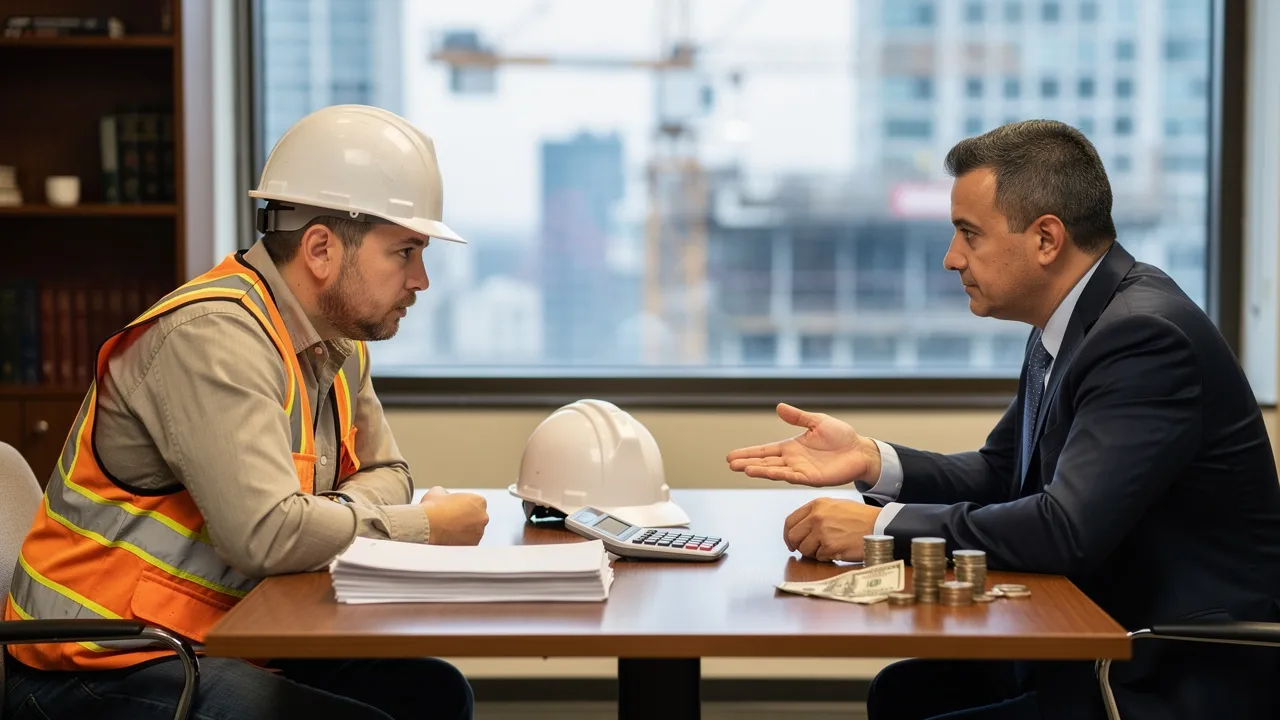
What should you do when weighing legal help after a Bronx construction injury?
After a scaffold or ladder fall at a Bronx worksite, you may be deciding whether calling a lawyer will create a bill before you know what happens next. This guide helps you separate the consultation, the legal fee, and the expenses connected to pursuing a construction-injury matter.
The first question is whether the initial conversation costs anything. We offer free consultations. A later representation agreement is a separate decision, and its fee method and expense terms should be clear before you hire a lawyer.
We provide legal help for construction workers injured in scaffold and ladder falls, falling debris, electrocution, and machinery accidents under New York Labor Law 240/241. Your accident still needs an individual review before anyone can identify the claims, payment arrangement, or expenses that could apply.
Start with your health and your records. Get medical care, keep the names of witnesses and people involved, save photographs and messages, and avoid signing a release or making a material claim statement unless you understand what it means. Then use a consultation to ask focused questions about cost and next steps.
What should you do first after the injury?
After a construction injury, follow your qualified medical professional’s treatment plan before making the fee decision. Attend follow-up appointments, take prescribed restrictions seriously, and describe your symptoms and how the injury occurred accurately.
Medical records often help show the full impact of a workplace injury. Keep discharge papers, appointment information, prescriptions, work restrictions, bills, and messages about your treatment together. Give accurate information to medical professionals and keep copies of what you receive.
Early legal guidance may help preserve evidence, identify relevant records and witnesses, and clarify the issues that need evaluation. Write down the worksite location, the equipment involved, what happened, who was present, and when you reported the injury while those details are fresh.
Do not trade away a possible claim simply to avoid an uncomfortable conversation about cost. Do not sign a release or give a detailed statement about fault, payment, or settlement without understanding the document or request. Ask a qualified New York attorney to explain the effect before you proceed.
Use a short preparation list before contacting counsel:
- Gather medical records and work-related paperwork.
- Save photographs, messages, names, and contact details.
- Write down questions about fees, expenses, and claim routes.
- Bring any release, insurer letter, or proposed agreement you were asked to sign.
Is the initial consultation the same as hiring a lawyer?
The initial consultation is a cost-free opportunity to discuss your construction injury and possible legal help; it is not the same document as a representation agreement. We offer free consultations.
A consultation lets you ask how the lawyer would be paid, which expenses might arise, and what the written agreement would cover. The percentage is set by the written fee agreement you sign at the start of the case. Ask for an explanation in plain language before deciding whether to sign.
The Law Offices of Evan W. Kohn can discuss construction injuries involving falls, falling objects, electrocution, and machinery, as well as the questions surrounding workers’ compensation and other possible claims. The consultation does not itself promise representation, a recovery, or a particular fee arrangement.
Bring three kinds of questions: what work the lawyer would perform, how payment would be calculated, and which costs could remain your responsibility. You can also ask who would communicate with you, what documents are needed, and what happens before any agreement is signed.
What should you ask about claim scope before discussing fees?
For a construction injury, begin with the scope of the matter: ask whether the proposed representation includes workers’ compensation, a possible Labor Law claim, a possible third-party claim, or more than one route. The written agreement should show how that calculation works for your matter.
A lawyer is not required to use a contingency fee, so ask whether an alternative payment structure, such as hourly billing, is available. Some lawyers may charge hourly fees; ask for the hourly rate and an estimate of the anticipated hours. A lawyer might require a retainer upfront, although this is less typical in personal-injury cases and can depend on the lawyer’s practice.
The written fee agreement sets the percentage or calculation method. If more than one possible claim route is under discussion, ask whether one agreement covers each route and how expenses are handled.
The New York court-rule passage describes more than one fee schedule.
A sliding-scale example is 50% of the first $10,000 recovered, 33% of the next $40,000, and 20% of everything over $50,000. Your agreement may use different terms. Ask whether the percentage changes by recovery amount, litigation stage, or another condition.
Compare arrangements by asking the same questions:
- Is payment contingent on recovering money?
- What percentage or hourly rate applies?
- Is a retainer required, and how is it used?
- Does the calculation use the gross recovery or a stated amount after deductions?
- What do you owe if the matter does not succeed?
Write down the answers and compare them with the agreement before signing.
Which case expenses should you ask about?
Case expenses are separate from the lawyer’s fee. Potential expenses can include court costs, medical-record charges, service of legal papers, deposition transcripts, expert fees, court filing fees, consultant and testimony fees, and investigation expenses. The type and amount can vary by case.
In many contingency arrangements, the firm advances costs and is reimbursed from the settlement, but your written agreement should state who is responsible for costs and whether you owe them if the case does not succeed. Court costs and disbursements may still apply regardless of the outcome.
The lawyer’s fee may rise to 40% if the case advances to a formal lawsuit. Ask whether a different fee applies after filing, and ask when that change would occur. Do not rely on a short phrase such as “no fee” to answer every expense question.
For example, a $200,000 settlement could produce a lawyer’s fee of around $66,000, leaving $134,000 after expenses. That is an illustration, not a prediction about your recovery or a quote for your matter.
Ask these expense questions before signing:
- Who advances filing, record, service, deposition, expert, consultant, testimony, and investigation costs?
- Are those costs deducted from a recovery?
- Are they deducted before or after the lawyer’s percentage?
- Do you owe any costs if the case does not succeed?
- Will you receive an itemized accounting of deductions?
The purpose of this checklist is simple: identify every possible payment path before you agree to representation. If an answer is unclear, ask for the exact term in the written agreement instead of assuming that the fee covers every case expense.
How should you audit the written fee agreement?
A New York contingency-fee agreement must be written and signed, and it must clearly outline the terms before the attorney may charge a contingency fee. A written engagement generally must be provided before representation begins or within a reasonable time afterward when an exception applies.
The written engagement should explain the legal services, attorney fees, expenses, and billing practices. It should also state, where applicable, whether you may have a right to arbitrate a fee dispute under part 137. Read the scope of work as carefully as the payment paragraph.
Ask the lawyer to explain which costs come out of the recovery and whether they are deducted before or after the percentage is calculated. That distinction changes the arithmetic, so ask for a simple example using the agreement’s stated method.
Audit the agreement with this sequence:
- Identify the claims and services covered.
- Find the fee percentage, hourly rate, or retainer terms.
- Mark every expense and who pays it.
- Locate the rules for deductions and case resolution.
- Ask what happens if the matter ends without a recovery.
- Keep a copy of the signed agreement and later billing records.
Ask for the written fee terms and expense responsibilities. A short slogan cannot explain every term. If the proposed agreement differs from what you understood in conversation, pause and ask for an explanation before signing.

Which claim questions can change the cost discussion?
The possible claim route can change the work involved and the questions you should ask about fees. We handle workers’ compensation and insurance paperwork for construction accident cases. If a third party played a role in your accident, you may have a lawsuit in addition to workers’ compensation benefits.
You may be able to sue a property owner or general contractor while collecting workers’ compensation. That possibility is not automatic. Ask who controlled the work area, supplied or maintained the equipment, directed the task, and may have played a role in the accident.
Ask whether workers’ compensation and a separate third-party construction injury claim both apply to your accident. The answer requires a factual investigation, and different claims have different requirements. Bring the worksite details, employer information, contracts or notices you received, and names of contractors or property owners.
New York workers’ compensation law generally requires filing a claim within 2 years, subject to exceptions. Reporting the injury and filing a workers’ compensation benefits claim are separate requirements, so ask about both. Do not assume that starting one step completes the other.
Use the claim discussion to connect legal scope with cost. Ask whether the proposed agreement covers workers’ compensation work, a possible third-party lawsuit, insurance communications, or only some of those tasks. Ask how a change in claim route would affect fees and expenses before the work expands.
When should you seek qualified professional evaluation promptly?
Contact a qualified attorney promptly when you are unsure whether employer notice, a benefits filing, a third-party claim, or another deadline remains open. New York workers’ compensation law generally requires written notice to your employer within 30 days of an accident, subject to exceptions.
Report the injury and ask about filing a workers’ compensation benefits claim because they are separate requirements. Give the date, location, employer information, and a clear description of what happened. Keep proof of what you reported and when you reported it.
Construction accident deadlines vary by case type, and claims against government entities may require a notice of claim within a much shorter window and have their own filing deadline. Many New York negligence-based personal injury lawsuits have a 3-year limitation period under CPLR 214(5), but that is not a universal deadline.
Treat these signs as reasons to act rather than wait for the cost question to resolve itself:
- You have not reported the injury or do not know whether the report was complete.
- An insurer, employer, owner, or contractor wants a statement or release.
- A government property or agency may be involved.
- Photographs, equipment, video, or witness information could disappear.
- You do not know which claim route or deadline applies.

How can you request a consultation with your questions ready?
Prepare a short account of the accident, your medical treatment, your employer and worksite information, the records you preserved, and every fee or expense question that remains. Bring any proposed release, insurance letter, or representation agreement so the terms can be discussed clearly.
We offer free consultations for people deciding whether to seek legal help after an injury. Use the conversation to ask which services would be covered, how payment would be calculated, who would pay case expenses, and what the written agreement would require before you proceed.
This is general information, not legal advice. A qualified New York attorney must evaluate your individual circumstances, explain the claim routes and deadlines that may apply, and address whether the proposed fee and expense terms fit your matter.
Requesting a consultation gives you a place to organize those questions before deciding whether to enter a representation agreement.
What should you ask about legal fees before hiring a Bronx construction-accident lawyer?
How much does it cost to get legal help for construction accidents in Bronx?
The initial consultation is free with The Law Offices of Evan W. Kohn. Later costs depend on the written agreement, which should state the fee method, percentage or billing terms, case expenses, deductions, and what happens if the matter does not succeed. Do not assume that a contingency arrangement covers every expense.
Does a contingency fee mean I will owe nothing if the case does not succeed?
Not necessarily. Under a contingency arrangement, you do not pay the lawyer upfront or hourly for services, and the fee is paid from a recovery. Court costs, records, filing, expert, deposition, or other expenses may still be your responsibility, so ask about them in writing before signing.
What should a New York construction-accident fee agreement explain?
It should identify the legal services covered, the attorney fee, billing practices, expenses, and how deductions are calculated. Ask whether expenses come out before or after the percentage, whether the terms change if a lawsuit is filed, and whether you owe expenses if there is no recovery.
Can workers’ compensation and a separate construction-injury lawsuit involve different fee questions?
They can. If a third party played a role, you may have a lawsuit in addition to workers’ compensation benefits, but that is not automatic. Ask whether the agreement covers workers’ compensation, insurance communications, a third-party claim, or only some of those services, and whether changing the claim route changes fees or expenses.
Hurt like this?
We handle Construction Accidents cases in the Bronx.
Evan W. Kohn, Esq. — more than 35 years of Bronx personal-injury practice. Reading about it only goes so far; a free consultation tells you what actually applies to your case.