
Personal Injury Basics
Understanding Structured Annuity Settlements: Key Insights for Accident Victims

Introduction
After an accident, the road to recovery can feel overwhelming, especially when financial worries add to the stress. Many accident victims find themselves overwhelmed by the weight of unexpected expenses and the fear of financial instability. Structured annuity settlements can provide a lifeline, allowing individuals to focus on healing rather than worrying about their finances.
Let’s explore how structured annuity settlements can help you navigate these challenges, looking at their benefits, potential drawbacks, and the different payout options available. Understanding how structured annuity settlements work can be the first step toward reclaiming peace of mind and stability in your life.
Define Structured Annuity Settlements
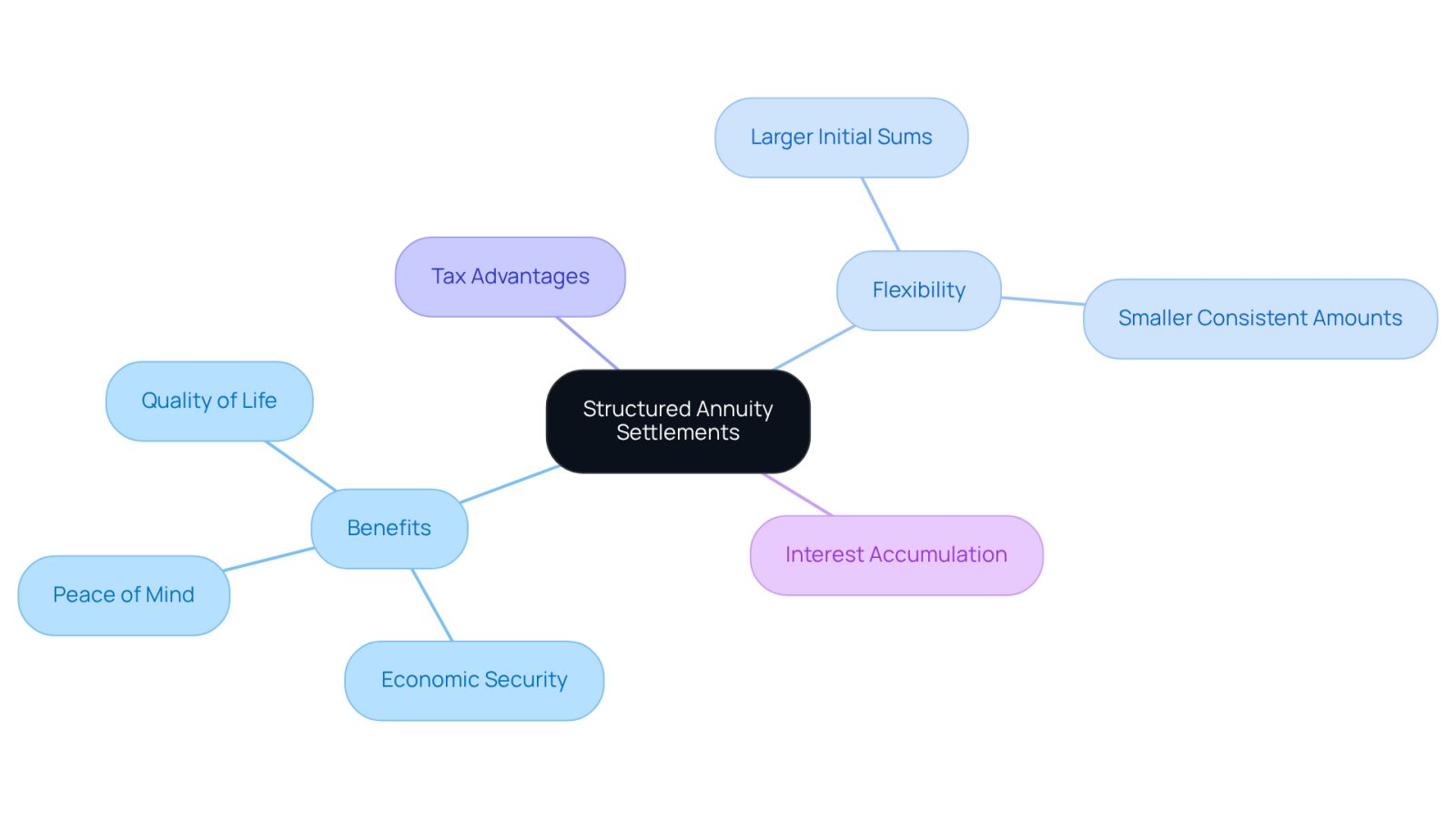
Imagine facing the aftermath of an accident, where the weight of financial uncertainty looms large over your recovery journey. Structured annuity settlements can be a lifeline, providing you with regular disbursements instead of a single lump sum. This approach is crafted to bring you economic security and peace of mind, helping you navigate your compensation in a way that supports your healing journey over time.
These structured annuity settlements provide you with the flexibility to choose financial plans tailored to your unique needs, ensuring you receive the support that feels right for you. For instance, you might opt for larger sums initially to cover immediate expenses or smaller, consistent amounts to provide ongoing assistance. Plus, these arrangements often come with tax-exempt payments, a significant advantage that can help you improve your financial wellbeing during a challenging time.
According to Graham Law, the benefits of structured compensations include:
- The potential for interest accumulation on your initial compensation funds
- The security of having your proceeds managed by a reputable brokerage firm
This setup not only protects your financial wellbeing but also ensures you have the funds for essential expenses, ultimately enhancing your quality of life as you focus on recovery.
Explain How Structured Annuity Settlements Work
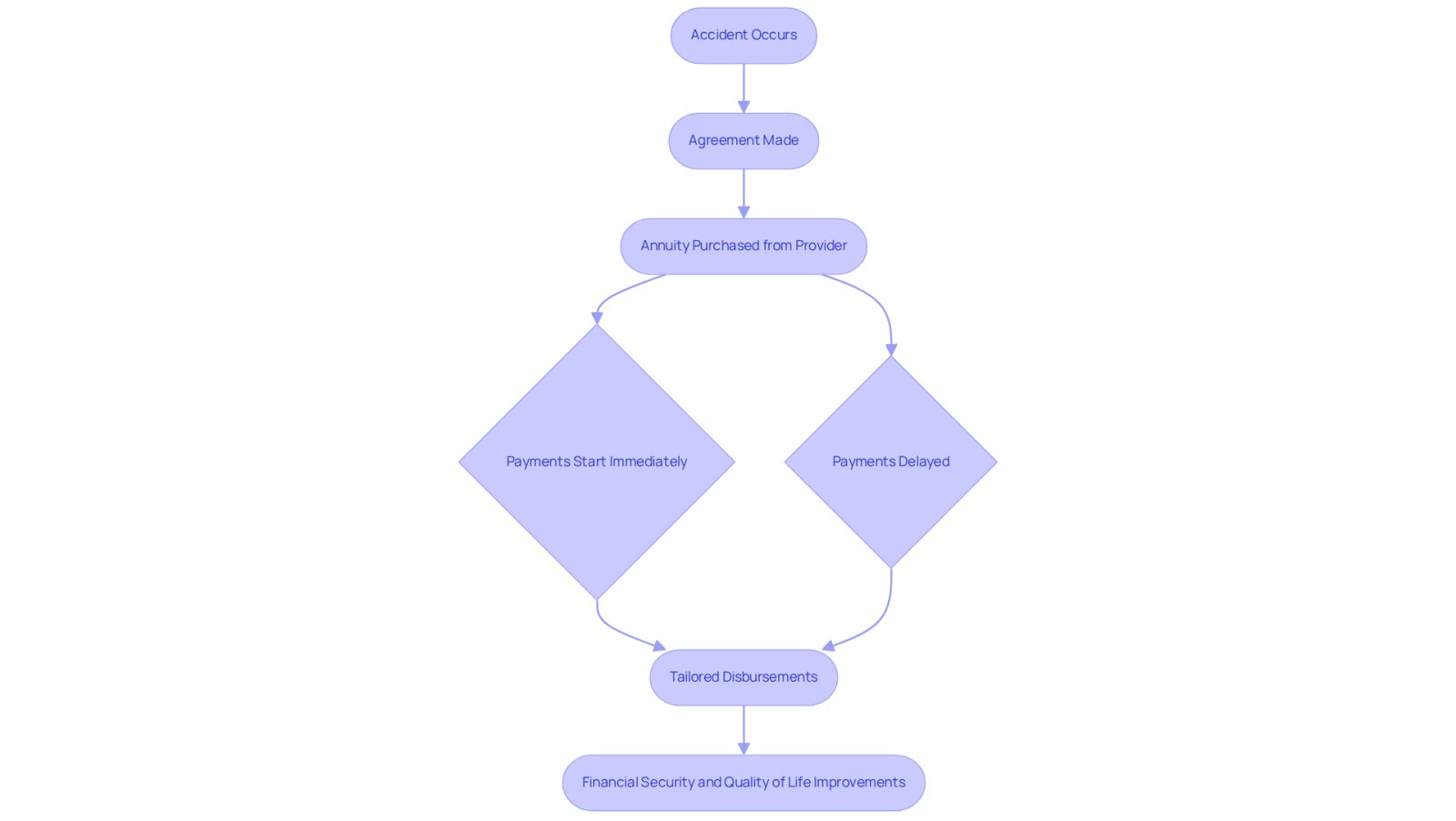
Imagine facing the aftermath of an accident, unsure of how to manage your finances and secure your future. Structured annuity settlements turn a lump sum into a series of future payments, helping you manage your finances over time. Once an agreement is made, the responsible party usually buys an annuity from a licensed provider, ensuring you receive steady payments. These payments can start right away or be delayed, depending on what you and the other party agree upon. This flexibility allows you to tailor the disbursements to fit your unique financial needs.
The Periodic Compensation Arrangement Tax Act of 1982 established organized arrangements to replace lump-sum payments for personal injury claimants. This law helps ensure that recipients have a disciplined approach to managing their finances. In fact, 94% of people receiving these structured payments report feeling financially secure, thanks to their reliable monthly income. Additionally, 79% have noticed an improvement in their quality of life since receiving these payments. Case studies show that organized payments help individuals budget more effectively compared to those who receive lump sums, with 96% of annuity recipients expressing satisfaction with their choice.
That said, it’s crucial to understand that these arrangements can have downsides, like limited flexibility and possibly lower annual returns. Moreover, selling a financial arrangement requires judicial approval, which means you need a valid reason to sell. Overall, structured annuity settlements can be a lifeline, offering peace of mind and stability when it’s needed most.
Analyze Advantages and Disadvantages of Structured Annuity Settlements
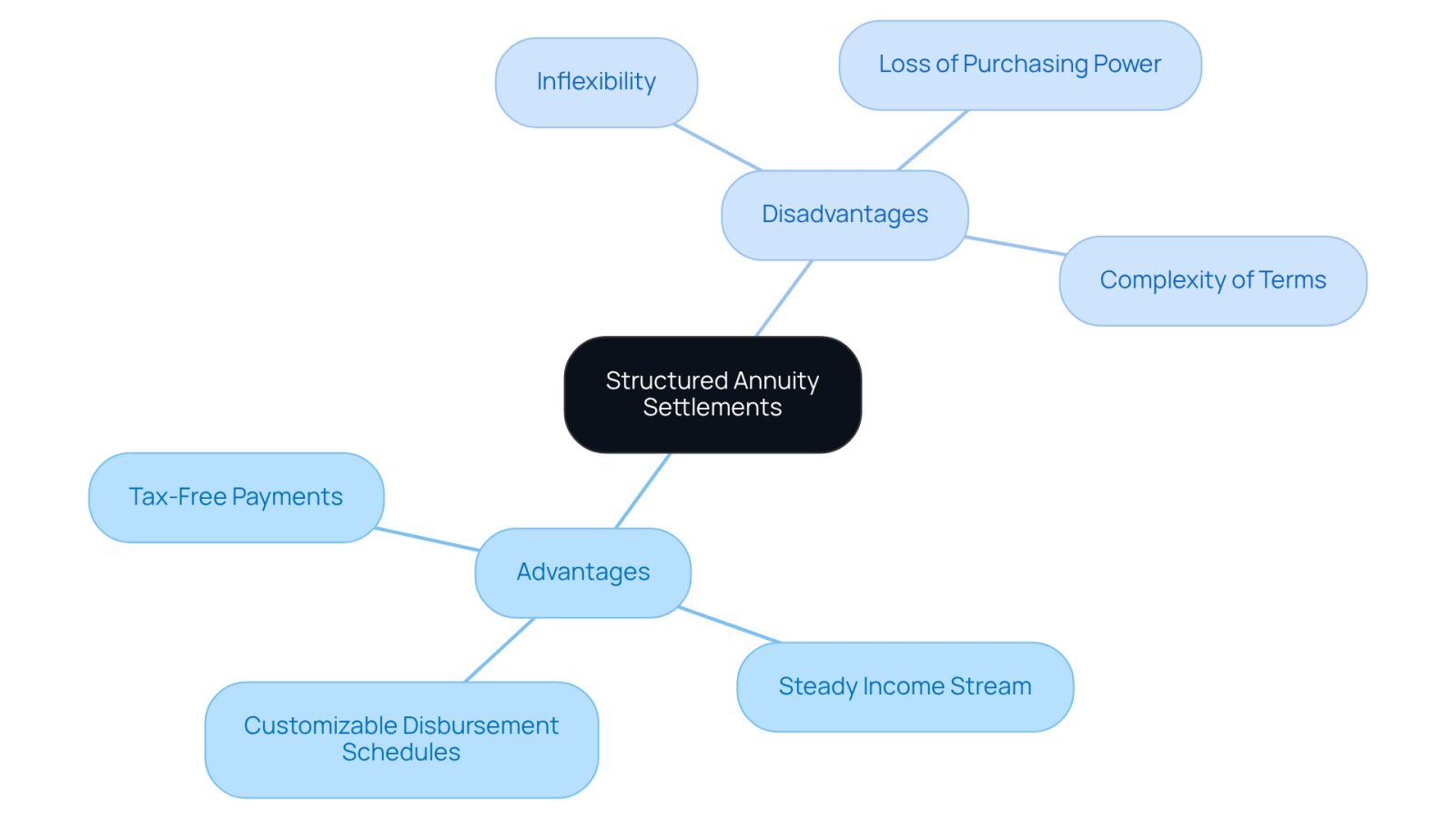
Structured annuity settlements can serve as a lifeline for accident victims; however, they present both advantages and challenges that warrant careful consideration.
Imagine receiving payments that are tax-free, allowing you to keep more of your hard-earned compensation for the things that truly matter. This benefit is especially crucial for personal injury victims, as it enables you to allocate funds toward necessary expenses without the burden of taxes.
This steady income stream helps you manage your finances, ensuring you have the support you need for medical bills, living costs, and other essential expenses without the fear of running out too soon. Knowing that you have a consistent source of income can bring peace of mind during a challenging time.
Moreover, you often have the ability to tailor your disbursement schedules to meet specific needs, whether that’s covering immediate medical expenses or planning for long-term living costs. This customization can make a significant difference in your financial stability.
However, it’s important to recognize the potential drawbacks. Once set up, these settlements can be rigid, making it tough to get larger amounts of money when unexpected expenses pop up. This inflexibility can be a significant concern for those who may find themselves in urgent need of funds.
Additionally, fixed disbursements may lose purchasing power over time due to inflation, which can diminish the long-term value of your agreement. This is a critical consideration for anyone relying on these payments for many years ahead.
Navigating the terms and conditions of structured settlements can be complex, and it’s wise to talk to a financial advisor who can help you understand these complexities and guide you through your options. Understanding both the benefits and drawbacks of structured annuity settlements can empower you to make informed decisions that best support your financial future.
Detail Payout Options for Structured Annuity Settlements
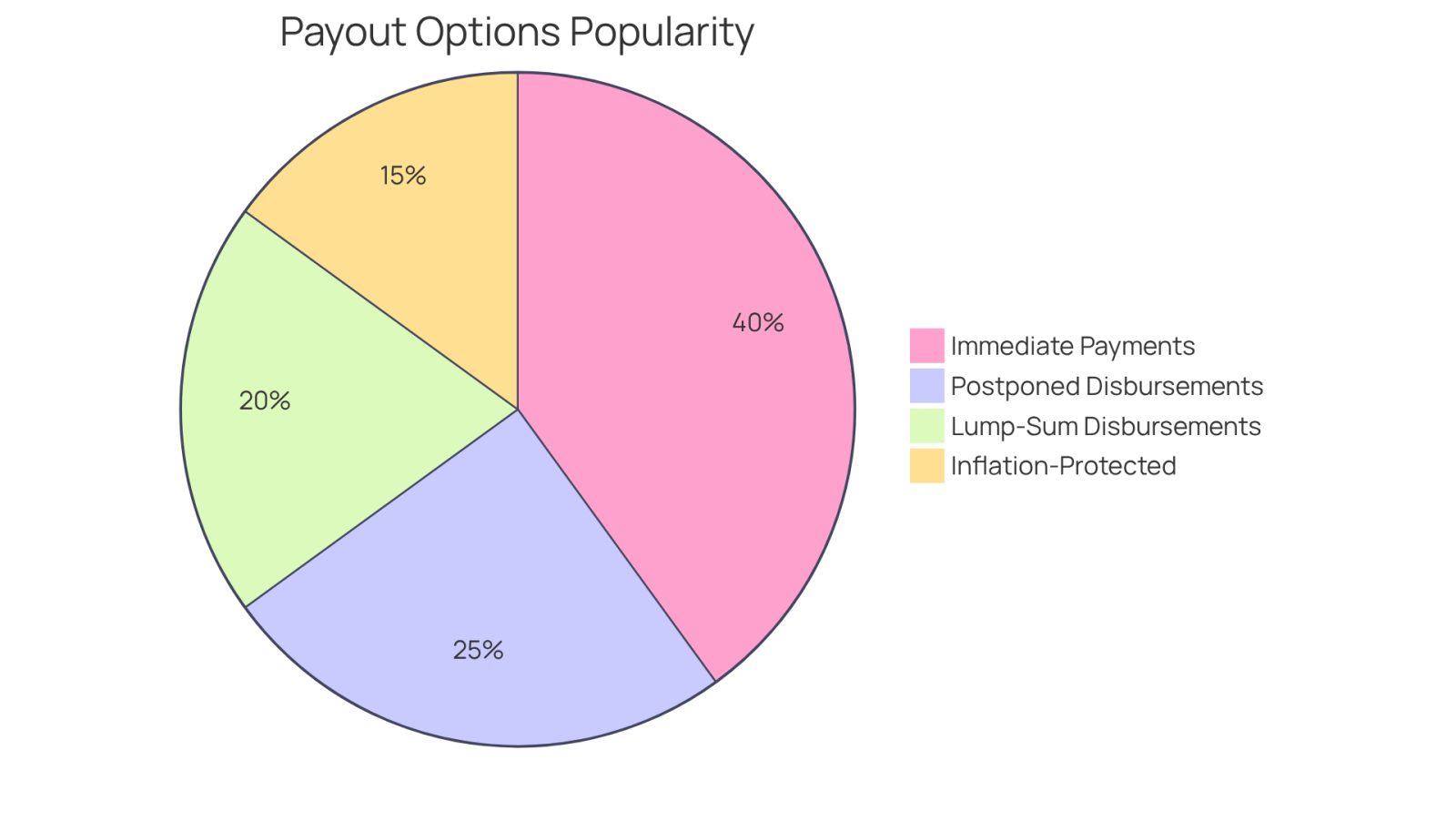
Navigating the aftermath of an accident can be overwhelming, especially when it comes to managing financial recovery options. Payout choices for structured annuity settlements provide flexibility, enabling claimants to choose plans that match their monetary situations. The most popular options include:
- Immediate Payments: These payments commence shortly after the settlement is finalized, providing quick access to funds for urgent expenses. Many individuals find themselves in dire situations, struggling to meet immediate financial obligations after an accident.
- Postponed Disbursements: Claimants can choose to begin receiving funds at a later date, aiding long-term economic planning and stability.
- Lump-Sum Disbursements: Certain agreements allow a part of the compensation to be released as a lump sum, with the rest allocated in regular installments, addressing diverse monetary requirements.
- Inflation-Protected Disbursements: Some arranged compensations include clauses for increases over time, ensuring that the purchasing power of the disbursements remains stable amid inflation.
Recent insights from industry experts emphasize how crucial it is for individuals to grasp these options fully. For example, Robert T. Simon, co-founder of Simon Law Group, notes that when clients understand their options, they can make choices that truly support their recovery journey. Furthermore, the launch of new products by firms such as MetLife improves the competitive environment, providing claimants with more options for delaying disbursements in different situations, including wrongful termination cases.
More and more people are turning to structured annuity settlements, with around $10 billion being paid out each year to over 30,000 recipients. Moreover, a case study demonstrates how families handling college expenses have effectively used organized arrangements to guarantee their children can seek higher education despite economic difficulties. As organized compensations continue to develop, they remain an essential monetary resource for accident victims, offering long-term security and stability in an unpredictable economic environment. Recent legislative updates, like the Survivor Justice Tax Prevention Act, further highlight the importance of organized compensation in offering financial assistance to individuals impacted by personal injuries. As these options evolve, they offer not just financial relief but also a pathway to rebuilding lives after trauma.
Discuss Tax Implications of Structured Annuity Settlements
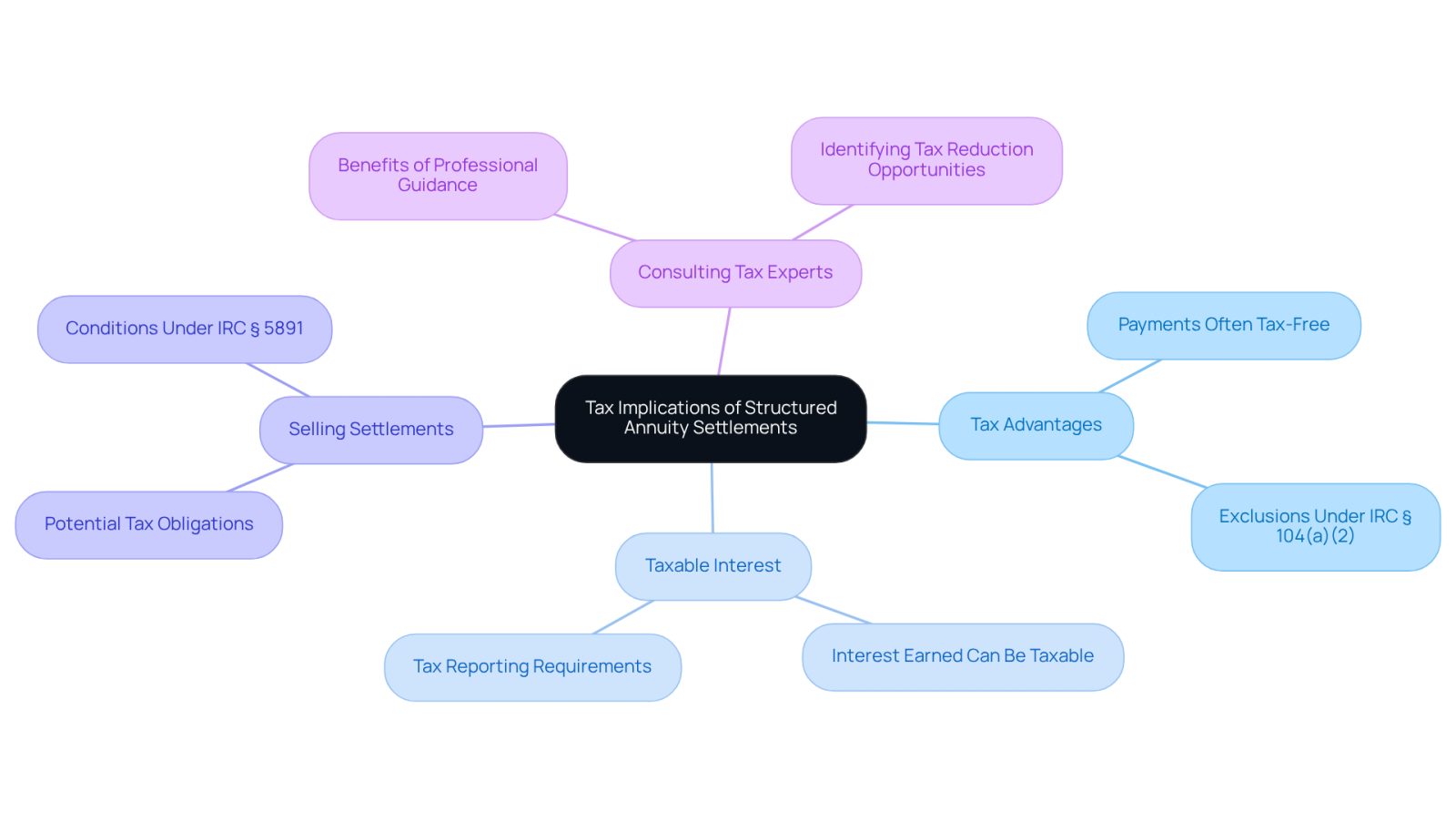
Many individuals navigating the aftermath of an accident worry about how their structured annuity settlements will impact their finances, especially when it comes to taxes. Structured annuity settlements can offer significant tax advantages, as these payments are often not considered taxable income. This means that recipients can breathe a little easier, knowing that they won’t face federal and state income taxes on these funds. However, it’s important to remember that while the payments themselves may be tax-free, any interest earned could still be taxable, which can add to the confusion.
If someone decides to sell their structured settlement for a lump sum, they might encounter tax obligations related to the structured annuity settlements based on the sale’s conditions and state regulations. For instance, selling a defined arrangement doesn’t change the tax treatment of the original payments, which remain tax-free under IRC § 5891(d). However, if the underlying agreement is taxable, any interest earned on the structured annuity settlements will also be taxable, leading to potential financial surprises.
Given the complexities of tax implications, it’s wise for individuals to reach out to a tax expert who can help clarify their situation and provide peace of mind. These specialists can assist in identifying opportunities to lower taxes and enhance the after-tax value of a settlement. Additionally, understanding the potential effects of state estate and inheritance taxes is crucial for those contemplating the long-term consequences of their structured annuity settlements. By seeking the right guidance, individuals can protect their financial future and ensure they make informed decisions about their structured annuity settlements.
Conclusion
Structured annuity settlements can feel like a lifeline for accident victims, but understanding their true value is essential for navigating the road to recovery. They turn a one-time payment into regular support, helping victims focus on healing rather than financial stress.
As we’ve explored, understanding structured annuity settlements can truly make a difference in your recovery journey. These arrangements offer benefits like tax-free payments and customizable payout options, allowing individuals to tailor their financial plans to meet their unique needs. Yet, it’s important to recognize that these settlements can come with challenges, like less flexibility and the worry of rising costs over time.
Ultimately, grasping the ins and outs of structured annuity settlements is crucial for accident victims seeking financial security after trauma. By taking the time to understand these options, accident victims can pave the way for a more secure and hopeful future. Talking to financial and legal experts can really help you find the best path forward, ensuring you get the support you need to rebuild your life.
Frequently Asked Questions
What are structured annuity settlements?
Structured annuity settlements provide regular disbursements instead of a single lump sum after an accident, offering financial security and peace of mind during recovery.
How do structured annuity settlements benefit individuals?
They allow for tailored financial plans, such as larger initial sums for immediate expenses or smaller, consistent amounts for ongoing support. Additionally, these payments are often tax-exempt, enhancing financial wellbeing.
How do structured annuity settlements work?
After an agreement, the responsible party purchases an annuity from a licensed provider, ensuring steady payments that can start immediately or be delayed based on mutual agreement.
What legislation governs structured annuity settlements?
The Periodic Compensation Arrangement Tax Act of 1982 established organized arrangements to replace lump-sum payments for personal injury claimants, promoting disciplined financial management.
What are the reported outcomes for individuals receiving structured payments?
94% of recipients feel financially secure due to reliable monthly income, and 79% report an improvement in their quality of life since receiving these payments.
Are there any downsides to structured annuity settlements?
Yes, they can have limited flexibility and potentially lower annual returns. Additionally, selling a financial arrangement requires judicial approval and a valid reason.
How do structured annuity settlements help with budgeting?
Case studies indicate that individuals receiving organized payments budget more effectively compared to those who receive lump sums, with 96% of annuity recipients expressing satisfaction with their choice.
List of Sources
- Define Structured Annuity Settlements
- 53+ Personal Injury Statistics For 2026 | Rev
- Structured Settlements in Injury Cases – How They Work and Benefits – Graham Law
- Structured Settlements and Annuities: How They Work
- Structured Settlements – What They Are and Why They Matter
- Explain How Structured Annuity Settlements Work
- Annuities & Structured Settlements
- Most Personal Injury Structured Settlement Annuity Recipients Report That Receiving Annuity Payments Makes Them Feel Financially Secure, According to New MetLife Study
- Structured Settlement News Powered By Patrick Farber
- Structured Settlement Industry Statistics | 2026 Edition
- Structured Settlements 4Real®Blog 2026
- Analyze Advantages and Disadvantages of Structured Annuity Settlements
- Pros and cons of structured settlements | Coughlin & Gerhart LLP
- Structure Settlements Pros and Cons
- Benefits and Disadvantages of Structured Settlements
- Structured Settlements Don’t Always Make Sense | Special Needs Alliance
- Advantages and Disadvantages of Structured Settlements in Personal Injury Awards
- Detail Payout Options for Structured Annuity Settlements
- Structured Settlement News Powered By Patrick Farber
- Structured Settlement Payout Options – Annuity.org
- What Is a Structured Settlement and How Does It Work?
- Payout Options for Your Structured Settlement | CBC Settlement Funding
- Structured Settlement Payments: Options by Payment & Case Type
- Discuss Tax Implications of Structured Annuity Settlements
Hurt like this?
We handle Personal Injury Basics cases in the Bronx.
Evan W. Kohn, Esq. — more than 35 years of Bronx personal-injury practice. Reading about it only goes so far; a free consultation tells you what actually applies to your case.