
Wrongful Death
Understanding New York Statute of Limitations for Wrongful Death Claims
Introduction
Losing someone you love is one of the hardest experiences anyone can face, and understanding the legal timelines that follow can feel overwhelming. In New York, families must be aware of a two-year deadline for filing wrongful death claims. This deadline is crucial, as it can determine the pursuit of justice and compensation.
However, understanding these legal processes can be confusing and overwhelming for families. What happens if this deadline is missed? It’s important to know how families can take steps to protect their rights during such a difficult time.
Define the Statute of Limitations in Wrongful Death Cases
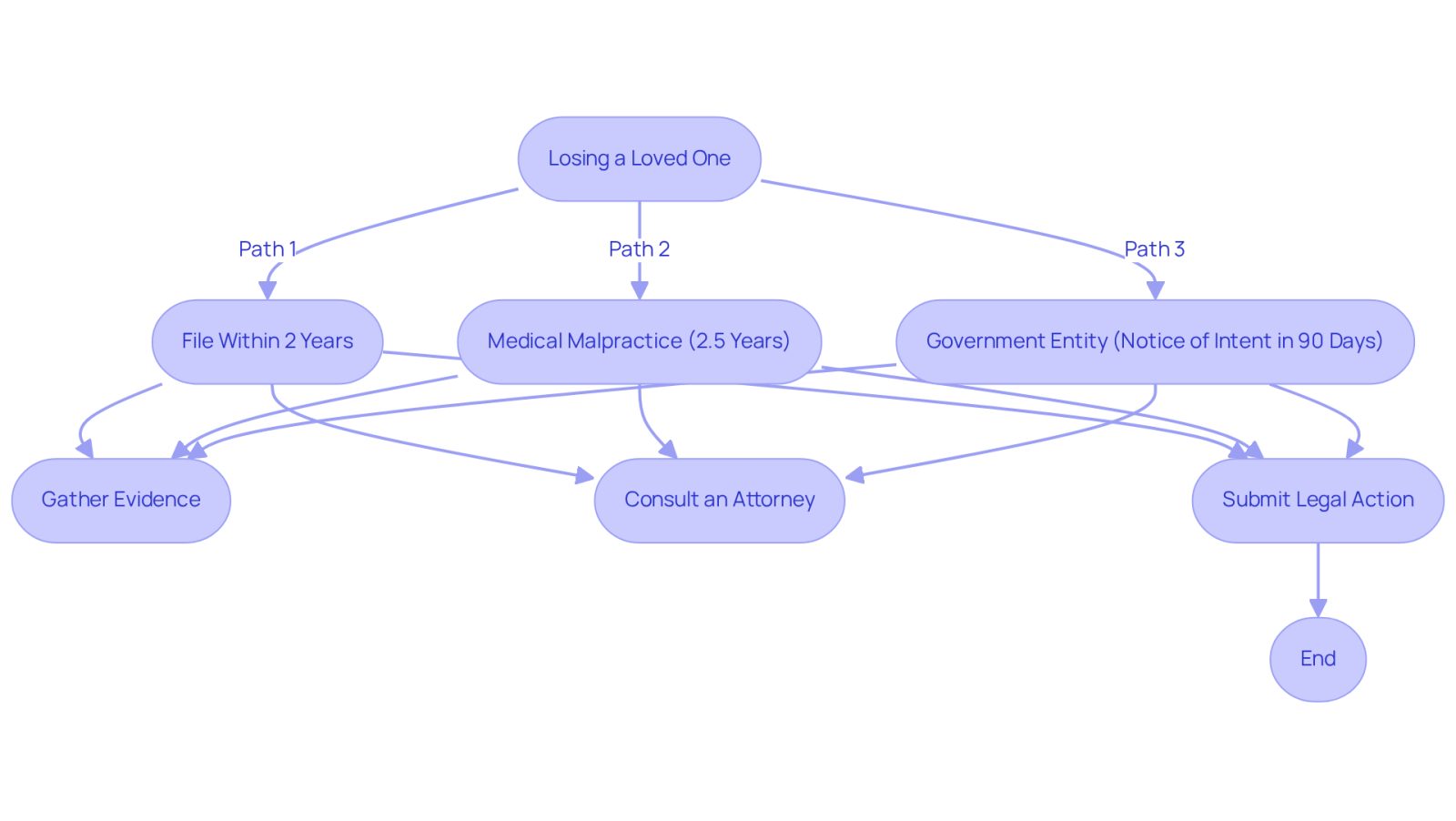
Understanding the time limits for legal action after losing a loved one can feel overwhelming, but knowing your rights is essential for finding peace and justice. In New York, the New York statute of limitations for wrongful death mandates that actions must be filed within two years from the date of your loved one’s passing. This two-year window is not just a legal deadline; it’s a critical opportunity to seek the justice your loved one deserves, and missing it can mean losing that chance forever.
Grasping these time limits is vital, not just for legal reasons, but to ensure that the memories and evidence of your loved one are preserved, allowing for a fair chance at justice. For instance, in cases of medical malpractice, the timeline can extend to 2.5 years, depending on the specifics. Additionally, if the case involves a government entity, a Notice of Intent must be submitted within 90 days, with legal actions typically needing to commence within about one year and 90 days.
In New York City, the stakes can be high, with wrongful death settlements ranging from $500,000 to over $10 million, depending on the circumstances. These figures highlight the importance of acting swiftly to secure what is rightfully yours. Without timely action, the chance to seek justice for your loved one may slip away, leaving you with unanswered questions and unresolved grief.
Explore the Two-Year Timeframe for Filing Claims
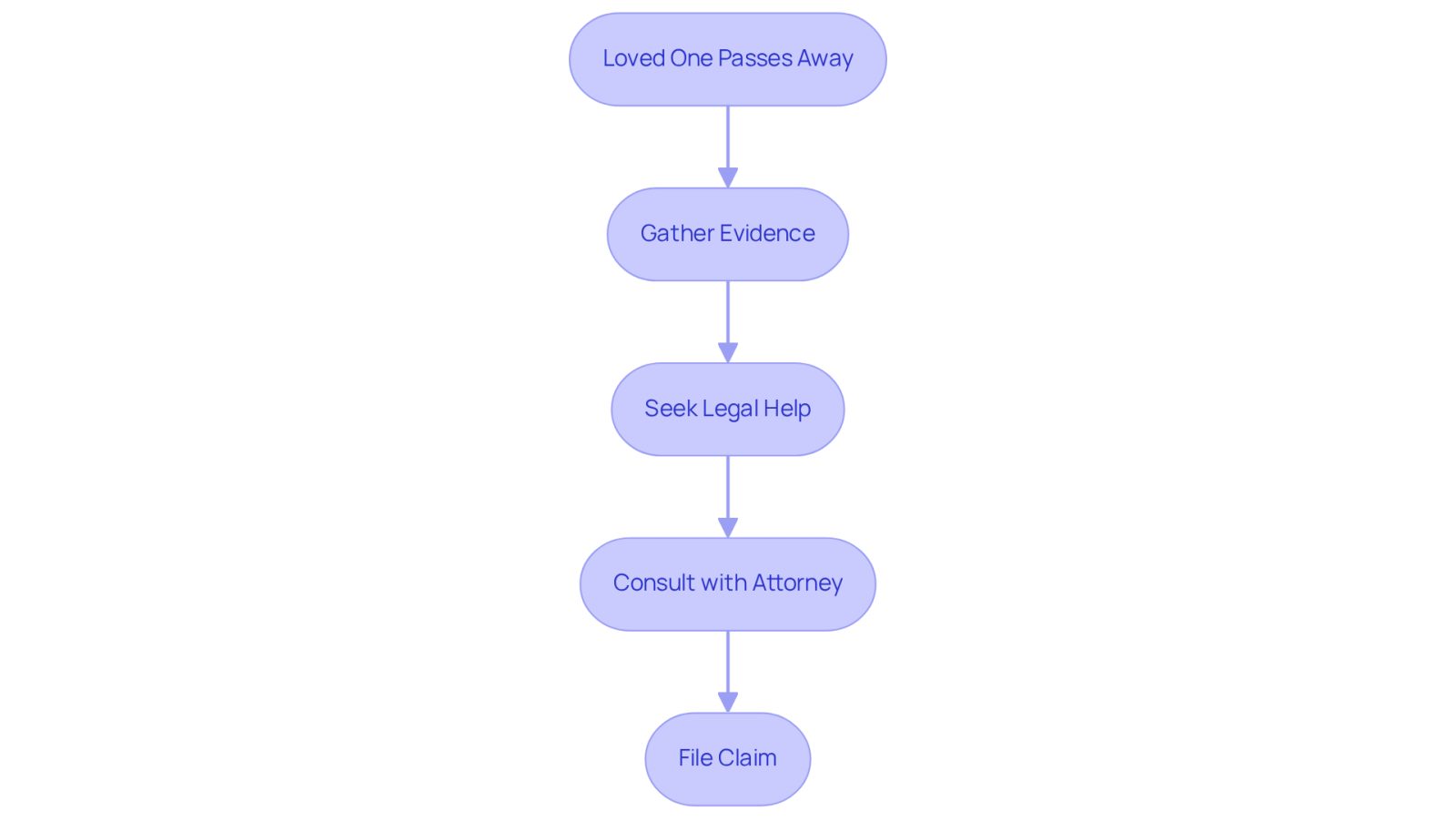
In New York, the New York statute of limitations wrongful death starts ticking the moment a loved one passes away, leaving families with a heavy burden to bear. It’s crucial for families to act quickly to gather evidence and seek legal help during such a painful time. Delays in reaching out for help can make it harder to collect important evidence and witness accounts that are vital for your case.
Every year, over 1,000 lives are lost in motor vehicle accidents in New York, reminding us how urgent it is to take action when tragedy strikes. Reaching out to The Law Offices of Evan W. Kohn can provide the support you need to handle these challenges and protect crucial evidence. You might be eligible for compensation that covers medical bills, lost income, and the emotional pain you’re experiencing.
Talking to an attorney soon after losing a loved one is vital to safeguard your rights and meet important deadlines under the New York statute of limitations wrongful death, helping you focus on healing while seeking justice. The Law Offices of Evan W. Kohn is here for you, offering free consultations and even home or hospital visits for those who can’t travel.
Identify Exceptions That May Affect Filing Deadlines
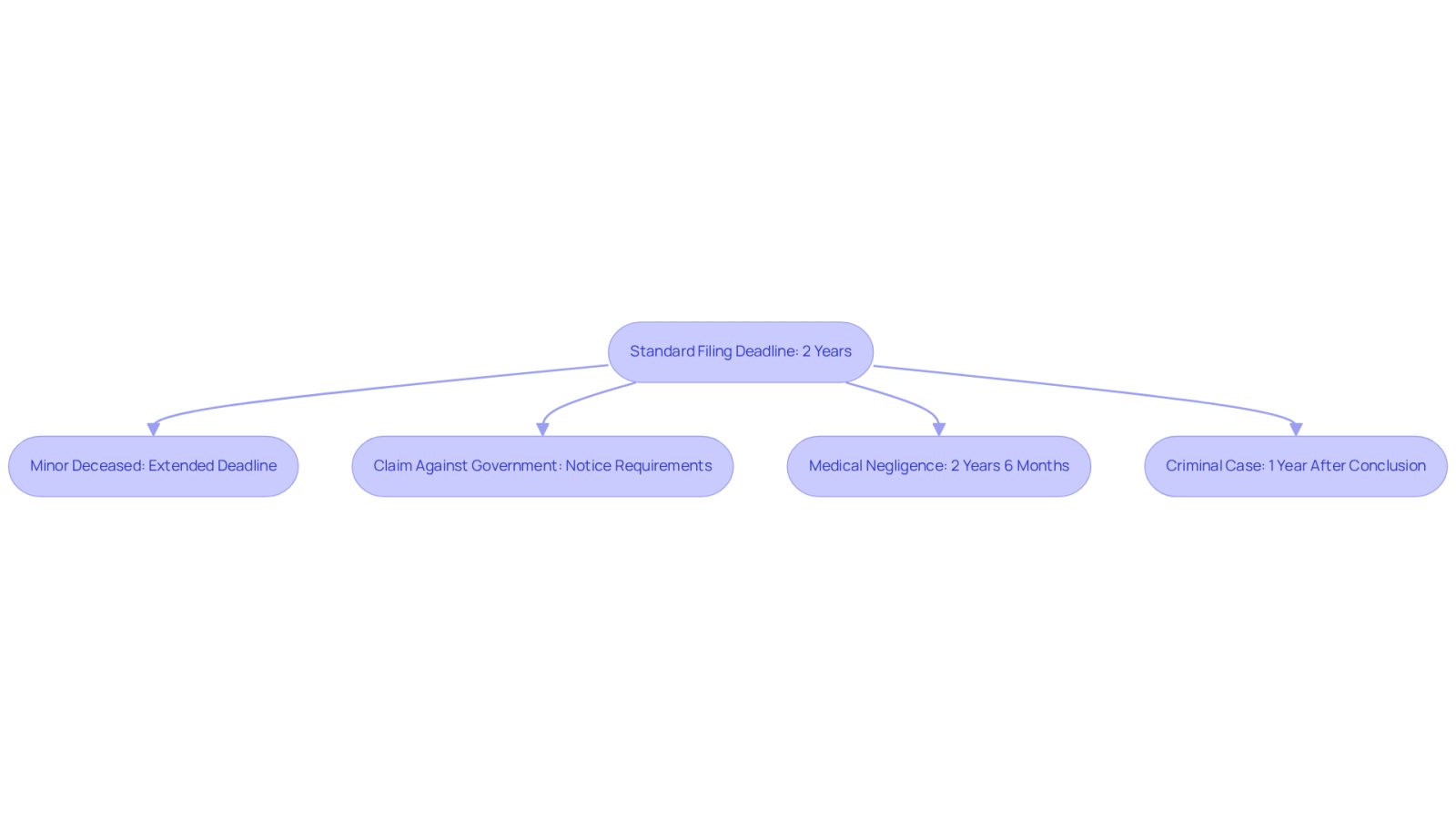
Navigating the legal landscape after losing a loved one can feel daunting and confusing, especially when it comes to understanding the timelines involved. While the typical New York statute of limitations for wrongful death is two years, it’s important to remember that this timeline is separate from other personal injury deadlines. Families often feel overwhelmed and lost when faced with the complexities of legal timelines after a tragic loss.
Several exceptions can extend this deadline:
- If the deceased was a minor, families can have a little more time to file a claim until the child grows up.
- When a claim for an unjust loss of life involves a government entity, particular notice requirements must be followed, which can change how quickly families can seek justice.
- In instances of medical negligence that lead to unintended fatality, the statute may extend to two years and six months from the date of the malpractice.
- If a criminal case is initiated against a defendant because of the victim’s passing, the personal representative has one year from the conclusion of that case to file a lawsuit for unlawful killing.
Understanding these exceptions can help families navigate the difficult path ahead after a tragic loss, as delays can lead to missed opportunities for justice and compensation, leaving families feeling helpless and frustrated. It is also essential to remember that only a personal representative of the deceased’s estate can submit a liability suit. Understanding these timelines can empower families to take the necessary steps toward justice and healing, ensuring they don’t miss out on the support they deserve.
Understand the Consequences of Missing the Deadline
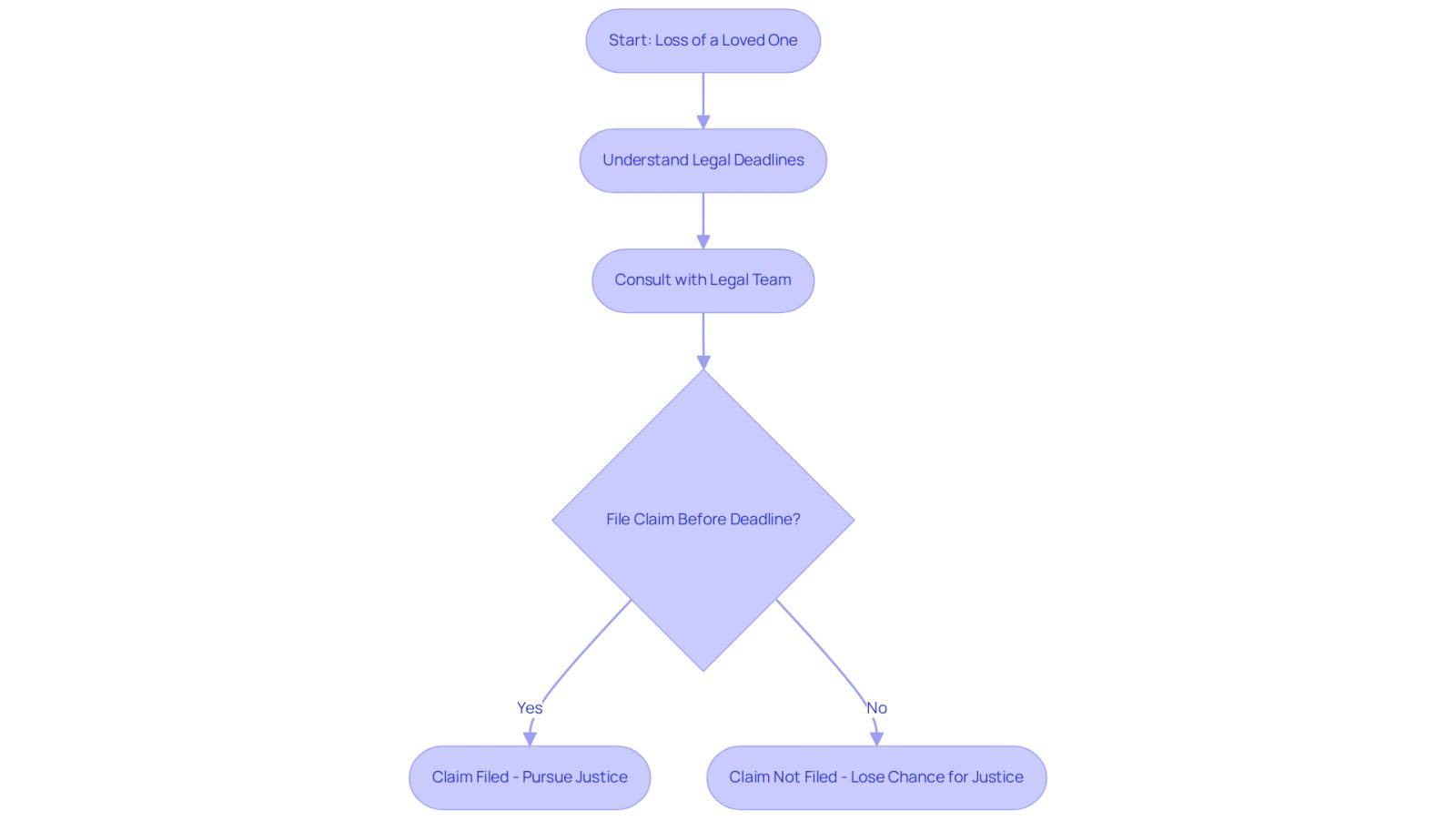
Losing a loved one is devastating, and the added pressure of legal deadlines can feel overwhelming for families seeking justice. If families miss the two-year deadline established by the New York statute of limitations for wrongful death, they risk losing their chance for justice and support during an already painful time. Many families find their hopes for justice dashed simply because they didn’t act quickly enough, underscoring the urgency of taking action. Courts are strict about the New York statute of limitations wrongful death deadlines; even a single day can mean the difference between pursuing justice and losing that chance forever. Families who wait too long to file often discover that the legal system doesn’t offer second chances, leaving them without the support they desperately need.
At The Law Offices of Evan W. Kohn, we understand the emotional and financial burden that wrongful death situations can place on families. Our compassionate legal team is here to support you through this challenging time. We offer free, no-obligation consultations to discuss your case and help you navigate the complexities of the legal process. Acting swiftly can make all the difference in securing the support you need during this difficult time.
Conclusion
Navigating the aftermath of losing a loved one is overwhelming, especially when faced with the complexities of wrongful death claims in New York. This two-year window isn’t just a deadline; it’s a chance for families to seek the justice and closure they desperately need. Imagine the heartache of realizing that a missed deadline means losing the chance to hold someone accountable for your loved one’s death.
Throughout this article, we’ve explored the importance of understanding the specific timelines and exceptions that may apply to wrongful death claims in New York. Factors such as the nature of the case, the age of the deceased, and the involvement of government entities can all influence the filing deadlines. The emotional and financial implications of missing these deadlines are significant, highlighting the urgency of seeking legal assistance as soon as possible.
In light of these considerations, it’s essential for families to prioritize their legal rights during such a challenging time. Reaching out for help can provide families with the strength and support they need to face this difficult journey. By taking that first step, families can find a path toward healing and justice.
Frequently Asked Questions
What is the statute of limitations for wrongful death cases in New York?
In New York, the statute of limitations for wrongful death cases mandates that actions must be filed within two years from the date of your loved one’s passing.
Why is it important to understand the statute of limitations in wrongful death cases?
Understanding the statute of limitations is crucial because it represents a critical opportunity to seek justice for your loved one. Missing this deadline can mean losing the chance to pursue legal action forever.
Are there any exceptions to the two-year statute of limitations for wrongful death cases?
Yes, in cases of medical malpractice, the timeline can extend to 2.5 years, depending on the specifics of the case. Additionally, if the case involves a government entity, a Notice of Intent must be submitted within 90 days, and legal actions typically need to commence within about one year and 90 days.
What are the potential settlement amounts in wrongful death cases in New York City?
Wrongful death settlements in New York City can range from $500,000 to over $10 million, depending on the circumstances of the case.
What happens if I miss the statute of limitations deadline for a wrongful death case?
If you miss the statute of limitations deadline, you may lose the opportunity to seek justice for your loved one, leaving you with unanswered questions and unresolved grief.
List of Sources
- Define the Statute of Limitations in Wrongful Death Cases
- New York Statute of Limitations for Wrongful Death | Meirowitz & Wasserberg
- New York State Legislature Passes Bill That Will Expand Wrongful Death Damages
- NYC Wrongful Death Lawyer | Complete Guide to New York Wrongful Death Claims
- What’s the NY Statute of Limitations for Wrongful Death?
- Statute of Limitations Timetable | New York Courts
- Explore the Two-Year Timeframe for Filing Claims
- When Is It Too Late to Get a Wrongful Death Lawyer in New York?
- Wrongful Death Damages in New York | Bornstein & Emanuel
- New York Wrongful Death Lawyer
- How Long Does It Take to Settle a Wrongful Death Claim in New York?
- How Long Do I Have to File a Wrongful Death Claim in New York?
- Identify Exceptions That May Affect Filing Deadlines
- New York Statute of Limitations for Wrongful Death | Meirowitz & Wasserberg
- What Is the Statute of Limitations on Wrongful Death in New York? | Lever & Ecker, PLLC
- New York Wrongful Death Statute of Limitations
- New York Wrongful Death Statute of Limitations | SSKB Law
- NYC Wrongful Death Statute of Limitations | Douglas & London
- Understand the Consequences of Missing the Deadline
Hurt like this?
We handle Wrongful Death cases in the Bronx.
Evan W. Kohn, Esq. — more than 35 years of Bronx personal-injury practice. Reading about it only goes so far; a free consultation tells you what actually applies to your case.