
Workers' Compensation
4 Key Insights on Home Health Workers Compensation You Need

Introduction
Understanding the landscape of home health workers is crucial. These dedicated professionals provide essential care that significantly enhances the quality of life for many individuals. Yet, the compensation structures they navigate can be complex and challenging. This often leaves caregivers feeling undervalued and uncertain about their financial futures.
What if there were key insights that could empower these vital workers to secure fair compensation? What if they could overcome the barriers they face in their roles? This article delves into the intricacies of home health workers’ compensation, offering valuable knowledge that can help caregivers advocate for their worth in a demanding industry. Together, we can explore how to navigate these challenges and ensure that the contributions of home health workers are recognized and rewarded.
Define Home Health Workers and Their Roles
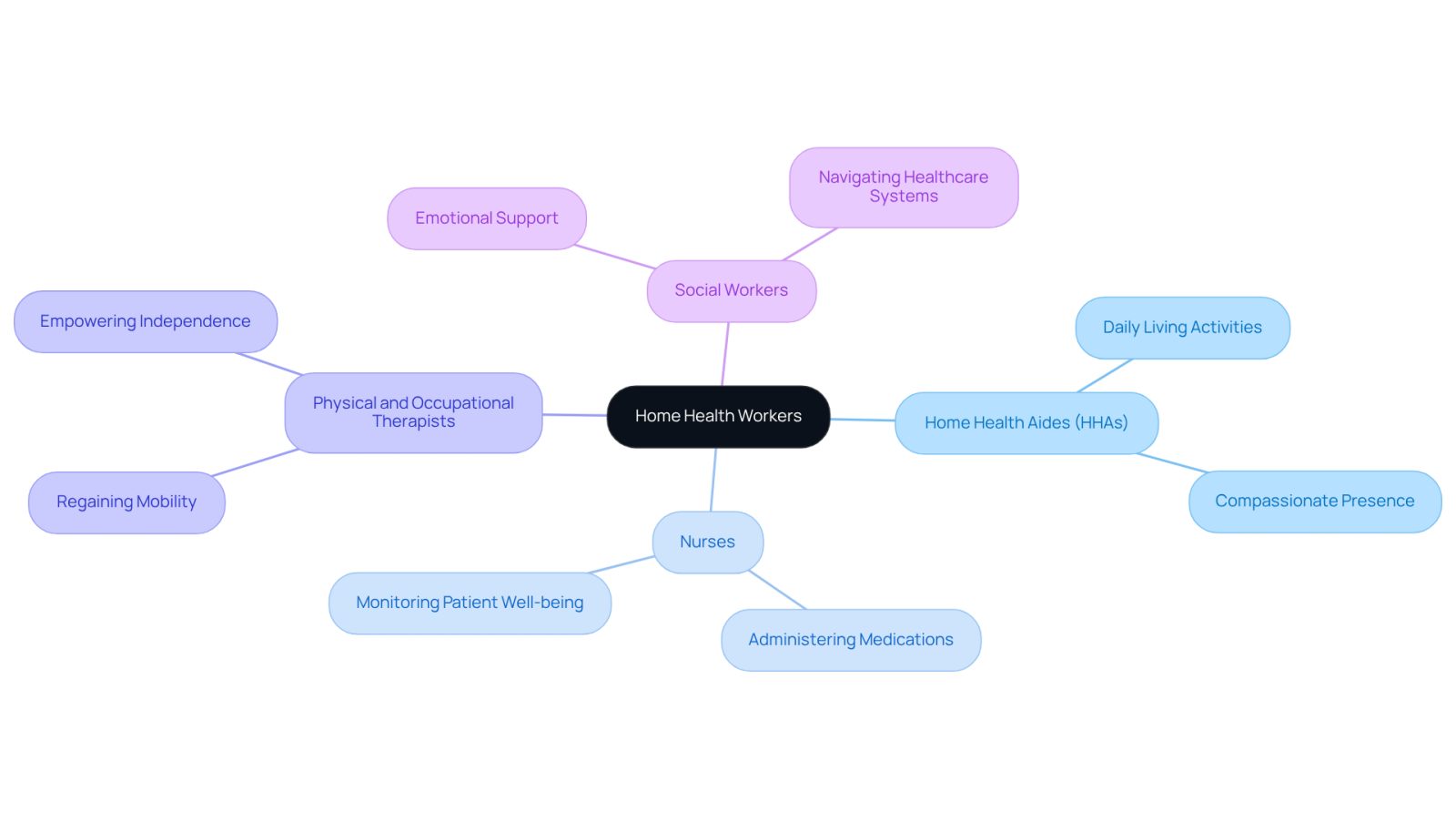
Home care workers are essential professionals who provide a range of medical and non-medical services to individuals in their own homes. They play a crucial role in enhancing the quality of life for those who may be facing challenges in their daily routines.
- Home Health Aides (HHAs) are often the first line of support, assisting with daily living activities like bathing, dressing, and meal preparation. Their compassionate presence can make a significant difference, helping individuals feel more comfortable and secure in their own environment.
- Nurses bring a wealth of medical expertise, offering care that includes administering medications and monitoring patient well-being. Their dedication ensures that clients receive the medical attention they need, fostering a sense of safety and trust.
- Physical and Occupational Therapists work diligently to help patients regain mobility and perform daily tasks, empowering them to reclaim their independence. Their encouragement and guidance can be transformative, allowing individuals to engage more fully in life.
- Social Workers provide invaluable emotional support, helping families navigate the often-complex healthcare systems. They are there to listen, understand, and advocate for the needs of their clients, ensuring that no one feels alone in their journey.
Each of these roles requires specialized training and skills, and the complexity of their tasks can significantly influence home health workers compensation and their eligibility for benefits. Recognizing the importance of these professionals is vital, as they not only provide care but also bring hope and comfort to those they serve.
Explore Compensation Structures for Home Health Workers
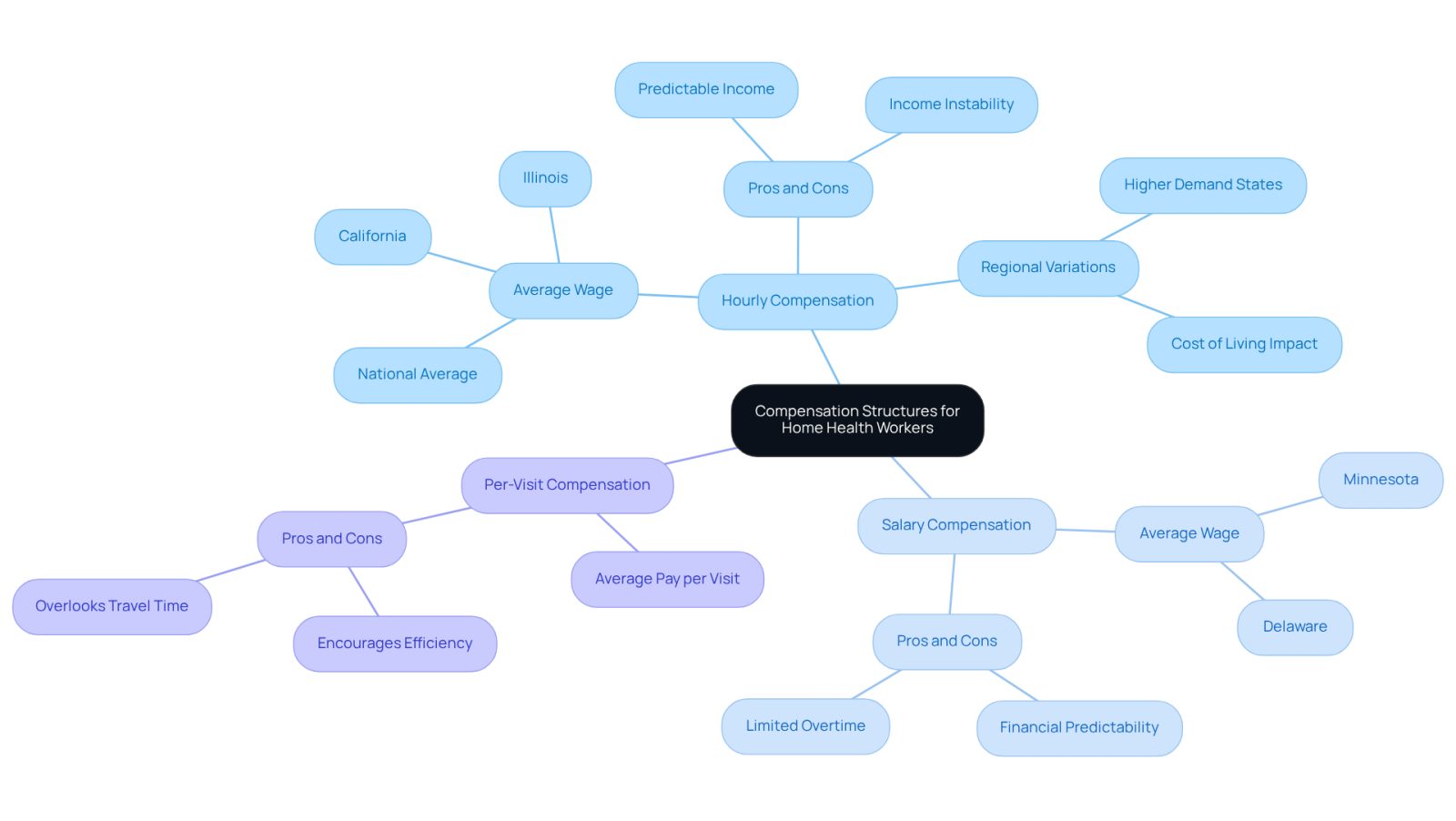
The compensation for home health workers can vary significantly, influenced by factors like location, type of service, and the employer’s payment structure. This variability can create challenges for caregivers, who often face uncertainty in their earnings.
Hourly Compensation is a common model where workers receive a set hourly rate for the time spent with clients. While this straightforward approach can be appealing, it may lead to income instability, especially when hours fluctuate. For instance, the national average hourly wage for nursing professionals in residential care is around $45.81, but this can differ widely from state to state. In California, for example, residential care nurses earn an average of $77 per hour, reflecting the state’s higher cost of living and demand for care services. This disparity can be disheartening for caregivers who strive to provide quality support.
Salary Compensation offers another avenue, where some home health professionals receive a fixed annual salary. This model can provide more financial predictability, which is a relief for many. However, it may also limit opportunities for overtime pay, potentially affecting overall earnings and leaving caregivers feeling undervalued.
Per-Visit Compensation is yet another structure, where individuals are paid for each client visit. While this can encourage efficiency, it often overlooks the time spent traveling or preparing, which can lead to further income instability.
Current trends indicate that states with a higher demand for healthcare services tend to offer better compensation to attract skilled professionals. For example, residential care nurses in Illinois report average compensation around $48 per hour, while those in Wisconsin earn about $49 per hour. These regional disparities can be frustrating for caregivers who are dedicated to their work.
Understanding these payment frameworks is essential for caregivers to navigate home health workers compensation in domestic settings. It empowers them to negotiate fair wages and benefits, ensuring they receive adequate remuneration for their vital services. By grasping these structures, caregivers can advocate for themselves and their worth, fostering a more supportive environment for all.
Understand Eligibility and Application Processes for Compensation
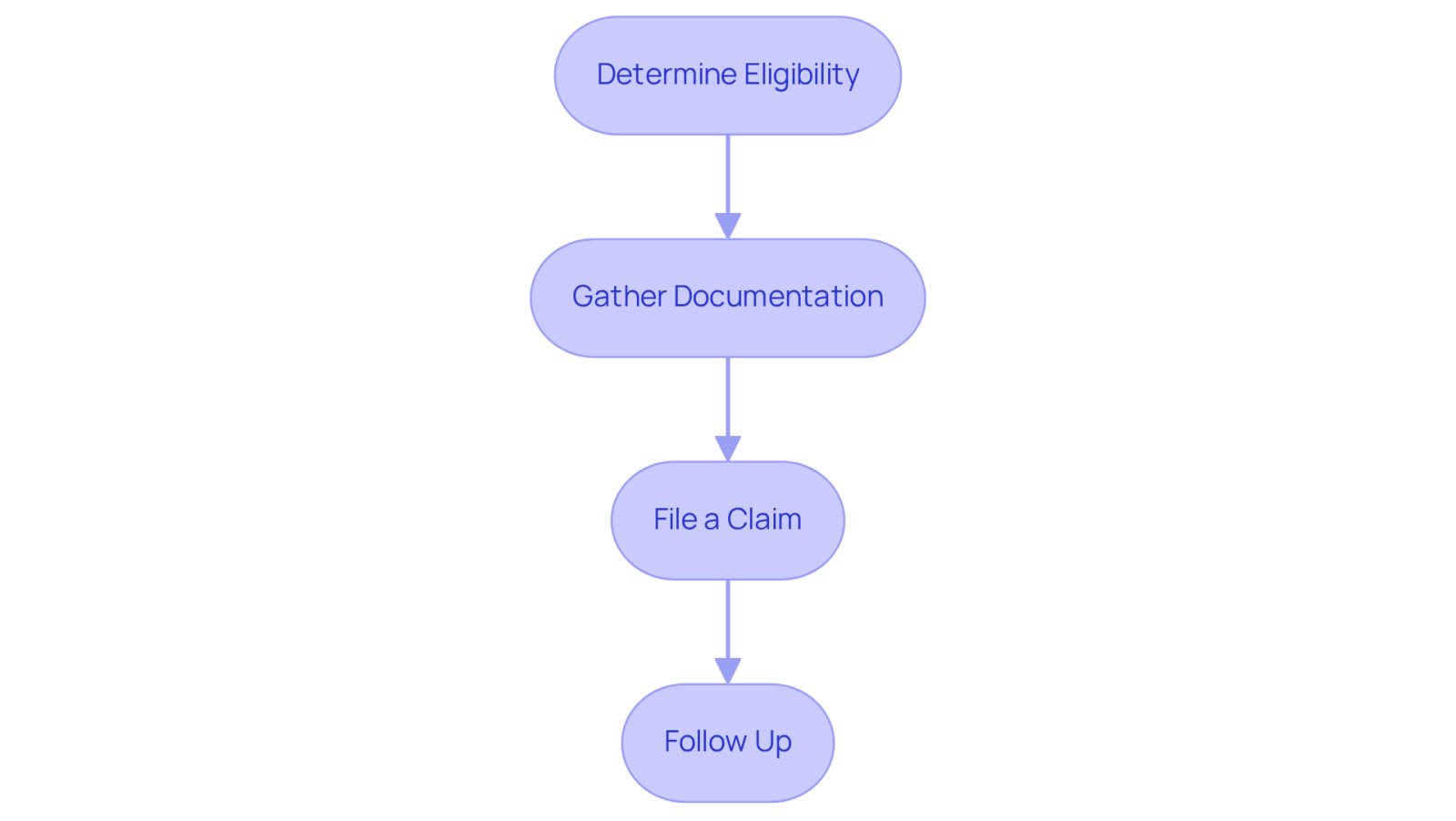
Navigating the claims process for home health personnel can feel overwhelming, especially when you’re already dealing with the stress of an injury. To qualify for payment, it’s crucial to understand the specific eligibility requirements, which can vary by state and employer. Let’s break down the steps to help you through this journey.
- First, it’s essential to determine your eligibility.
Take a moment to verify that you meet the criteria set by your employer or state regulations. Often, this means being classified as an employee rather than an independent contractor. Knowing where you stand can alleviate some of the uncertainty. - Next, gather the necessary documentation.
This includes proof of employment, medical records, and incident reports related to your workplace injury. Accurate medical documentation is vital, as it serves as objective evidence of the injury’s nature and extent. Remember, without sufficient medical documentation, your benefits claim could face delays or even rejection, adding to your stress. - Once you have everything in order, it’s time to file a claim.
Submit your claim through the appropriate channels, usually involving your employer’s human resources department or a state labor board. For instance, in New Jersey, the employees’ benefits system can assist with medical costs, a portion of lost income, and disability support. It’s crucial to demonstrate that your injury is job-related, so ensure you have clear medical documentation linking your condition to your work responsibilities. - After filing, don’t forget to follow up.
Keep an eye on your claim status and respond promptly to any requests for additional information from the claims adjuster. Regular updates from your healthcare providers can strengthen your claim by showing that you’re actively managing your injury. Once your claim is submitted, expect to receive a notification letter and a BWC ID card in the mail shortly after.
While this process may seem intricate, understanding these steps is essential for caregivers like you to secure home health workers compensation that you deserve. You’re not alone in this; with the right information and support, you can navigate these challenges with confidence.
Identify Challenges in Securing Compensation
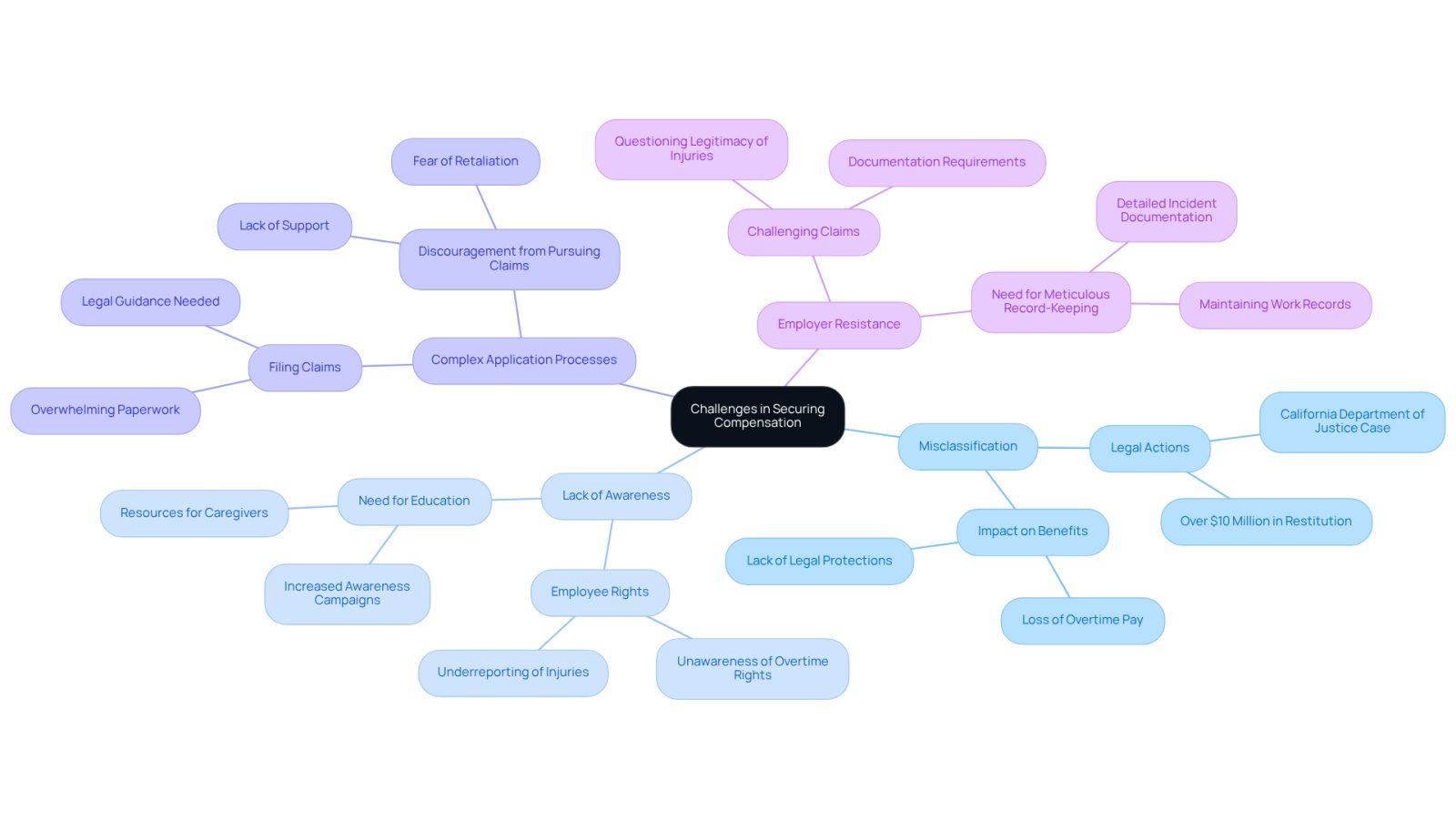
Home health workers often encounter significant hurdles when it comes to securing compensation.
- Misclassification is a major issue. Many home health workers face misclassification as independent contractors, resulting in the loss of vital benefits and legal protections, highlighting the need for home health workers compensation. This problem has come to light through recent legal actions, like the California Department of Justice’s successful case against Care Specialist HCS Inc., which resulted in over $10 million for misclassifying in-home care providers. Courts have recognized that many of these individuals should actually be classified as employees, which allows for home health workers compensation, including access to overtime pay and other benefits under the Fair Labor Standards Act (FLSA).
- Then there’s the lack of awareness. Many employees are unaware of their rights regarding compensation, which can lead to underreporting of injuries and incidents. Research indicates that a significant number of caregivers don’t fully understand their payment rights, leaving them vulnerable to exploitation. A recent survey highlighted that many personnel in home health workers compensation are not even aware of their entitlement to overtime pay, underscoring the urgent need for greater awareness.
- The complex application processes add another layer of difficulty. Filing compensation claims can feel overwhelming, especially for those who aren’t familiar with legal procedures. The complicated paperwork and requirements often discourage individuals from pursuing their rightful claims, making it crucial for them to seek guidance.
- Lastly, there’s resistance from employers concerning home health workers compensation. Some employers may challenge claims or question the legitimacy of reported injuries, which makes it essential for employees to meticulously document incidents and maintain detailed records. As Attorney General Rob Bonta pointed out, “Misclassification is wage theft. If you deceive employees by misclassifying them, you will be held accountable.”
To navigate these challenges effectively, home health workers are encouraged to seek legal counsel, stay informed about their rights, and keep thorough documentation of their work and any incidents that arise. By taking these steps, they can better advocate for themselves and ensure they receive the compensation they deserve.
Conclusion
Home health workers are truly the backbone of in-home care, offering vital support that greatly improves the quality of life for individuals facing various challenges. Their roles, which include home health aides, nurses, and therapists, demand specialized skills and training. It’s essential to grasp the complexities surrounding their compensation to ensure these dedicated professionals receive fair pay for their invaluable contributions.
This article explores several key aspects of home health workers’ compensation, including the various payment structures – hourly, salary, and per-visit compensation – that can significantly affect their earnings. It sheds light on the regional disparities in pay, the importance of understanding eligibility requirements, and the often complicated application processes for compensation claims. Moreover, it addresses the considerable challenges caregivers face, such as misclassification, a lack of awareness regarding their rights, and resistance from employers, all of which can impede their ability to secure the compensation they rightfully deserve.
Ultimately, raising awareness about the rights and compensation structures for home health workers is crucial. By recognizing their value and advocating for fair treatment, caregivers can navigate the complexities of the compensation landscape more effectively. This not only empowers them but also nurtures a more supportive environment that acknowledges the critical role they play in the healthcare system. As the demand for home health services continues to rise, it becomes imperative to tackle these issues and ensure that those who provide care receive the respect and compensation they truly deserve.
Frequently Asked Questions
What are home health workers?
Home health workers are professionals who provide a range of medical and non-medical services to individuals in their own homes, enhancing the quality of life for those facing challenges in their daily routines.
What specific roles do Home Health Aides (HHAs) play?
Home Health Aides assist with daily living activities such as bathing, dressing, and meal preparation, providing compassionate support to help individuals feel comfortable and secure in their environment.
What services do nurses provide in home health care?
Nurses offer medical care that includes administering medications and monitoring patient well-being, ensuring clients receive the necessary medical attention and fostering a sense of safety and trust.
How do physical and occupational therapists assist patients?
Physical and Occupational Therapists help patients regain mobility and perform daily tasks, empowering them to reclaim their independence through encouragement and guidance.
What role do social workers play in home health care?
Social Workers provide emotional support and help families navigate the complex healthcare systems, advocating for the needs of their clients and ensuring they do not feel alone in their journey.
What factors influence the compensation and benefits of home health workers?
The complexity of the tasks performed by home health workers, along with their specialized training and skills, can significantly influence their compensation and eligibility for benefits.
List of Sources
- Define Home Health Workers and Their Roles
- Explore Compensation Structures for Home Health Workers
- Understand Eligibility and Application Processes for Compensation
- 14 Inspirational Quotes About Personal Injury Law, Justice, and Fighting for What’s Right – Keys Law Offices, PC
- The Role of Medical Documentation in Strengthening Your Workers’ Compensation Claim | Drazin and Warshaw, P.C.
- Workers’ Compensation for Home Health Services – RT Specialty
- info.bwc.ohio.gov
- Identify Challenges in Securing Compensation
Hurt like this?
We handle Workers' Compensation cases in the Bronx.
Evan W. Kohn, Esq. — more than 35 years of Bronx personal-injury practice. Reading about it only goes so far; a free consultation tells you what actually applies to your case.