
Brain & Spinal Injuries
4 Steps to Choose the Right Brain Injury Lawyer for You

Introduction
Finding the right brain injury lawyer can feel overwhelming, especially when you’re already dealing with the emotional toll of recovery. It’s tough to navigate legal complexities while managing the emotional strain of recovery. With so many options, it’s easy to feel lost and unsure about making the right choice for your unique situation.
This guide aims to help you:
- Identify your specific legal needs
- Evaluate potential attorneys
- Understand the financial aspects of hiring legal representation
Choosing the right legal support can make all the difference in your healing journey, ensuring you feel understood and supported every step of the way.
Identify Your Specific Legal Needs
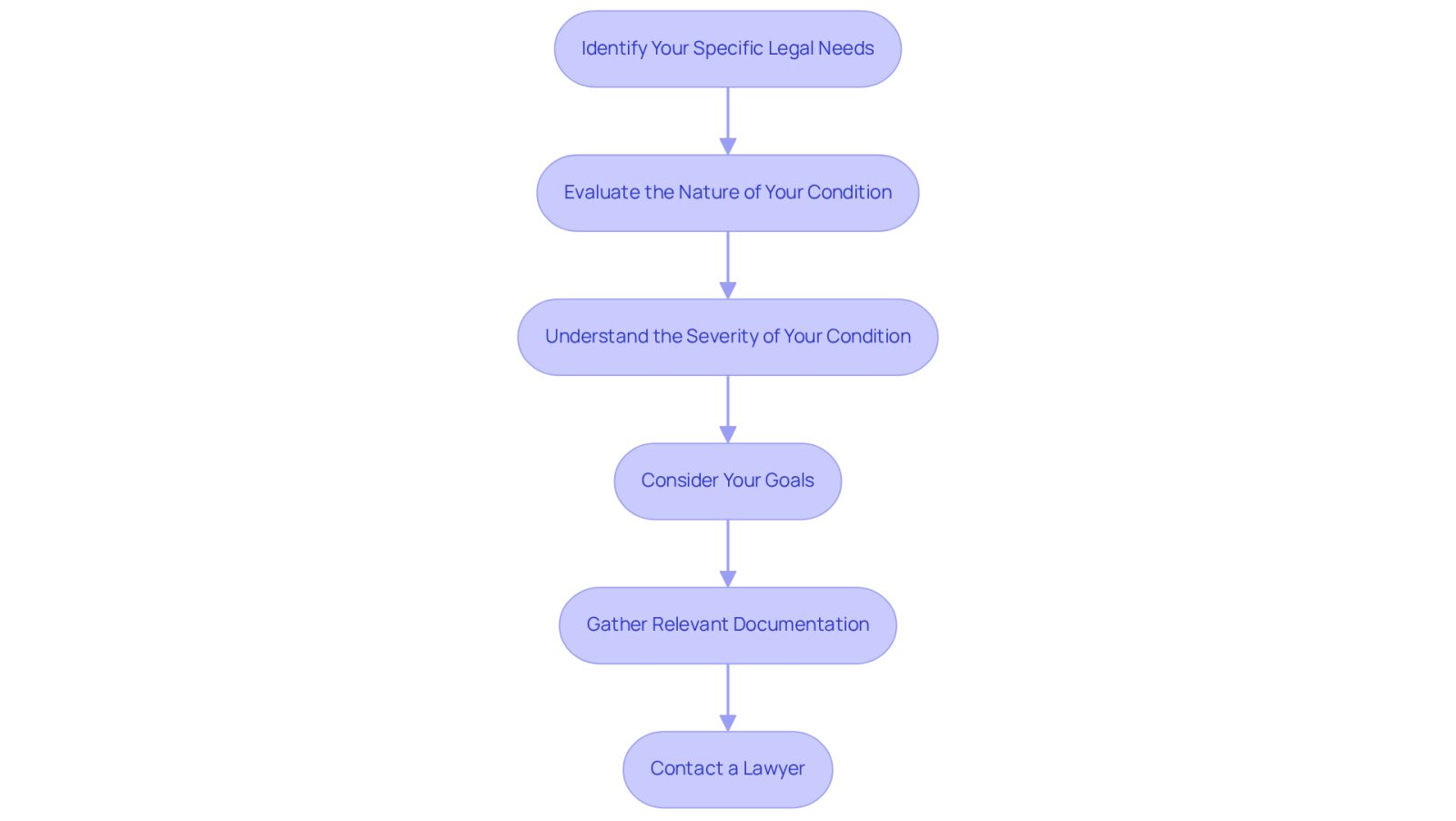
Finding the right brain injury lawyer can feel daunting, especially when you’re already dealing with the emotional toll of your condition. Understanding your legal needs is a crucial first step in finding the right brain injury lawyer for you.
- Evaluate the Nature of Your Condition: Determine if your brain damage resulted from an accident, medical malpractice, or another form of negligence. Understanding the cause helps you find a brain injury lawyer who specializes in that area, as brain injuries from accidents and medical negligence present different legal challenges.
- Understand the Severity of Your Condition: Different brain injuries can have very different impacts on your life, and it’s important to understand how that affects your legal situation. For instance, a traumatic brain injury (TBI) may require a legal expert with knowledge in complex medical cases, as these conditions often demand thorough documentation and a solid grasp of medical science to support claims.
- Consider Your Goals: Clarify what you aim to achieve through legal action. Are you seeking compensation for medical expenses, lost wages, or pain and suffering? When you know what you want, it becomes easier to find the right support to help you through this challenging time.
- Gather Relevant Documentation: Compile all pertinent documents, including medical records, accident reports, and any other materials that detail your condition and its impact on your life. Having solid evidence can make a world of difference in your TBI case, giving you a stronger chance at the support you deserve.
Additionally, after an accident, it is critical to contact The Law Offices of Evan W. Kohn immediately to ensure your rights are protected. Mr. Kohn is available 24/7, and your consultation is free. Remember, do not admit responsibility or sign any documents until you have spoken with him. By taking these steps, you’re not just protecting your rights; you’re also ensuring that you have the support you need during this challenging journey.
Evaluate Qualifications and Experience
Finding the right brain injury lawyer after a traumatic brain injury can feel overwhelming, but it’s a crucial step toward your recovery. Let’s explore some important factors to keep in mind as you search for the right attorney:
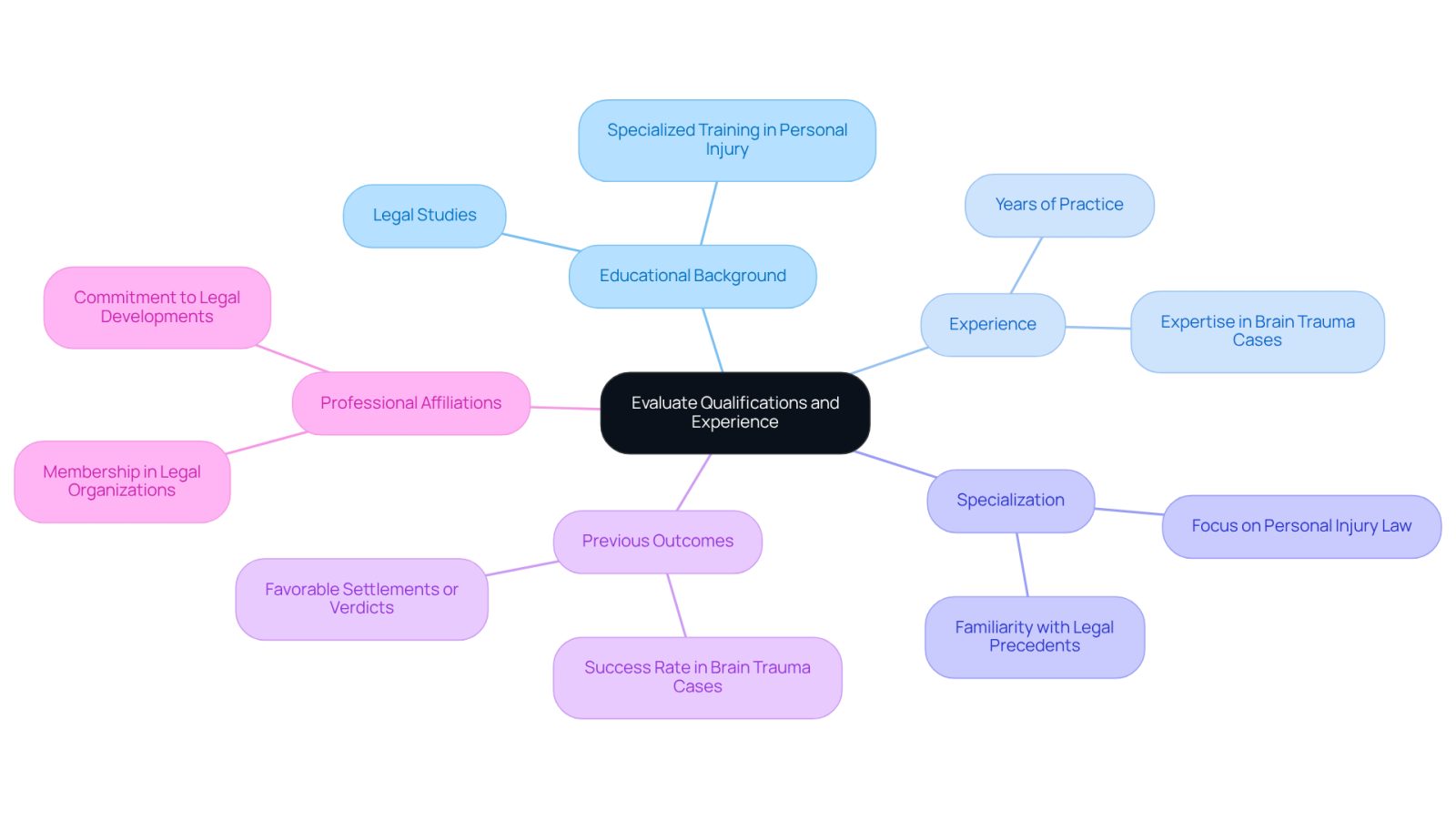
- Check Educational Background: Look for attorneys with a solid educational foundation in legal studies, especially those who have specialized training in personal injury or medical malpractice. This specialized education shows they understand the complexities involved in brain trauma cases.
- Review Experience: Take a moment to evaluate how long the brain injury lawyer has been practicing and their specific expertise with brain trauma cases. Attorneys who have a proven track record in similar situations are more likely to navigate the complexities effectively, as traumatic brain injuries often require a nuanced understanding.
- Seek expertise from a brain injury lawyer to ensure that the attorney focuses on personal injury law, particularly in cases of brain traumas. This specialization indicates they are familiar with the latest legal precedents and medical knowledge relevant to your case, which is vital since unintentional injuries are the third leading cause of death in the U.S.
- Review Previous Outcomes: Don’t hesitate to ask the brain injury lawyer about their success rate in handling brain trauma cases. Lawyers who have achieved favorable settlements or verdicts in the past are generally more effective advocates for your rights. It’s worth noting that 90% of personal injury lawsuits that go to trial result in success for the plaintiff, underscoring the importance of choosing a skilled lawyer.
- Check Professional Affiliations: Membership in professional organizations, like the American Association for Justice or local bar associations, shows a commitment to staying updated on legal developments and best practices in the field.
By considering these factors, you can narrow down your options to legal professionals who are well-equipped to handle your case. With the right support, you can navigate this challenging time and secure the justice you deserve.
Conduct Interviews and Ask Key Questions
Finding the right brain injury lawyer can feel like an uphill battle, especially when you’re already dealing with so much. After narrowing down your list of potential attorneys, it’s time to conduct interviews. Here are some steps to help you make an informed choice:
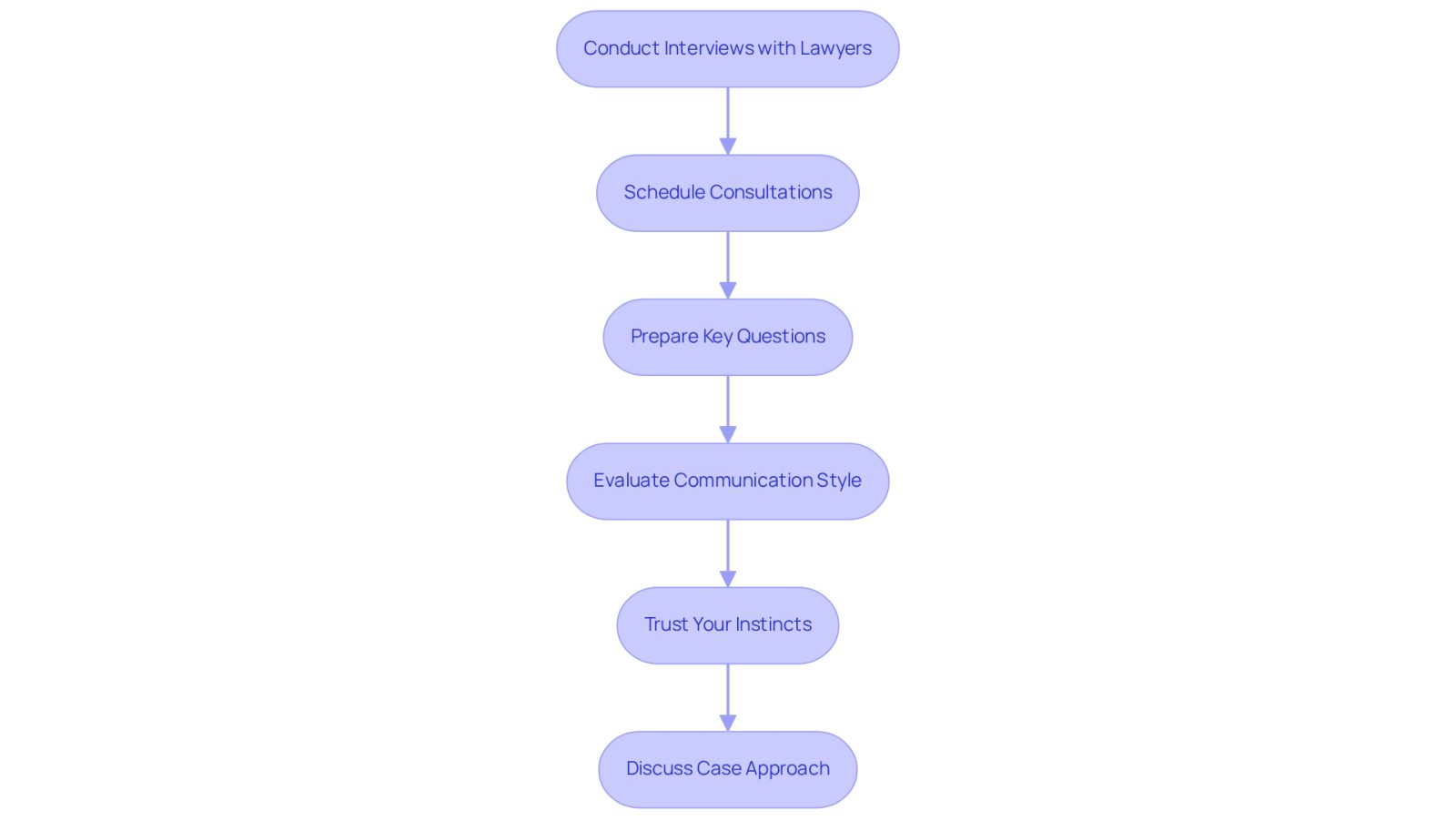
- Consider scheduling consultations: Most lawyers offer free initial consultations. This is a great opportunity to share your story and explore your options in detail.
- Think about the questions that matter most to you: Before the meeting, compile a list of essential questions to ask. You might want to include:
- What is your experience with brain injury cases?
- How do you handle situations similar to mine?
- What is your success rate in securing settlements for clients?
- How will you communicate with me throughout the process?
- What challenges do you foresee in my case?
- Pay attention to how the attorney communicates: It’s important that their communication feels like a conversation, not a lecture. Are they clear and responsive? Do they take the time to explain complex legal concepts in a way you can understand?
- Trust your instincts: You should feel at ease talking about private aspects of your condition and confident in the attorney’s ability to represent you successfully.
- Talk about how they plan to approach your case: A thoughtful strategy can show their dedication to your well-being and indicate their level of expertise.
By conducting thorough interviews and asking these key questions, you can confidently choose the brain injury lawyer who is the best match for your brain trauma situation. Choosing the right attorney can make all the difference in your journey toward recovery and peace of mind.
Understand Fee Structures and Payment Options
Navigating the fee structures and payment options can feel overwhelming, especially when you’re already dealing with the aftermath of an accident. Here’s how to approach this important aspect:
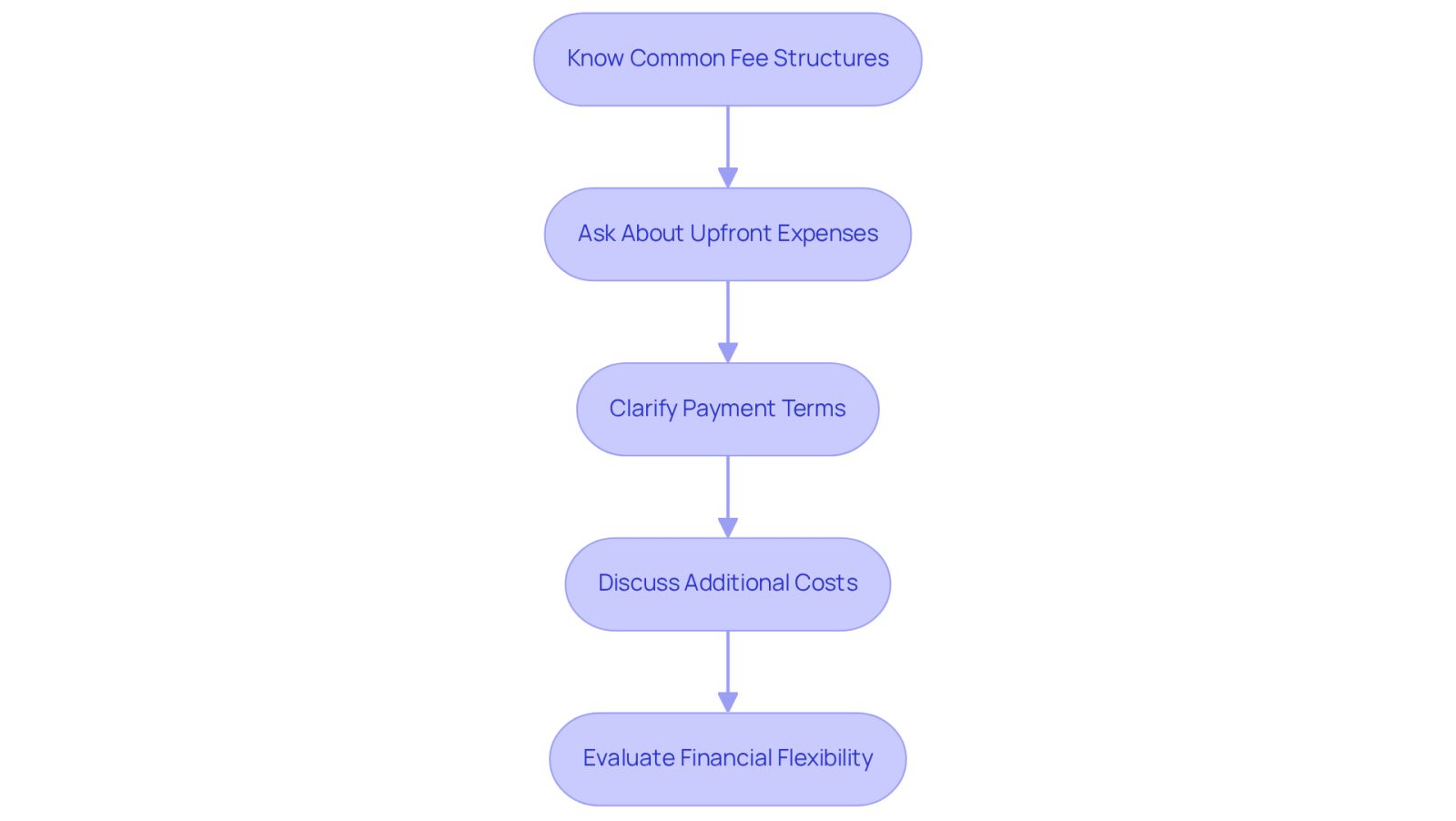
- Know Common Fee Structures: Most personal injury attorneys work on a contingency fee model, meaning they only get paid if you win your claim. Usually, the fee falls between 25% and 40% of your settlement, and it can be higher if your case goes to trial. The contingency fee model offers several advantages to clients, making it a favorable option for many.
- Ask About Upfront Expenses: Most attorneys won’t ask for payment upfront, but some might need you to cover certain costs, like filing fees or expert witness payments, even if they operate on a contingency basis. Clients should know that they don’t have to pay upfront legal costs in contingent payment arrangements, which can ease some of the financial burden you might be feeling.
- Clarify Payment Terms: Make sure you understand when and how the lawyer will be compensated. Typically, fees are deducted from your settlement, but it’s essential to confirm this with your lawyer to avoid any surprises. A written payment agreement will outline all terms regarding attorney’s fees and case expenses before legal representation begins, ensuring clarity.
- Discuss Additional Costs: Be proactive in asking about any potential additional costs that may arise during the legal process, such as court fees, medical record retrieval, or expert witness fees. Understanding these expenses upfront can help you budget effectively and prepare for any financial implications.
- Evaluate Financial Flexibility: Some attorneys may offer flexible payment plans or options for clients who may struggle with upfront costs. Discuss these options during your consultation to find a solution that works for your financial situation.
By taking the time to understand these financial aspects, you empower yourself to make informed decisions that can ease your journey toward recovery.
Conclusion
Choosing the right brain injury lawyer can feel overwhelming, especially when you’re already facing the challenges of recovery. It’s crucial to take the time to understand your unique legal needs and find a lawyer who truly understands your situation. This can make a world of difference in your recovery journey.
Throughout this guide, we’ve shared important insights about:
- Assessing the nature and severity of your brain injury
- Clarifying your goals
- Ensuring that the attorney you choose has the necessary expertise and a proven track record in handling similar cases
Remember, open communication and transparency regarding fees are vital, as they contribute to a more empowering legal experience.
Your choice in legal representation can shape not just your case, but your entire recovery journey, so take this step with care and intention. By following these steps, you can secure the legal support you need and lay the groundwork for a successful recovery. Empower yourself through knowledge and proactive decision-making – choose wisely, advocate for your rights, and ensure that your voice is heard in the pursuit of justice.
Frequently Asked Questions
What should I identify before finding a brain injury lawyer?
You should identify your specific legal needs, which include evaluating the nature and cause of your brain injury, understanding its severity, clarifying your goals for legal action, and gathering relevant documentation.
How can the nature of my brain injury affect my choice of lawyer?
The nature of your brain injury, whether it resulted from an accident, medical malpractice, or another form of negligence, helps you find a lawyer who specializes in that specific area, as different causes present different legal challenges.
Why is it important to understand the severity of my brain injury?
Understanding the severity of your brain injury is crucial because it impacts your legal situation and may require a lawyer with expertise in complex medical cases, especially for conditions like traumatic brain injury (TBI) that need thorough documentation and medical knowledge.
What goals should I consider when pursuing legal action for a brain injury?
You should clarify your goals, such as seeking compensation for medical expenses, lost wages, or pain and suffering, as knowing what you want helps in finding the right legal support.
What kind of documentation should I gather before consulting a lawyer?
You should compile all pertinent documents, including medical records, accident reports, and any other materials that detail your condition and its impact on your life, as solid evidence strengthens your case.
When should I contact a lawyer after a brain injury?
It is critical to contact The Law Offices of Evan W. Kohn immediately after an accident to ensure your rights are protected. Mr. Kohn is available 24/7 for a free consultation.
What should I avoid doing before consulting a lawyer?
You should avoid admitting responsibility or signing any documents until you have spoken with a lawyer, as this can impact your rights and legal situation.
List of Sources
- Identify Your Specific Legal Needs
- 10 Strategies That Will Help You Navigate a Brain Injury Lawsuit | Crosley Law Firm
- 7 Reasons Why Brain Injury Cases Require Specialized Legal Representation | Deno Millikan Law Firm, PLLC
- TBI Data
- Navigating TBI Legal Cases: Common Legal Challenges and Outcomes
- Guide to Selecting an Attorney after Brain Injury | Brain Injury Preferred Attorney
- Evaluate Qualifications and Experience
- 2026 Personal Injury Law Statistics: What the Data Reveals
- Preferred Attorneys
- bronxlawfirm.net
- TBI Lawyers: Comprehensive Guide to Legal Representation
- Guide to Selecting an Attorney after Brain Injury | Brain Injury Preferred Attorney
- Conduct Interviews and Ask Key Questions
- 53+ Personal Injury Statistics For 2026 | Rev
- Guide to Selecting an Attorney after Brain Injury | Brain Injury Preferred Attorney
- loshaklaw.com
- Always Ask These Questions Before Hiring a Traumatic Brain Injury Lawyer
- Understand Fee Structures and Payment Options
- Guide to Selecting an Attorney after Brain Injury | Brain Injury Preferred Attorney
- How Much Does It Cost for a Brain Injury Lawyer? | Raynes & Lawn
- Contingency Fee Cases | Personal Injury Attorneys
- How Much Does It Cost To Hire a Personal Injury Lawyer in Texas?
- Understanding Personal Injury Lawyer Fee Structures and Costs
Hurt like this?
We handle Brain & Spinal Injuries cases in the Bronx.
Evan W. Kohn, Esq. — more than 35 years of Bronx personal-injury practice. Reading about it only goes so far; a free consultation tells you what actually applies to your case.