
Medical Malpractice
5 Steps to Choose the Right Malpractice Medical Lawyers

Introduction
Choosing the right malpractice medical lawyer can feel overwhelming, especially when you’re faced with the complexities of healthcare negligence. With nearly half of doctors encountering lawsuits during their careers, it’s crucial to grasp the intricacies of medical malpractice law if you’re seeking justice after a medical mishap. This guide aims to provide a supportive roadmap for finding the legal representation that best fits your needs, focusing on essential factors like:
- The specifics of your case
- The qualifications of the attorney
- Their fee structures
But what do you do when those who are meant to heal can also inflict harm? This article explores the vital steps to take when selecting a malpractice lawyer, empowering victims to advocate for their rights and secure the compensation they truly deserve.
Understand Medical Malpractice Law
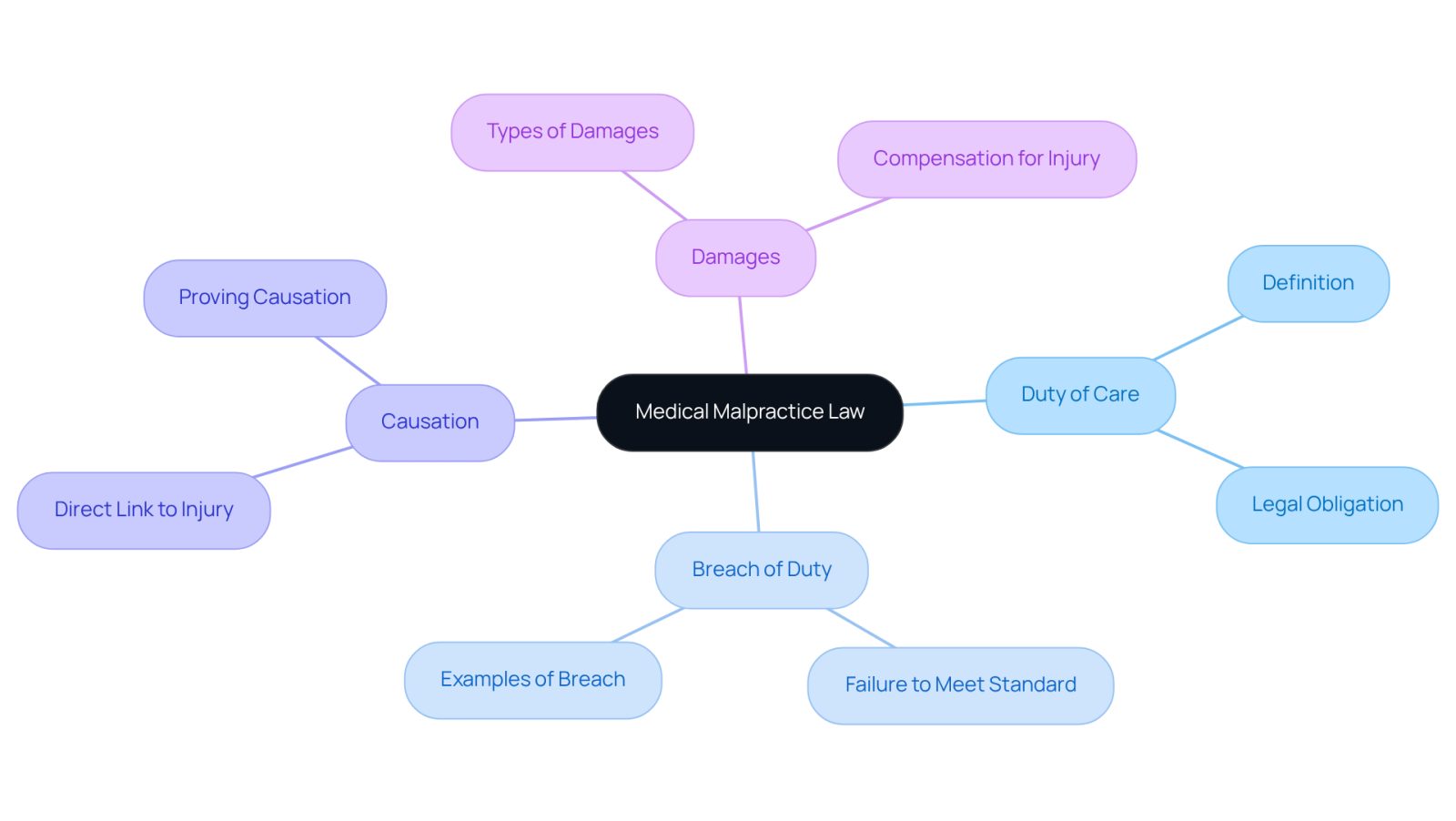
Understanding healthcare negligence is crucial when searching for malpractice medical lawyers to help with your situation. Medical negligence happens when a healthcare professional doesn’t provide the level of care that a competent provider should, leading to harm for the patient. The key elements of a medical malpractice case include:
- Duty of Care: The healthcare provider had a legal obligation to care for you.
- Breach of Duty: The provider failed to meet the expected standard of care.
- Causation: This failure directly caused injury to you.
- Damages: You suffered damages as a result of that injury.
Getting familiar with these concepts is vital for effectively sharing your experience during consultations with potential malpractice medical lawyers. It’s important to note that around 49% of doctors have reported being involved in 2-5 lawsuits, highlighting how common these legal claims can be. In fact, New York has recorded the highest number of healthcare negligence reports, totaling 16,688 from 2009 to 2018. This underscores the importance of understanding your rights and the legal landscape surrounding healthcare negligence.
For personalized guidance, consider reaching out to Bronx lawyer Evan W. Kohn for a complimentary consultation about healthcare negligence. With over 35 years of experience, he is committed to helping victims like you secure the compensation you deserve. Plus, remote consultations via Zoom and Skype are available, making it easier for you to get the help you need.
Assess Your Specific Case Needs
- Type of Malpractice: Start by recognizing the nature of your case. Medical negligence can take many forms, such as misdiagnosis, surgical errors, and medication mistakes. Misdiagnosis alone accounts for about 32% of successful legal claims, highlighting its prevalence and the serious impact it can have on patient outcomes. For example, consider a young woman who faced irreversible health damage because her viral infection was misdiagnosed, when in fact, she had a severe autoimmune disease. This illustrates just how critical accurate diagnosis is for patient well-being.
- Severity of Injury: Take a moment to assess the extent of your injuries, as this plays a crucial role in your claim. Compensation for major permanent injuries can often exceed $451,281, while cases involving death due to malpractice typically average around $395,509. By understanding the severity of your injury, you can better express your needs and ensure they are heard.
- Desired Outcomes: It’s important to clearly define what you hope to achieve through legal action. Whether you’re seeking reimbursement for healthcare costs, lost income, or emotional distress, having specific goals will guide your discussions with potential attorneys. For instance, victims of surgical errors frequently seek compensation for both economic and non-economic damages, reflecting the deep impact these events have on their quality of life.
By clarifying these aspects, you can effectively communicate your needs to potential attorneys, helping you find one who specializes in your unique situation.

Evaluate Qualifications and Experience
Choosing the right malpractice medical lawyers can feel overwhelming, especially when you’re already dealing with the emotional toll of a healthcare mishap. It’s crucial to take a moment to evaluate their qualifications and experience, focusing on a few key areas that can make all the difference in your case.
- Checking Credentials: Start by confirming their educational background, licenses, and any specialized certifications in medical malpractice law. This step is vital; it ensures that your malpractice medical lawyers possess the legal knowledge and expertise necessary to navigate the complexities of your situation.
- Reviewing Experience: Look for attorneys who have successfully handled cases similar to yours. Research shows that hiring malpractice medical lawyers with significant experience in health-related negligence can greatly improve your chances of a favorable outcome. For example, a recent case resulted in a $10 million settlement due to a misdiagnosis, which underscores the importance of having malpractice medical lawyers as specialized legal representation on your side.
- Assessing Reputation: Take the time to investigate client testimonials and reviews. Understanding a lawyer’s standing in the legal community can provide insight into their effectiveness and client satisfaction. As legal specialists often remind us, ‘When healthcare providers engage in clinical negligence, you have choices and should consider consulting malpractice medical lawyers to assert your rights.’ This sentiment highlights the importance of selecting malpractice medical lawyers who are respected and trusted.
- Inquiring About Results: Don’t hesitate to discuss their success rates in healthcare liability cases. Statistics reveal that physicians win about 70-80% of jury trials, making it essential to choose an attorney with a proven track record of securing settlements or favorable verdicts for their clients. This understanding of the legal landscape is crucial for anyone considering action against a negligent healthcare provider.
By taking these steps, you can refine your choices and find malpractice medical lawyers who are not only capable but also genuinely committed to advocating for your interests in the challenging world of medical malpractice claims.

Conduct Initial Consultations
Once you’ve narrowed down your list of potential attorneys, it’s essential to set up initial meetings to see if they’re the right fit for your unique situation. Here’s how to make the most of these important conversations:
- Prepare Your Questions: Ask about their experience with cases like yours, their strategy for handling your situation, and what timeline you might expect. Understanding their approach can give you insight into their expertise and how they might support you.
- Discuss Communication: It’s vital to clarify how often you can expect updates and how available they are for your questions. Good communication is key in legal matters, and knowing how responsive they are can help ease your worries.
- Assess Your Comfort Level: Pay attention to how comfortable you feel discussing your situation with the attorney. A skilled attorney should foster an environment where you feel safe sharing sensitive information.
- Evaluate Professionalism: Observe their demeanor and professionalism during your meeting. How they treat you and their overall conduct can reveal their commitment to your case.
These consultations are a crucial chance to see if the attorney aligns with your needs and expectations, which can significantly impact your decision in choosing the right legal representation. At The Law Offices of Evan W. Kohn, we offer free, no-obligation consultations, ensuring you only pay when we secure compensation for you. Initial meetings usually last from a few minutes to a couple of hours, so be ready to discuss your situation in detail. Additionally, understanding the attorney’s fee structure is vital; ask about their billing practices to avoid any surprises down the line. Having the right legal support from malpractice medical lawyers can greatly influence your outcome, especially in healthcare negligence cases, where plaintiffs secure settlements in 91% of negligent instances. With over 35 years of experience, Evan W. Kohn is committed to providing compassionate legal support to accident victims in the Bronx and surrounding areas.

Understand Fee Structures and Payment Options
Before you hire malpractice medical lawyers, it’s essential to grasp their fee structures and payment options. This understanding can make a significant difference in your journey toward justice.
Many malpractice medical lawyers operate on a contingency fee basis, meaning they only receive payment if you win your case. Typically, these fees range from 25% to 40% of the settlement amount. If your case resolves before litigation, you might see lower fees of 25% to 33%. However, if your situation requires extensive legal work and litigation, the fees could rise to 33% to 40%. For example, if you settle for $100,000 with a 33% contingency fee, the lawyer would take $33,000, leaving you with a net recovery of $67,000 after expenses. Understanding this can help you feel more secure in your financial planning.
- Retainer Fees: Some lawyers might ask for a retainer fee upfront to secure their services. While this is less common in healthcare malpractice cases compared to other legal areas, it’s still important to know that most malpractice medical lawyers prefer contingency arrangements. This preference aligns their interests with yours, ensuring they’re motivated to achieve the best outcome for you.
- Hourly Rates: Although it’s rare, some attorneys may charge by the hour. It’s crucial to clarify this during your initial consultation to avoid any surprises down the line. Knowing how you’ll be charged can alleviate some of the stress associated with legal fees.
- Additional Costs: Don’t forget to ask about any potential additional costs, such as court fees, deposition expenses, and expert witness fees. These can significantly affect your net recovery, so understanding who covers these expenses is vital. For instance, clients might encounter unexpected costs like medical liens from healthcare providers claiming a portion of settlement proceeds, which are separate from attorney fees. Being aware of these possibilities can empower you to navigate your legal journey with greater confidence.
By staying informed about these financial aspects, you can make educated decisions and help prevent unexpected costs as you move forward.

Conclusion
Choosing the right malpractice medical lawyer is more than just a legal step; it’s a crucial part of reclaiming your voice and seeking justice after experiencing healthcare negligence. It can feel overwhelming, but understanding the intricacies of medical malpractice law, assessing your specific needs, and evaluating a lawyer’s qualifications can empower you to navigate this challenging journey with confidence. Each of these steps is essential in ensuring that you find legal representation that truly understands your unique situation and needs.
It’s vital to be informed about medical malpractice law and recognize the different types of malpractice that can occur. Knowing the key elements of a medical malpractice case, like duty of care and damages, allows you to express your experiences more effectively. Moreover, taking the time to evaluate a lawyer’s credentials and engaging in thorough consultations can significantly influence the outcome of your case, providing you with the support you deserve.
While the path through medical malpractice claims may seem daunting, taking these proactive steps can lead to a more favorable outcome. It’s important to seek out qualified malpractice medical lawyers who are not only dedicated to advocating for your rights but also committed to providing compassionate support throughout this process. By doing so, you can reclaim your power and work towards achieving the justice you rightfully deserve.
Frequently Asked Questions
What is medical malpractice?
Medical malpractice occurs when a healthcare professional fails to provide the level of care that a competent provider should, resulting in harm to the patient.
What are the key elements of a medical malpractice case?
The key elements include: – Duty of Care: The healthcare provider had a legal obligation to care for you. – Breach of Duty: The provider failed to meet the expected standard of care. – Causation: This failure directly caused injury to you. – Damages: You suffered damages as a result of that injury.
How common are medical malpractice lawsuits?
Approximately 49% of doctors have reported being involved in 2-5 lawsuits, indicating that these legal claims are quite common.
Which state has the highest number of healthcare negligence reports?
New York has recorded the highest number of healthcare negligence reports, totaling 16,688 from 2009 to 2018.
What should I consider when assessing my specific case needs?
Consider the type of malpractice (such as misdiagnosis, surgical errors, or medication mistakes), the severity of your injuries, and your desired outcomes from legal action.
How prevalent is misdiagnosis in medical malpractice claims?
Misdiagnosis accounts for about 32% of successful legal claims, highlighting its significance in patient outcomes.
What is the potential compensation for injuries caused by medical malpractice?
Compensation for major permanent injuries can often exceed $451,281, while cases involving death due to malpractice typically average around $395,509.
Why is it important to define desired outcomes in a malpractice case?
Clearly defining your desired outcomes, such as reimbursement for healthcare costs or emotional distress, helps guide your discussions with potential attorneys and ensures your needs are addressed.
Who can I contact for personalized guidance on healthcare negligence?
You can reach out to Bronx lawyer Evan W. Kohn for a complimentary consultation about healthcare negligence. He has over 35 years of experience and offers remote consultations via Zoom and Skype.
List of Sources
- Understand Medical Malpractice Law
- Medical Malpractice
- New Medical Malpractice Statistics by State
- 3 new malpractice laws in 2026 – Becker’s ASC
- The Biggest Medical Malpractice Verdicts of 2026
- Assess Your Specific Case Needs
- Medical Malpractice Statistics In The USA | The Beasley Firm
- hoffersheremet.com
- How Common is Medical Malpractice? | Facts and Statistics
- 2026 Medical Malpractice Statistics
- 14 Inspirational Quotes About Personal Injury Law, Justice, and Fighting for What’s Right – Keys Law Offices, PC
- Evaluate Qualifications and Experience
- finchmccranie.com
- Important Medical Malpractice Statistics
- conboyinjurylaw.com
- Checking your browser – reCAPTCHA
- The Benefits of Hiring a Specialized Medical Malpractice Law Firm
- Conduct Initial Consultations
- lawlion.com
- Your First Attorney Consultation: What to Expect – Lawrence Law
- Checking your browser – reCAPTCHA
- How Common is Medical Malpractice? | Facts and Statistics
- How To Prepare for a Lawyer Consultation | MetLife
- Understand Fee Structures and Payment Options
Hurt like this?
We handle Medical Malpractice cases in the Bronx.
Evan W. Kohn, Esq. — more than 35 years of Bronx personal-injury practice. Reading about it only goes so far; a free consultation tells you what actually applies to your case.