
Bus & Subway Accidents
Accidental Death Lawyer in New York: A Fact-and-Timing Consultation Decision Guide
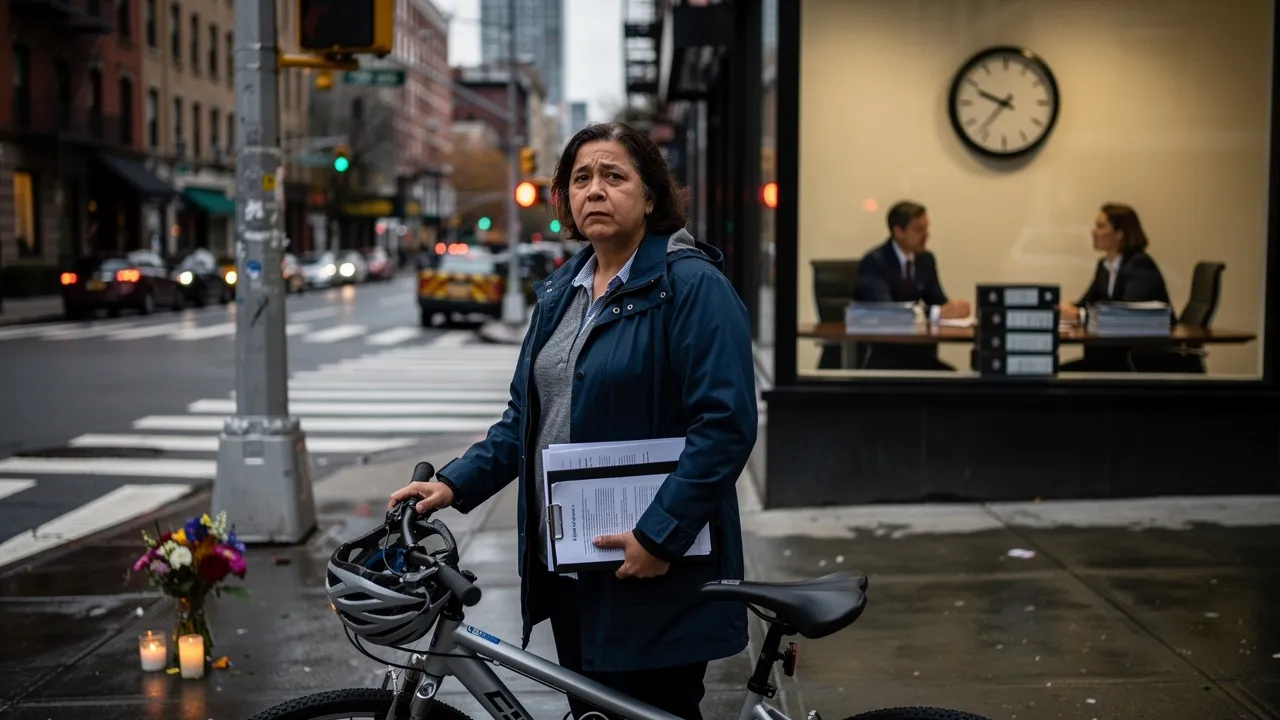
Start a fact-and-timing map before choosing the next step
Start with a fact-and-timing map when you do not yet know who may be responsible, whether a public entity is involved, who has authority to act for the estate, or which timing rules apply. The map is an organizing record, not a finding that anyone is liable. It places the event, connected parties, representative information, location, and dates in view for a New York legal review.
New York law provides that a duly appointed personal representative may bring a wrongful-death action when a wrongful act, neglect, or default caused the death and the decedent is survived by distributees. That rule makes representative status part of the initial review, not a detail to address after every other issue.
The map is especially useful when any of these conditions applies:
- The account of what happened is incomplete, disputed, or based on information from several people.
- A driver, property owner, employer, contractor, medical provider, business, or public entity may have a connection to the event, but the responsible party is not clear.
- The death occurred in the Bronx, elsewhere in New York City, another New York county, or New Jersey and you are unsure which jurisdictional questions need to be addressed first.
- You do not know whether an executor or administrator has been appointed or who may act for the estate.
- You have received insurance, settlement, release, or other legal documents and have not had them explained before signing.
- You are worried that a deadline or notice requirement may apply, even though you do not know which rule fits the facts.
The New York State Bar Association says early consultation could prevent serious problems later and recommends consulting an attorney before, rather than after, a legal problem. When the map still has unresolved responsibility, representative, government, or timing fields, those are reasons to request current review; the map does not decide the claim.
Separate the fatal event from the wrongful-death question
Use the fact-and-timing map as a separation tool, not as a prediction of liability. It keeps four questions distinct:
- What was the fatal event? The event account records what happened, when and where it occurred, who was involved, and what remains uncertain. Calling a death accidental describes the event; it does not by itself establish that another person or entity committed a wrongful act.
- Why might the event raise a wrongful-death question? New York law provides that a duly appointed personal representative may bring a wrongful-death action when a wrongful act, neglect, or default caused the death and the decedent is survived by distributees. Whether those facts are present in a particular matter requires current legal review; this record does not decide liability.
- Who may have authority to act? The record keeps estate information, appointment information, and the family relationship together without assuming that a relative is the duly appointed personal representative. That status is a fact for review.
- Which procedure and timing branch needs attention? The record places the incident location, possible defendant, public-entity connection, date of death, appointment dates, notices, and other relevant dates together. New York law and court guidance describe different requirements for the general wrongful-death statute, New York State claims, and municipal claims. A general timing statement should not be applied before the defendant, location, claim type, and facts are reviewed.
The supporting record sits beside the question it may help answer: police or official reports, photographs, witness information, medical and death records, insurance correspondence, and estate or representative papers. Separating the event, the possible claim, authority to act, and procedure gives a lawyer a clearer starting point without turning an accidental death into a conclusion about liability.
For each entry, the record distinguishes documented information, a report from someone else, and an unknown point. The person or record behind a documented or reported item is noted, while an unknown item is paired with the question it leaves open. A completed separation record can accompany a request for a consultation, where the specific facts, defendant, representative position, and timing issues can receive current review.

Map the event before naming a legal claim
Use the following questions to keep the description and the legal theory separate:
- What happened? Record the sequence in plain language, including the date, approximate time, location, people present, and events before and after the fatal incident.
- What may have gone wrong? Identify the condition, act, omission, collision, equipment issue, workplace event, medical event, or other circumstance that needs examination. Do not label it negligence simply because the outcome was devastating.
- Who may have a connection? List each person, business, property owner, employer, contractor, driver, public entity, or other organization linked to the place, equipment, conduct, or event.
- Who may act? Record whether an executor or administrator has been appointed and preserve any estate papers that identify that person.
- What remains unknown? Mark missing reports, conflicting accounts, unidentified witnesses, and assumptions separately from facts you personally know.
A lawyer can then assess whether the facts support further investigation. Your task before that review is to preserve a clear account, not to prove the claim yourself.
Key Highlights
Five points should guide your first decision:
- Do not treat the death alone as proof of liability. A possible wrongful-death claim depends on the facts connecting a wrongful act, neglect, or default to the death, along with the identity of the proper representative and defendant.
- Identify the responsible-party question early. A private individual or business, New York State, a municipality, a school district, or another public entity may lead to different procedural questions.
- Put timing near the front of the review. New York materials describe a general wrongful-death period as well as separate state and municipal notice procedures. The defendant and the type of claim matter.
- Gather what already exists. Names, contact details, incident records, photographs, witness information, medical and death-related records, insurance correspondence, and estate papers can give the first conversation a usable factual base.
Turn those points into a short preparation task. Write the death date, incident location, known participants, possible defendants, representative information, and every deadline concern on one page. Put a question mark beside anything you cannot confirm. Bring the page and the related papers to a lawyer rather than filling gaps with guesses.
Build a responsibility map from the incident facts
A responsibility map connects the event to every person and entity that may need to be identified, without deciding liability before the facts and records are reviewed. Start with the decedent and the incident, then work outward. Before the first interview, write down the names, addresses, telephone numbers, and relevant facts for everyone involved, and have all case-related papers available.
Create five columns in a notebook or digital document:
- Person or entity: Include names as they appear on reports, policies, notices, invoices, contracts, or correspondence.
- Connection to the event: Record whether the person was a driver, witness, property owner, employer, contractor, medical provider, public employee, tenant, business, or family contact.
- Known contact details: Add addresses, phone numbers, email addresses, insurer information, and the source of each detail.
- What the person or entity may know: Note observations, control of a location, ownership or maintenance information, employment details, or post-incident communications.
- Open question or supporting record: Identify what still needs confirmation and which document, photograph, report, or witness may address it.
A missing document is one item to note: record who may have it and when you last saw or requested it. Write down that the record is missing, who may have it, and when you last saw or requested it.
Use the map to distinguish confirmed connections from open questions. Record the location, the people or entities tied to it, and the facts you personally know; mark assumptions and missing information separately. These categories are prompts for factual organization, not conclusions about responsibility.
End the map with a boundary: write who may be connected, preserve the records you can access, and let legal review determine which relationships matter.

Map the location and possible public connection
Put the incident location in the map before assessing the legal theory. Record the exact address, borough or county, and state. Then note whether the location, road, sidewalk, building, school, transit system, worksite, or other setting was owned, operated, maintained, or controlled by a city, county, New York State, school district, or another public entity.
For a municipal branch, the cited New York Courts guidance says a Notice of Claim must be served before starting an action or special proceeding against a municipal entity for covered personal injury, wrongful death, or property damage claims. The same guidance states that a municipal Notice of Claim must normally be served within 90 days after the claim arises, usually measured from the accident or other event. If a public connection is possible, record it and raise it promptly with a lawyer; do not assume that an ordinary private-defendant procedure applies.
Use these branches to organize the next step:
- Possible city, county, or school-district involvement: Record the public entity’s name, the exact location, the date of the event, and any notice or correspondence. Ask a lawyer to assess the Notice of Claim procedure before treating a general deadline as sufficient. That is the action for this branch.
- Possible New York State involvement: Record the state agency, facility, roadway, employee, or other connection and identify whether an executor or administrator has been appointed. Ask which Court of Claims procedure applies. Do not substitute the municipal notice example for the state procedure.
- Private location or private actor: Record the owner, operator, employer, contractor, driver, or insurer and preserve the incident records. Ask which claim type and timing rules fit the identified defendant.
- New Jersey location: Mark the New Jersey location clearly and do not apply the New York examples in this guide as though they govern the matter. Seek review under the law and procedure connected to the actual location.
A location branch is complete when you have written the address, possible controlling entity, state, and unresolved government question.
When the public connection is uncertain, preserve the uncertainty instead of choosing a branch based on an assumption. Compare the names and locations appearing in incident reports, notices, insurance communications, and other records, and note where those records do not match. Distinguish the entity that may own, operate, maintain, employ, or control something from the person or business that was present at the event; those may be different questions for legal review. If both private and public connections remain possible, keep both branches in the map and identify the record or fact that could separate them. This makes the location review more useful without treating a public setting or a private relationship as proof of responsibility.
Add authority and dates to the map
The general New York wrongful-death statute and a special claim against New York State describe different timing structures. The cited statute generally states that a wrongful-death action must be commenced within two years after the decedent’s death, with a separate two years and six months period for the specified September eleventh terrorist-attack exception. For the New York State claim procedure described in the Court of Claims Act passage, an executor or administrator must file and serve the claim upon the attorney general within 90 days after appointment unless a written notice of intention is served within that time; the passage also states a two-year-after-death outside period.
Those statements cannot be converted into one universal deadline. The relevant defendant, representative status, claim type, location, and procedural route must be confirmed before a lawyer applies them to your facts. Write down every date you know, including the death date, appointment date, incident date, notice date, and date of any insurance or government communication. Then ask which date controls the question being reviewed.
Do not wait for perfect estate paperwork before raising the issue. Give the lawyer the information you have, identify what is missing, and explain any disagreement or uncertainty about representative status. The supported action is to obtain a fact-specific review of authority and timing together; neither question should be assumed from a family relationship or a single date.
Preserve the timing branch without treating it as a deadline
Keep the timing panel focused on warning points because the applicable procedure can depend on the defendant and the type of claim. The cited New York wrongful-death statute generally states a two-year period after the decedent’s death. The Court of Claims Act passage describes a New York State procedure involving 90 days after the executor’s or administrator’s appointment, a written notice-of-intention alternative, and a two-year-after-death outside period. New York Courts guidance describes a municipal Notice of Claim that must normally be served within 90 days after the claim arises before the action proceeds through the municipal route.
These examples show why a death date alone may not answer the timing question. A lawyer needs to know who may be sued, whether the defendant is public or private, whether an estate representative has been appointed, where the event occurred, and what notices or filings have already been made.
A municipal Notice of Claim has its own details. The cited New York Courts guidance lists a written and sworn notice, claimant and attorney information, the nature of the claim, when, where, and how it arose, and the claimed injuries or damages. For the municipal procedure described there, at least 30 days must elapse after a proper and timely Notice of Claim is served before a lawsuit can be instituted, and the initiating papers must recite timely service and passage of that period.
The same guidance says a court may allow a late municipal Notice of Claim, but an extension cannot exceed one year and 90 days. It identifies factors including actual knowledge of the essential facts, minority or incapacity, reliance on settlement discussions, an excusable error about the government’s identity, and prejudice to the government. Those factors describe a court’s possible review; they do not create permission to wait.
Use a timing worksheet rather than a single deadline box:
- Write the incident date and the date of death separately.
- Write the appointment date of the executor or administrator, if there is one.
- Identify every public entity that may be involved and the date you first learned of that connection.
- List notices, claims, court papers, insurance letters, settlement discussions, and requests for records.
- Mark whether any notice was sworn, where it was served, and who received it, if you know.
- Record the date of every conversation in which someone discussed a release, settlement, or extension.
- Put unknown dates in a separate section instead of estimating them.
Bring the worksheet to a lawyer and ask which procedure, defendant, and date control. Do not treat the examples in this section as a personal deadline or assume that a late-notice possibility protects a claim.
Before the consultation, turn the worksheet into a short chronology with five columns: date, event, source, uncertainty, and question. Keep the incident date, death date, representative-appointment date, notice date, and date of any government or insurance communication in separate rows. Label each timing example by the event from which it is described as running rather than placing all dates in one deadline box. If two records give different dates, preserve both entries and identify the conflict; do not silently select the date that seems most favorable. Bring the notices, letters, and available proof of service with the chronology. Ask the lawyer whether the notice was directed to the right entity, whether its contents and service need review, and which procedural route applies. These questions help organize current legal analysis without converting the worksheet into advice about the outcome.

Preserve the records behind each map entry
Organize the records that can clarify each important event, person, location, and date in the incident. The New York State Bar Association recommends having papers relating to the case available for the first interview.
Attach or list what you can from these categories:
- Identity and contact information: Names, addresses, phone numbers, email addresses, and relationships for family members, witnesses, drivers, employers, property contacts, public entities, and insurers.
- Incident records: Police or official reports, incident reports, emergency-service information, photographs, videos, dispatch records, and written accounts made close to the event.
- Witness material: Names and contact details, statements, messages, social-media posts, and notes identifying what each person personally observed.
- Medical and death records: Ambulance information, hospital records, treating-provider records, medical bills, death records, and information about the cause and timing of death that you already possess.
- Insurance and communications: Policies, claim numbers, adjuster letters, denial or reservation letters, settlement proposals, releases, emails, text messages, and notices from government entities.
- Estate and representative papers: A will, probate or administration filings, letters of appointment, and documents identifying the executor or administrator.
Arrange the file in date order, then create a short index. Label each item with its date, sender or creator, and a one-line description. Keep originals unchanged and save copies for the consultation. If a record is unavailable, write the name of the person or institution that may have it and the date you requested it.
Your file does not need to be complete before you speak with a lawyer. A missing report, unknown witness, or unavailable estate document is itself a fact to disclose. The useful preparation is a clear separation between records you have, records you requested, facts you remember, and questions you need answered.
Bring uncertainty and unfavorable facts to the first review
Separate your notes into four headings:
- Known: Facts supported by your memory, a document, a photograph, a report, or a witness you identify.
- Uncertain: Details you do not remember, dates you need to confirm, or information received from someone else.
- Conflicting: Accounts, records, or statements that disagree.
- Unfavorable: Facts that another party may use against the claim, including conduct, prior statements, possible consent, disputed location details, or gaps in care and documentation.
Do not delete an inconvenient message, rewrite an earlier account, coach a witness, or sign a release simply to create a cleaner story. Preserve the original material and explain the context to the lawyer.
Bring focused questions to the review:
- Who may be the proper defendant based on the incident and location?
- Who may bring the action, and what representative documents are needed?
- Which claim type or types should be examined separately?
- Does a city, county, state, school district, or other public entity change the procedure?
- Which dates and notices need immediate attention?
- Which records are missing, and who may have them?
- What should you avoid signing or doing before the facts are reviewed?
A lawyer can explain the strengths, weaknesses, open issues, and next steps after reviewing the specific facts. Your role is to give a complete account and identify the questions that need current legal analysis.
Add practical questions about the consultation itself: What information should be supplied first? Which missing record would be most useful to locate? Which dates or notices require immediate attention? If the discussion may lead to representation, what fee arrangement, terms, and expenses should be explained before any agreement is signed? The firm states that it offers consultations on a contingency basis, but the specific arrangement must be confirmed during the consultation. Asking for that explanation keeps a free initial conversation separate from a promise about representation, recovery, or the eventual handling of the matter. Before ending the conversation, write down the factual questions that remain open and the next steps the lawyer recommends for review.
Use the completed map to request a consultation
After the fact-and-timing map is assembled, access information helps determine how to request the review when a family is dealing with a death, travel limitations, hospital care, or an incident outside the immediate neighborhood. The specific fee arrangement, terms, and expenses can be confirmed during the consultation.
We serve clients in all five boroughs, as well as Westchester, Putnam, Rockland, Nassau, and New Jersey. Our office is located at 2000 White Plains Road in the Bronx. Those are access and location options, not a promise that a particular claim will be accepted, that a particular lawyer-client relationship will result, or that a claim will succeed.
Use the completed map to choose the contact format that lets you provide the incident summary and records without delaying the factual review. If travel is difficult, explain that when you make contact and ask about an available home or hospital visit. If you reach out outside ordinary business hours, have the death date, incident location, possible responsible parties, representative information, and timing concerns ready to state clearly.
Whether the conversation is remote or in person, bring the same completed map and organized records. Bring or send the same organized account, identify missing records, and disclose unfavorable facts. If the incident occurred in New Jersey, identify that location at the beginning so the legal review is directed to the proper jurisdiction rather than relying on New York examples.
A concise handoff can make the first contact more productive. Prepare one short paragraph stating what happened, when and where it occurred, who died, which people or entities may be connected, whether representative information is available, and which timing question concerns you most. Follow it with a list of the records you have and the records you have requested. Say plainly which parts come from your own knowledge and which came from another person or document. This format does not replace a full review, but it gives the lawyer a starting point and makes missing information visible. It also lets the family ask focused questions about the possible defendant, representative status, notices, and next steps rather than trying to reconstruct the entire event during the first conversation.
Take the prepared facts to current legal review
Only a qualified lawyer who reviews the specific facts can assess which defendant, claim type, representative issue, and timing rules apply. New York’s general wrongful-death period, New York State filing procedure, and municipal Notice of Claim process are separate examples, not a single answer for every family. Put your dates and documents in one file, identify what remains unknown, and take that file into the next legal conversation.
Questions families may ask before requesting a consultation
What should I gather before contacting an accidental death lawyer?
Before reaching out to a lawyer, compile relevant documents such as incident records, medical records, witness information, and any correspondence related to the case. This preparation will help facilitate a more productive initial consultation.
How does the timing of filing a wrongful death claim work in New York?
In New York, a wrongful death claim generally must be filed within two years after the decedent’s death. However, if the claim involves a municipal entity, a Notice of Claim must typically be served within 90 days of the incident. This is a general summary, not a personal deadline: the cited materials describe different procedures for private defendants, municipalities, and New York State, and the applicable accrual date, representative status, defendant, and claim type should be confirmed promptly with a New York lawyer.
Can I consult a lawyer if I am unsure about the details of the incident?
Yes, consulting a lawyer can be beneficial even if you are uncertain about the details. They can help clarify your situation and guide you on the next steps.
What options does The Law Offices of Evan W. Kohn offer for consultations?
The Law Offices of Evan W. Kohn offers free consultations and can arrange home or hospital visits for clients who are unable to travel. The firm also states that consultations are offered on a contingency basis and that it operates 24/7; the specific fee arrangement, terms, and expenses should be confirmed during the consultation.
How can I determine if a public entity is involved in my case?
To determine if a public entity is involved, consider the location of the incident and whether it occurred on public property or involved a government employee. This can affect the legal procedures and deadlines that apply.
Hurt like this?
We handle Bus & Subway Accidents cases in the Bronx.
Evan W. Kohn, Esq. — more than 35 years of Bronx personal-injury practice. Reading about it only goes so far; a free consultation tells you what actually applies to your case.