
Car Accidents
Car Accident on the LIE: What to Do, What to Preserve, and When to Seek a Consultation
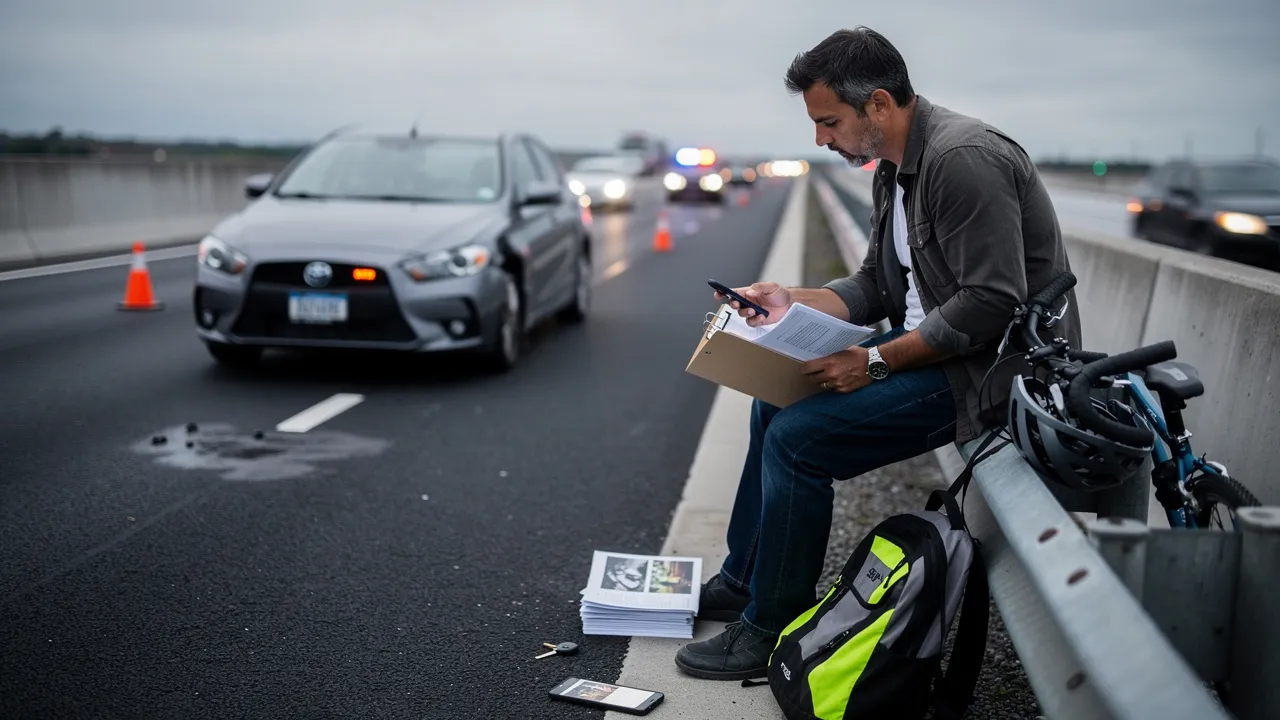
What to do first after an LIE crash
If the scene remains dangerous, focus on getting out of immediate danger when you can do so without creating another risk.
If you can safely do so, use this order: determine whether immediate danger remains; follow police or emergency personnel directions about moving or remaining; address urgent medical needs; and only then begin the fuller record and evidence steps. If pain, confusion, or another immediate need makes detailed recording difficult, preserve the basic information you can and return to the record later. If another person is helping, keep your own account separate from that person’s account. This sequence matters because documentation is useful only when it can be completed without delaying care or creating another risk.
Your next steps can follow a simple order:
- Address immediate safety and urgent medical needs.
- Cooperate with the necessary scene and reporting process.
- Write down what you remember while the sequence is still clear.
- Preserve photographs, witness information, vehicle records, medical records, and insurance communications.
- Mark every deadline that may apply to the insurer, a public entity, or a possible lawsuit.
A highway collision can leave you dealing with pain, transportation problems, damaged property, and uncertainty about insurance at the same time. You do not have to resolve every question at the scene. You do need to avoid letting the first hours pass without addressing immediate needs and preserving basic information.
This guide keeps the questions separate. Scene duties are different from insurance notice. Vehicle damage is different from an injury claim. A general deadline is different from a conclusion about your particular case. That separation can help you decide what to do next without assuming fault, coverage, or an outcome.
Use that separation as a working file structure. Put immediate-care information and scene details at the front, keep insurance notices with their delivery records, and place vehicle-damage communications apart from treatment records. If another person is helping, preserve your own account and identify which details came from that person. This keeps later questions tied to the record without turning an observation into a legal conclusion.
Documentation can be incomplete at first. If pain, confusion, or another immediate need makes detailed recording difficult, preserve the basic information you can without delaying care. Later additions should be marked with their date. The point is to create an account over time, not to force a complete narrative during the first minutes.
Create a dated crash record while details are available
A dated crash record gives you one place to preserve the sequence of events without turning your first account into a fault conclusion. Start with the date, approximate time, and location on the Long Island Expressway. Add the direction of travel, the nearest identifiable exit or landmark if you know it, the lanes involved, and the weather or roadway conditions you personally observed.
Use a factual format. Record what you saw, heard, did, and were told. Separate your own observations from statements made by other people. If you are unsure about a detail, mark it as uncertain rather than filling the gap from memory or assumption.
Your first record can include:
- Your position in the vehicle and what you were doing immediately before the collision.
- The vehicles involved, including identifying information you received at the scene.
- The direction each vehicle appeared to be traveling.
- The sequence of contact, movement, stopping, and any later interaction you observed.
- Visible damage, apparent injuries, and whether anyone requested or received medical attention.
- The names or roles of people who arrived, including police, medical personnel, or other witnesses.
- The steps you took after the collision and the insurance or police information exchanged.
A dated file can contain later additions, but mark each addition with the date you made it. Keep the original version instead of silently rewriting it. A clean timeline helps you identify missing records and focused questions; it does not establish liability by itself.
When you add a later record, identify whether it comes from a document, a conversation, or your own recollection. Keep that source context beside the entry rather than blending another person’s account into yours. For a highway collision, a missing insurance detail, an accident-report request, a new medical record, or an insurer response can each be marked by date. If two records differ, preserve both and write the question that needs clarification rather than choosing one without a basis.
The record can also show the next information task. It may point to obtaining a report, preserving an original file, recording a notice, gathering a medical document, or listing a deadline question. It does not need to answer every legal issue before you request a consultation; it needs to show what is known, what is missing, and what changed.
New York’s driver manual says involved drivers must exchange identifying and insurance information after a crash.
Save the information in your crash file rather than relying on a photograph or memory alone. If a field is missing, note that fact in the dated record. Do not use a missing detail as a reason to guess.
Photographs can preserve conditions that may change after a highway collision. We recommend taking photographs of the cause of an injury. When you can do so without placing yourself in danger or interfering with emergency activity, organize photographs by subject and add the date and a short description.
Useful labels can identify the vehicle area shown, the roadway condition shown, or the relationship between objects. Keep the original files and avoid relying only on cropped or edited copies.
Witness information can help preserve accounts that may be difficult to locate later. We recommend noting witnesses’ names and phone numbers after an accident. Add a short description of where each witness was positioned and whether the witness said they saw the collision, its aftermath, or only a later condition.
Do not pressure a witness to adopt your interpretation. Preserve the contact information and the witness’s own description as accurately as you can.
Complete the required exchange and reporting steps
New York’s driver manual says you must stop after a crash, regardless of the damage. Leaving a property-damage crash is a traffic violation; leaving a crash involving injury or death is a criminal violation.
The scene may be confusing, particularly on a busy expressway. Keep the legal duty to stop separate from the practical question of how to reach a safer position or obtain medical help. Follow the directions of police or emergency personnel at the scene, and do not leave simply because the visible vehicle damage appears limited.
Hit-and-run and uninsured-driver situations can change the practical path for reporting and insurance review. We explain that those claims can have strict deadlines, so report the crash to police quickly.
Keep the report information, incident number, responding agency, and any instructions you receive. If you do not yet know whether another vehicle was insured, preserve the facts you do know and identify that insurance question for follow-up. Do not treat uncertainty about coverage as proof that no claim route exists.
The reporting sequence should leave you with a basic set of records: your dated account, the exchanged information, police or incident details, and the names of people who may have observed the crash or its immediate aftermath. Those records support later conversations without requiring you to decide fault at the roadside.
Preserve highway-crash evidence before it disappears
Highway-crash evidence can become harder to organize once vehicles move, roadway conditions change, and conversations multiply. Create a preservation folder—digital, paper, or both—and use the same date-based naming system throughout.
Place these items in the folder:
- Your original crash account and later dated additions.
- Photographs and videos, with original files preserved.
- Names and phone numbers for witnesses and other relevant contacts.
- Police or incident information and any accident-report request records.
- Vehicle photographs, repair estimates, inspection communications, and storage or towing records.
- Medical records, bills, work-related records, and communications about treatment.
- Insurance notices, claim numbers, letters, emails, text messages, and call notes.
- A deadline list showing the date of the crash and every date that requires follow-up.
A call note should identify the date, the organization or person contacted, the topic, and any requested next step. Keep copies of documents you send. Preserve messages in their original form when possible, and do not delete a communication because it seems repetitive or unhelpful.
Use the folder as a live index rather than a storage place with no order. A first page can list the accident date, the categories included, the items requested, and the questions still open. Update that index when a report arrives, a medical record is added, or an insurer sends a response. Keep originals separate from working copies, and note when a file was created or received if that information is available.
If a document is incomplete, keep it and label the missing portion. If a photograph does not show the larger roadway context, keep the original and note what additional view would answer the question. If a call produces no confirmed answer, preserve the call note as an unresolved item rather than treating the absence of an answer as a conclusion.
New York State Police identifies TA-W4310 as the form required to request a copy of an accident report and provides it online through the Thruway website. Keep the request form, submission date, and any response with the rest of the crash records.
An accident report is one part of the file, not a substitute for your own dated account or the underlying photographs and witness information. Record whether you have requested the report, received it, or are still waiting for it.
Organizing those categories gives you a practical way to identify what you have, what you requested, and what remains unresolved before a legal conversation.
The organization method does not require you to label a document as proof of fault. Use neutral names such as “scene photographs,” “medical records,” or “insurance correspondence.”
Keep medical records with the crash file
Medical records belong in the crash file because they document care, timing, instructions, and related expenses in an organized way. Keep the records you receive from emergency care, follow-up visits, diagnostic services, prescriptions, therapy, and other treatment connected to the collision.
Use the symptom log as an index to the medical file, not as a replacement for provider records. When a bill, explanation of benefits, prescription record, or follow-up document arrives, note its date and match it to the related visit if you can. If dates or descriptions do not line up, keep both documents and mark the discrepancy for follow-up instead of silently changing either one. If a record is still being requested, list the provider, the date requested, and the response status beside the rest of the file. This preserves the history of what was received while making gaps easier to identify during a later review.
Your medical file can include:
- Visit dates and the name of each medical provider.
- Discharge instructions, referrals, prescriptions, and scheduled follow-up.
- Bills, payment records, explanation-of-benefits documents, and correspondence about unpaid balances.
- A dated symptom and treatment log written in your own words.
- Work records showing dates missed or restrictions communicated to you, if those records exist.
Keep the medical file descriptive rather than diagnostic. Record what a provider told you and what you experienced, but do not use your own log to replace medical advice or to decide whether a symptom was caused by the collision. Give providers complete information about the event and follow their instructions.
Treat No-Fault notice as a separate insurance deadline
For an injury from a motor-vehicle accident, New York guidance generally calls for written No-Fault notice no later than 30 calendar days after the accident, unless written proof provides clear and reasonable justification for late filing. This timing rule does not decide who caused the crash, whether another claim exists, or what compensation may ultimately be available. Put the accident date at the top of your deadline list and record when and how notice was given.
For an accident in New York State, you generally file a No-Fault claim with the insurer of the vehicle you occupied. If you were a pedestrian, you generally file with the insurer of the vehicle that struck you.
A collision on the LIE can involve different roles, vehicles, and insurance arrangements. Your role at the time of the collision matters to the filing route, so identify whether you were the driver, a passenger, or outside a vehicle before treating a general route as your answer. Your coverage or eligibility depends on the facts of your situation, not on the general route alone.
Use a written checklist for the notice process:
- Record the crash date and the date you first learned where notice should be sent.
- Identify the vehicle you occupied and the insurance information available to you.
- Preserve the notice, claim number, delivery record, and every response.
- Write down any question about late notice, the proper insurer, or your status in the crash.
- Obtain prompt case-specific review when the route or deadline is unclear.
Do not combine No-Fault notice with the separate process for vehicle damage or a potential injury lawsuit. Each item needs its own record.

Keep vehicle damage and injury issues on separate tracks
Insurance information for vehicle damage may be easier to identify after you obtain the accident report. If the crash involved a vehicle registered in New York State, you can use the three-digit insurance-company code on the accident report to search the Department of Financial Services’ insurance-code list and identify the insurer.
Save the code, the search result, and the insurer’s contact information. Keep property-damage communications in a separate subfolder from medical and injury records so that a repair discussion does not become confused with an injury question.
For a covered vehicle-damage loss, New York guidance says the insurer must inspect the vehicle and make a good-faith offer within six business days after receiving notice, if the vehicle is available for inspection. New York guidance also says the insurer must make payment within five business days after you and the insurer agree on a settlement.
These timing rules address the vehicle-damage process described by the guidance. They do not answer whether a loss is covered, resolve an injury claim, or determine fault. Record when notice was given, when the vehicle was made available, what inspection occurred, and what written offer or agreement followed.
A practical two-track file can prevent one conversation from obscuring another:
- Vehicle track: damage photographs, towing and storage records, estimates, inspections, repair communications, and settlement documents.
- Injury track: medical care, bills, symptoms, work records, No-Fault notice, and communications about the injury.
- Shared track: the crash timeline, police information, vehicle identities, witness contacts, and insurance information.
Keep the tracks connected by the same accident date, but do not treat progress on one track as a resolution of the other.
Mark deadlines by claim and potential defendant
A deadline map should identify the claim or process beside each date. The accident date alone is not enough because different routes can involve different notice or filing requirements. Write the responsible insurer, agency, or potential defendant beside each item and mark the date you need to act, not only the date you discovered the issue.
Start the map with these general New York time frames, then obtain review of the facts that determine whether each one applies.
For each line, write the factual reason it appears: an injury and treatment record, a possible public-entity connection, a vehicle or insurer question, or a filing question. Then write the missing fact that would change how the line is handled. This keeps a general time frame from being treated as a deadline determination.
Use the map with the records, not instead of them. A calendar reminder can point to the file, while the file should show the applicable process, the recipient, the date sent, and any proof. If the accident date, discovery date, vehicle identity, or public-entity involvement is uncertain, preserve the uncertainty and flag it for prompt review. Do not fill an unresolved date with an estimate presented as final.
For a claim subject to New York’s Notice of Claim requirement, a court instruction states that the notice generally must be served within 90 days after the claim arises, normally the accident date for an accident-based claim. A Notice of Claim must be written, sworn before a notary public, and include the claimant’s information, the nature of the claim, when and where it arose, how it arose, and the damages or injuries claimed as practicable at that time.
The 90-day period is not a universal rule for every crash. It belongs on your map when a potential public-entity claim or other fact makes that requirement relevant, and it should be reviewed promptly because the notice has formal content requirements.
New York CPLR § 214 states that a personal-injury action generally must be commenced within three years, subject to exceptions identified in the statute. Treat three years as a general statutory period, not as permission to wait or as the answer for every person, defendant, or claim.
Put the general period on a separate lawsuit line and note the exceptions question next to it. A consultation may need to address notice requirements, the identity of a possible defendant, and facts that change the applicable period.
Your deadline map should show:
- The accident date and the date each issue was discovered.
- The No-Fault notice line.
- Any public-entity or Notice of Claim line that may be relevant.
- The general personal-injury lawsuit line and its exceptions question.
- The person or organization responsible for receiving notice.
- The date you sent each item and proof of delivery.
Use calendar alerts as reminders, but do not treat an alert as proof that a legal filing was completed.
Do not turn a general deadline into a case conclusion
A general deadline does not determine whether you have a claim, who may be responsible, what insurance applies, or what result a case could produce. The facts that require review can include the exact LIE location, the people and vehicles involved, the nature and timing of any injury, the available insurance information, and whether a public entity may be part of the factual picture.
New York’s general personal-injury period is three years subject to statutory exceptions, while a claim subject to a Notice of Claim requirement generally involves a 90-day notice period. Those periods address different questions. Do not use the longer general period to postpone a shorter notice issue.
Turn uncertainty into specific questions:
- What entity or insurer should receive the notice?
- Which date starts the relevant period?
- Does the crash involve a public roadway, vehicle, or agency that changes the notice analysis?
- Does the available medical record connect the timing of care to the event without requiring you to make a diagnosis?
- Which missing report, photograph, witness account, or insurance document would clarify the next step?
Write the questions beside the supporting records. A focused list is more useful than a broad statement that the case is “complicated.”
When a consultation may help clarify the next step
A consultation may help when the unresolved questions affect what you should preserve, whom you should notify, or which deadline you should track. Consider seeking review if any of these conditions apply:
- You have an injury, continuing symptoms, medical bills, or work-related records to organize.
- The account of the collision is disputed, incomplete, or difficult to reconstruct.
- The other driver left, cannot be identified, or may not have insurance.
- You do not know which insurer should receive a No-Fault notice.
- You have received insurer communications and are unsure which issue each communication addresses.
- A police or accident report, witness account, photograph, or medical record is missing.
- A possible public-entity issue makes the 90-day Notice of Claim question relevant.
- A notice or lawsuit deadline is approaching, or you are unsure which date controls.
These conditions identify questions for review. They do not establish fault, coverage, eligibility, claim value, or a particular outcome.
They also help set the order of a conversation. Start with any approaching notice or filing issue, then identify missing scene or medical records, and then separate vehicle-damage questions from injury questions. If the account is incomplete, bring both the known facts and the gaps. A dated packet can show what was observed, what came from someone else, and what still needs confirmation.
Hit-and-run and uninsured-driver claims can have strict deadlines, so report the crash to police quickly. That step is especially useful to identify as an open task when you do not yet know the other vehicle’s insurance status.
We offer free consultations and charge no fee unless we win the case.
The purpose of a consultation is to discuss the preserved information and the unresolved questions. Bring the facts as you have them, including gaps and uncertainty, rather than presenting a conclusion about fault.
We provide home and hospital visits for clients who cannot come to our office. Our law office is available 24 hours a day, 7 days a week.
If travel is difficult after the collision, keep that access question with the consultation criteria. You can also note whether another person is helping you organize the records, while keeping your own account and medical information accurate.

Prepare a focused consultation packet
A focused consultation packet should let you explain the crash, show what happened afterward, and identify what remains unanswered. Use one folder with clearly named subfolders rather than sending a large collection of unlabeled files.
Include these categories:
- Dated crash account: location, time, direction, vehicles, people, conditions, sequence, and immediate actions.
- Scene evidence: photographs, videos, witness names and phone numbers, and notes about what each person observed.
- Police information: responding agency, incident details, report number, and any report request or response.
- Medical records: provider records, bills, prescriptions, referrals, treatment dates, and your dated symptom notes.
- Work records: dates missed, restrictions, wage documentation, or employer communications that relate to the aftermath.
- Vehicle records: photographs, towing information, estimates, inspections, repair communications, and settlement documents.
- Insurance records: policy information, No-Fault notice, claim number, letters, emails, texts, and call notes.
- Deadline map: the accident date, notice dates, possible public-entity issue, and the general lawsuit period with questions about exceptions.
Label each file with the document type and date. Keep originals, save copies of anything submitted, and identify missing items rather than replacing them with assumptions.
Before sending the packet, make an index of the files and keep a copy of the index with the materials. Mark each category as included, requested, incomplete, or not available. That label is a description of the file’s status, not a conclusion about the claim. If a record contains private information, identify it in the index and keep the version you send with the rest of the packet. Use the same date convention throughout the index. If a file is replaced by a clearer copy, retain the earlier copy and note the change instead of deleting the history.
Bring unresolved questions to the front of the packet: the deadline you are watching, the insurer or recipient you cannot identify, the account detail that remains uncertain, and the record you are still trying to obtain. This lets the consultation begin with the decisions that remain rather than with an unsupported conclusion about responsibility.
Use the police-information folder to keep the form, submission record, and any received report together.
For each witness, place the name and phone number in the packet with a short note about where the witness was and what the witness said they observed. Preserve the wording without asking the witness to reach a legal conclusion.
End the packet with a short list of questions: what deadline concerns you, what insurance route is unclear, what evidence is missing, and what decision you need to make next.
Request a free consultation about the unresolved questions
The next step after an LIE collision is a clear record of what happened, what you did afterward, which deadlines may apply, and which questions remain open. Preserve the information without deciding fault, coverage, value, or outcome from a general guide.
A qualified lawyer must decide whether legal representation is suitable for your individual facts. Bring the dated account, records, insurance communications, and deadline map so the conversation can focus on the issues that need review rather than on reconstructing basic information from memory.
Hurt like this?
We handle Car Accidents cases in the Bronx.
Evan W. Kohn, Esq. — more than 35 years of Bronx personal-injury practice. Reading about it only goes so far; a free consultation tells you what actually applies to your case.