
Personal Injury Basics
How to Write a Demand Letter for Settlement: 4 Essential Steps
Introduction
After an accident, the road to recovery can feel daunting, leaving you unsure of how to seek the compensation you deserve. Writing a demand letter is a crucial step in your journey, as it helps you express the impact of the accident and the support you need to heal. You might wonder what to do if the response from the other party leaves you feeling uncertain about your next steps. Knowing how to effectively present your case can empower you to secure the support you need for your recovery journey.
Understand the Purpose and Structure of a Demand Letter
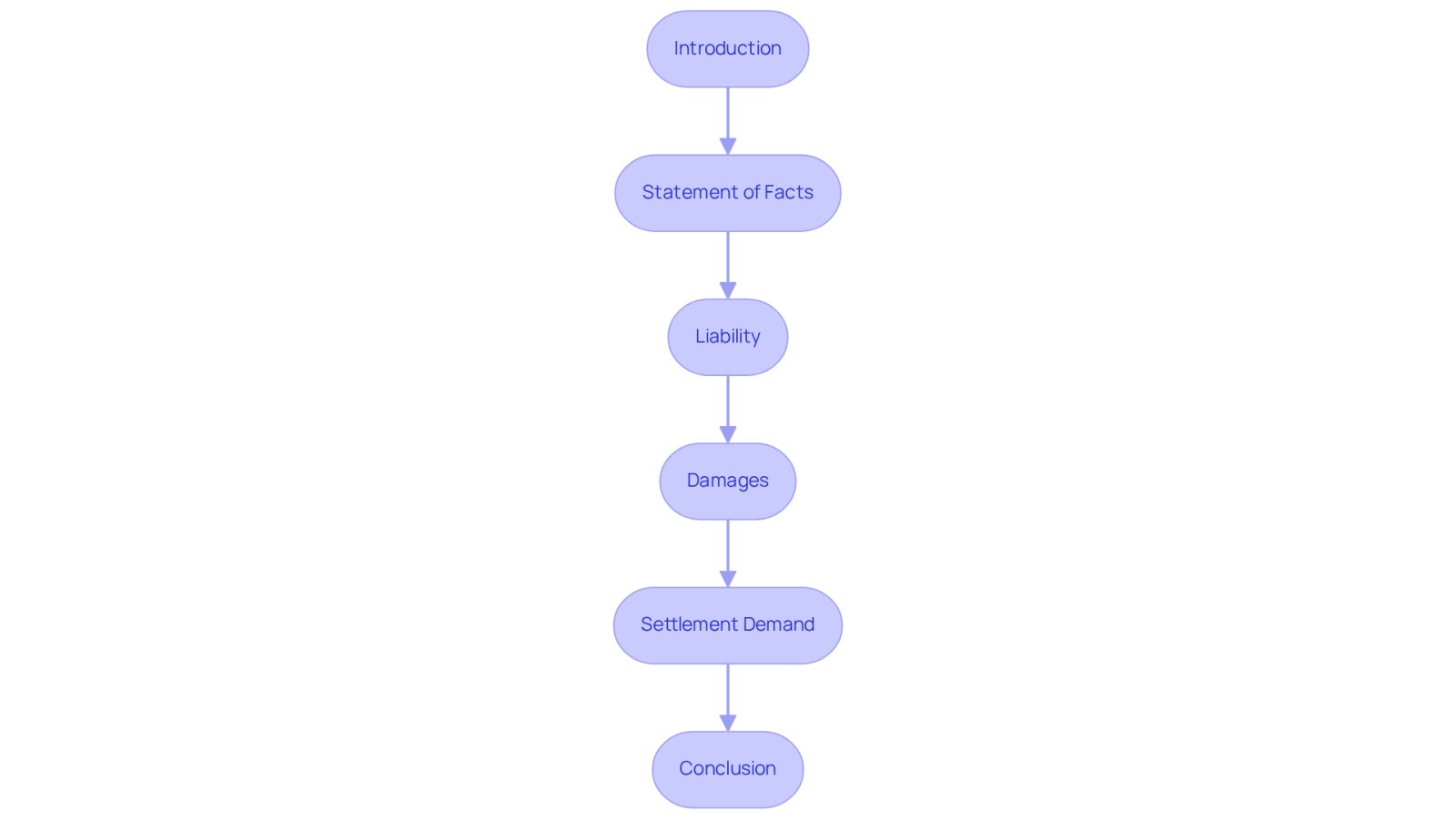
When you’ve been hurt, understanding how to write a demand letter for settlement can feel like a daunting task, but it’s a crucial step in your journey toward healing. Here’s how to structure your demand letter to ensure your voice is heard:
- Introduction: Start by clearly stating the purpose of your letter and identifying everyone involved in the incident. This sets the stage for your story.
- Statement of Facts: Share a concise account of what happened, including specific dates, locations, and details that led to your injury. This is your chance to paint a vivid picture of your experience.
- Liability: Explain why the other party is responsible for your damages. Reference any relevant laws or regulations that support your claim, helping to clarify your position.
- Damages: Detail the injuries or losses you’ve suffered, including medical expenses, lost wages, and emotional distress. Be sure to support your claims with relevant documentation, as this adds weight to your request.
- Settlement Demand: Clearly specify the amount of compensation you’re requesting, ensuring it reflects the total damages you’ve incurred. This is an important part of advocating for yourself.
- Conclusion: Encourage a prompt response and outline the next steps if your request isn’t met. Reinforce the urgency of the matter, reminding them of the importance of addressing your needs.
By following this organized method, you will understand how to write a demand letter for settlement that is clear and convincing, which not only aids in negotiations but also strengthens your position in the process. Taking the time to craft a thoughtful request can be the first step toward healing and moving forward with your life.
Gather and Organize Essential Information for Your Letter
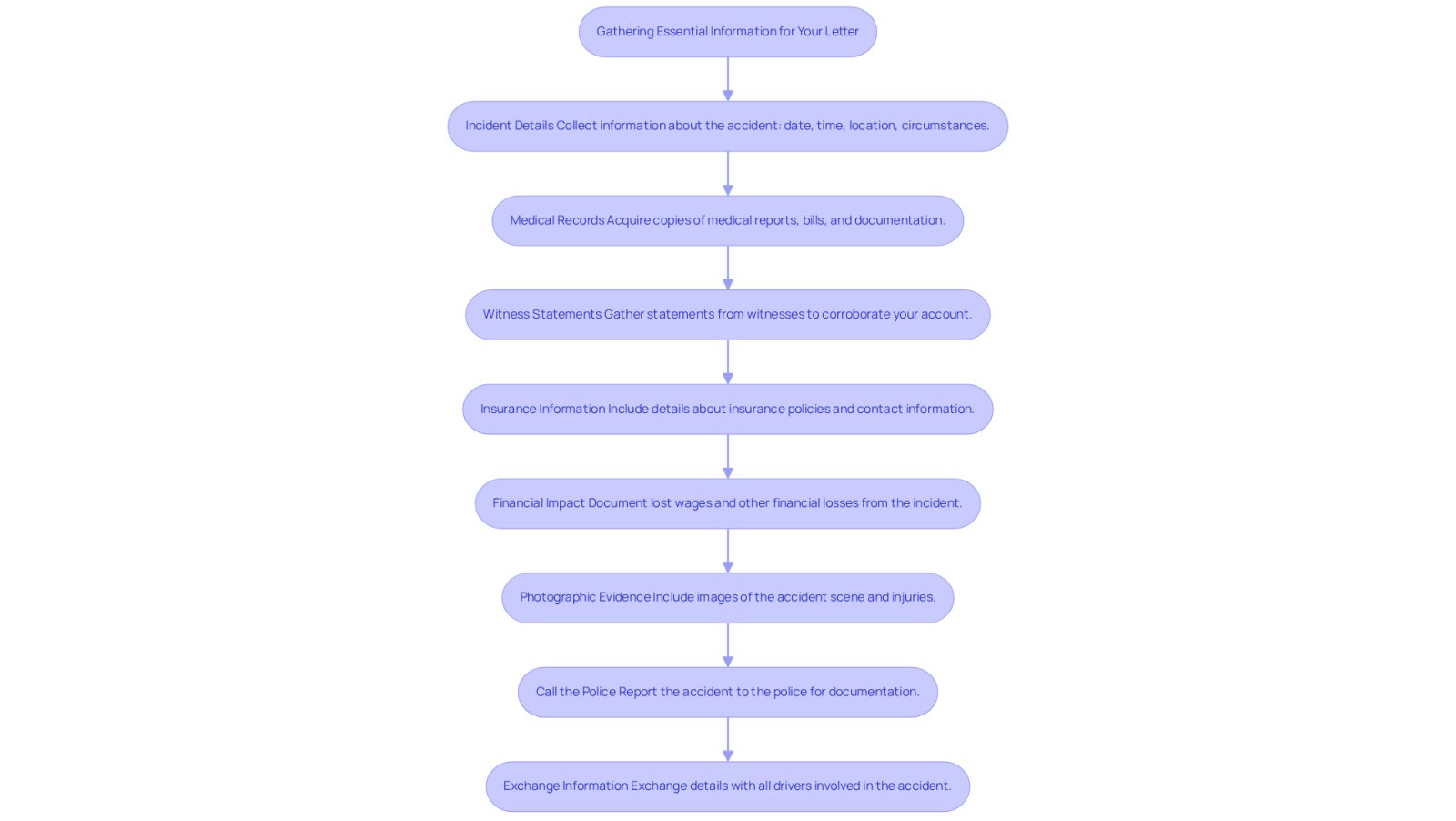
Before you can effectively advocate for yourself after an accident, gathering and organizing the right information is essential:
- Incident Details: Collect comprehensive information about the accident, including the date, time, location, and specific circumstances surrounding the event.
- Medical Records: Acquire copies of all pertinent medical reports, bills, and documentation associated with your conditions, as these will support your claims for compensation. Remember, even wounds that appear minor can have long-term effects, so it’s crucial to document everything.
- Witness Statements: If applicable, gather statements from witnesses who can corroborate your account of the incident, adding credibility to your case.
- Insurance Information: Include details about the insurance policies involved, such as coverage limits and contact information for the insurers. This information is vital for understanding your rights and the potential for compensation.
- Financial Impact: Document any lost wages, future earning potential, and other financial losses resulting from the incident, as this information is vital for calculating your compensation. Consider how the accident has affected your daily life and financial stability.
- Photographic Evidence: If accessible, include images of the accident scene, your wounds, or any property damage, as visual proof can greatly improve your demand letter. Taking pictures immediately after the accident can be crucial for your case.
- Call the Police: Always call the police to report the accident, even if there are no injuries. Having a police report can really help when you’re submitting your insurance request and documenting what happened.
- Exchange Information: Ensure you exchange information with all drivers involved in the accident, including names, insurance details, and contact information.
Additionally, consider seeking legal guidance from The Law Offices of Evan W. Kohn. They provide complimentary, no-commitment consultations and can assist you in navigating the intricacies of your situation, ensuring you comprehend your rights and the essential actions to undertake. Arranging this information in a clear and accessible manner will aid in referencing it when composing your correspondence, particularly in understanding how to write a demand letter for settlement, ensuring that you present a persuasive argument for your request. Understanding how to write a demand letter for settlement can make a big difference in your negotiations, showing just how strong your case really is. Remember, the average time taken to gather evidence for personal injury claims can vary, so start this process as soon as possible. After sending your request document, be ready for different replies from the insurance company, including acceptance, denial, or a counteroffer, which will start the negotiation process. By taking these steps, you’re not just building a stronger case; you’re also giving yourself the confidence to handle the challenges of your recovery.
Craft a Persuasive Narrative and Specify Your Settlement Demand
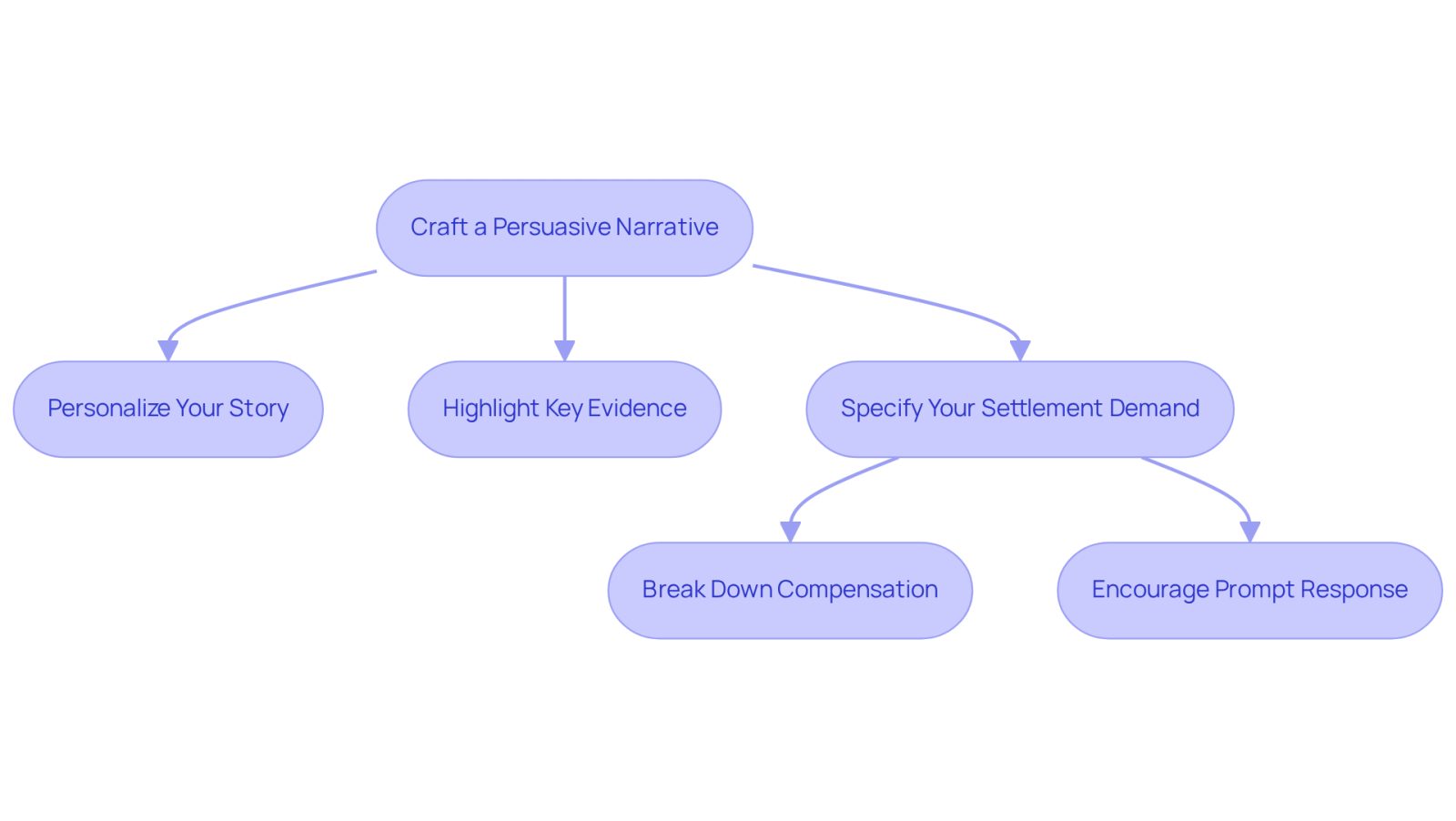
Imagine waking up after an accident, not just in pain, but also overwhelmed by the financial and emotional toll it has taken on your life. When considering how to write a demand letter for settlement, it’s crucial to personalize your story. Share how the incident has affected you, detailing the physical, emotional, and financial consequences. Many who suffer personal injuries find themselves not only grappling with physical pain but also facing overwhelming emotional distress and financial strain, with medical bills averaging $38,750 and lost wages around $12,400.
Be clear and concise. Use straightforward language to convey your message without unnecessary jargon. Clarity is essential in ensuring that your requests are understood and taken seriously.
Highlight key evidence. To strengthen your case, it’s important to create a clear timeline that connects your injuries to the accident, making it harder for insurers to challenge your claims based on prior conditions. Reference the evidence you gathered, such as medical records and witness statements, to support your assertions.
You need to specify how to write a demand letter for settlement. Clearly state the amount of compensation you are seeking, breaking it down into categories like medical expenses, lost wages, and pain and suffering. For instance, a total requirement amount of $60,000 could be justified by detailing:
- $38,750 in medical expenses
- $12,400 in lost wages
- $8,850 in other damages
Use a professional tone. By keeping the conversation respectful and professional, you open the door for a more positive response and a better chance of getting what you need. Avoid emotional language or threats, as this approach fosters a constructive dialogue and increases the likelihood of compliance.
Finally, encourage the recipient to respond promptly. Indicate a timeline for their reply, typically allowing 15 days for a response. This sets clear expectations and emphasizes the urgency of your request. When you present your story with clarity and compassion, you not only advocate for yourself but also pave the way for a resolution that acknowledges your struggles.
Finalize and Send Your Demand Letter with Confidence
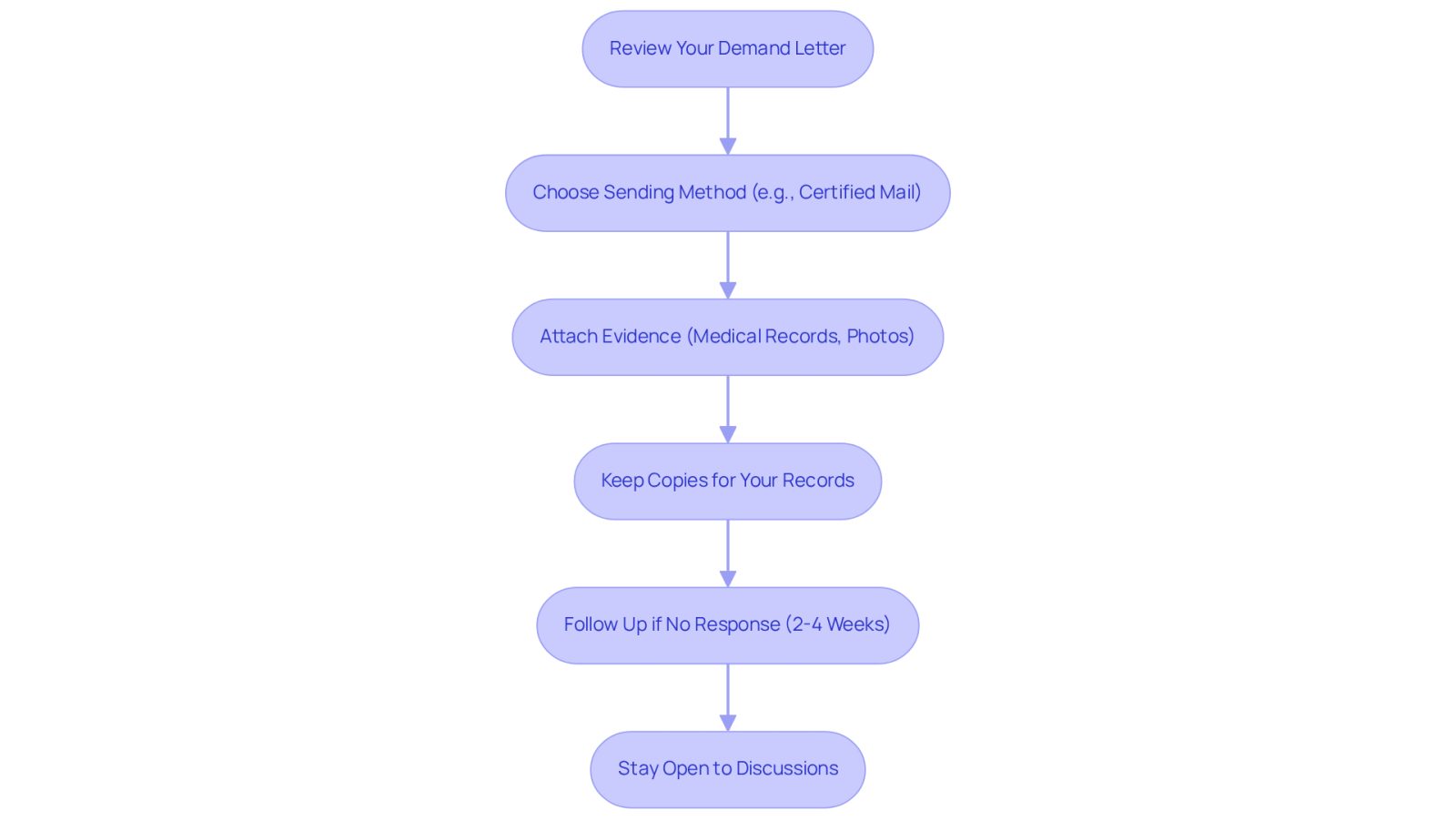
Sending a demand letter can feel daunting, especially when you’re already dealing with the aftermath of an accident. Take a moment to carefully review your letter, ensuring every detail is accurate and your voice is heard. It’s important to confirm that all facts are correct and that your request is clearly articulated.
Next, consider how you’ll send your letter; using certified mail can provide peace of mind, knowing it’s tracked and received. Attaching copies of all pertinent evidence, such as medical records and photographs, will bolster your case and support your request.
As you prepare to send your letter, keep copies of everything for your records. This way, you’ll have a complete set of documents to refer back to if needed. If you don’t receive a response within a reasonable timeframe-typically 2-4 weeks-don’t hesitate to follow up with a phone call or email. This gentle nudge can confirm receipt and check on the status of your request.
Finally, stay open to discussions; the recipient may have questions or a counteroffer, and being ready can help you navigate this process. Taking these steps not only helps ensure your letter is received but also empowers you to advocate for the compensation you truly deserve.
Conclusion
Writing a demand letter for settlement can feel overwhelming, especially when you’re already dealing with the aftermath of an injury. By taking the time to understand how to craft your letter, you can effectively communicate your experiences and needs, paving the way for a resolution that acknowledges your suffering. This journey helps you find your voice and ensures that your pain is acknowledged and addressed.
Throughout the article, we’ve outlined essential steps, including:
- Gathering necessary information
- Crafting a persuasive narrative
- Clearly specifying your settlement demand
Each component plays a crucial role in building a compelling case, from detailing the incident and its impact to presenting evidence that supports your claim. By following these guidelines, you can create a demand letter that is not only clear and organized but also persuasive and professional.
Your path to recovery starts with small, meaningful steps that help you stand up for yourself. Whether it’s through seeking legal guidance from The Law Offices of Evan W. Kohn or meticulously preparing a demand letter, every action contributes to a stronger position in negotiations. Taking these steps not only paves the way for the compensation you deserve but also helps you reclaim your sense of control and hope for the future.
Frequently Asked Questions
What is the purpose of a demand letter?
A demand letter serves as a formal request for compensation following an injury, outlining the details of the incident and the damages incurred.
How should I start my demand letter?
Begin your demand letter by clearly stating its purpose and identifying all parties involved in the incident to set the stage for your narrative.
What should be included in the statement of facts?
The statement of facts should provide a concise account of the incident, including specific dates, locations, and details that led to your injury, creating a vivid picture of your experience.
How do I establish liability in my demand letter?
Explain why the other party is responsible for your damages and reference any relevant laws or regulations that support your claim to clarify your position.
What details should I include about my damages?
Detail the injuries or losses you’ve suffered, such as medical expenses, lost wages, and emotional distress, and support your claims with relevant documentation.
How do I specify my settlement demand?
Clearly state the amount of compensation you are requesting, ensuring it reflects the total damages you have incurred, which is crucial for advocating for yourself.
What should I include in the conclusion of my demand letter?
Encourage a prompt response and outline the next steps if your request isn’t met, reinforcing the urgency of the matter and the importance of addressing your needs.
Why is it important to write a clear and convincing demand letter?
A well-structured demand letter aids in negotiations and strengthens your position in the process, making it a vital step toward healing and moving forward with your life.
List of Sources
- Understand the Purpose and Structure of a Demand Letter
- Understanding Demand Letters in Personal Injury Claims
- What Happens After My Lawyer Sends a Demand Letter? | Tamaki Law
- What Is a Settlement Demand Letter?
- Strategies and Tips for Writing a Personal Injury Demand Letter
- What Is a Demand Letter? | Morris Bart Personal Injury Lawyers
- Gather and Organize Essential Information for Your Letter
- What Is a Demand Letter? | Morris Bart Personal Injury Lawyers
- Personal Injury Demand Letter | How to Write
- Personal Injury Demand Letter Guide: Tips, Templates & Examples
- What Happens After My Lawyer Sends a Demand Letter? | Tamaki Law
- Craft a Persuasive Narrative and Specify Your Settlement Demand
- What Is a Settlement Demand Letter?
- Alt Legal Connect Session: In High Demand: Crafting effective and creative demand letters
- How to Write a Winning Demand Letter (+Free Template) | Rev
- Govern Yourself Accordingly- Crafting Effective Demand Letters
- Finalize and Send Your Demand Letter with Confidence
- What Happens After My Lawyer Sends a Demand Letter? | Tamaki Law
- Demand Letter Response Time-When Will I Get Settlement Check?
- Demand Letters – Tips on Making a Demand | The Maryland People’s Law Library
- Best Practices and Considerations for Employee Demand Letters, Charges and Early-Stage Lawsuits
- What Is a Demand Letter in a Florida Personal Injury Case—and Why It Matters
Hurt like this?
We handle Personal Injury Basics cases in the Bronx.
Evan W. Kohn, Esq. — more than 35 years of Bronx personal-injury practice. Reading about it only goes so far; a free consultation tells you what actually applies to your case.