
Rideshare & Taxi Accidents
Rideshare Accident Lawyer in the Bronx: What Injured Passengers Should Do Next
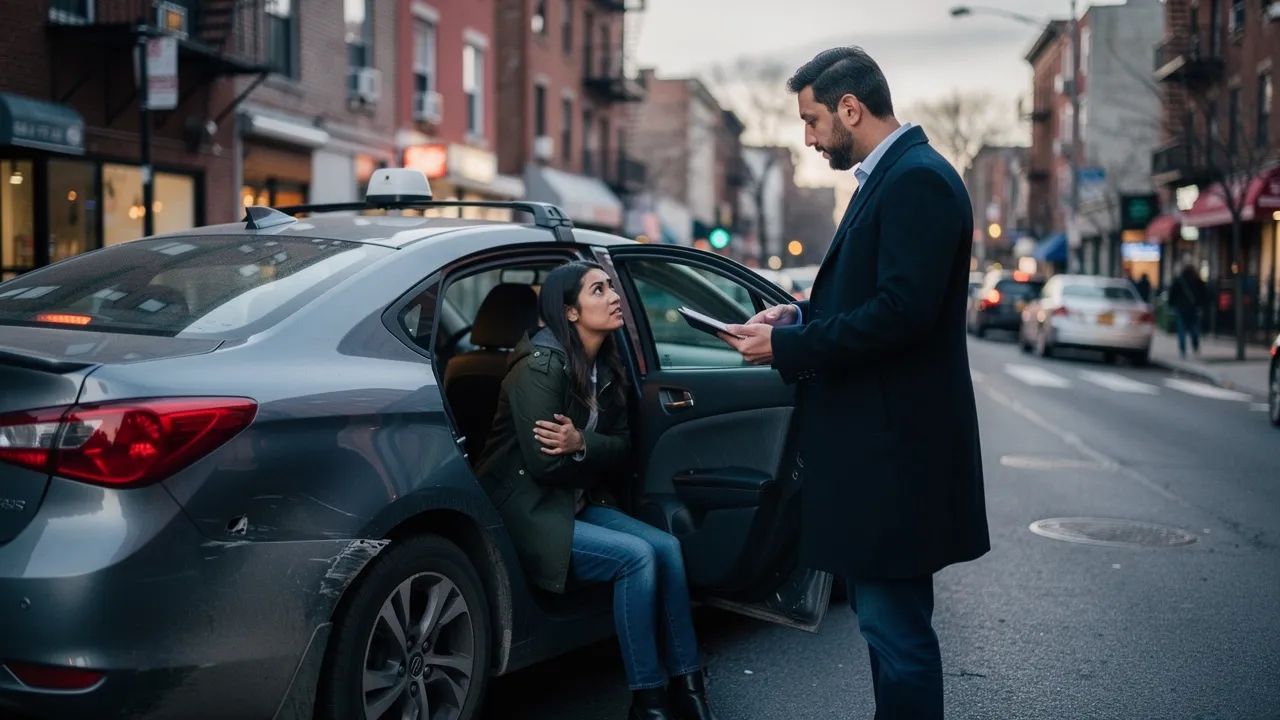
What should you do first after a Bronx rideshare or taxi crash?
After a rideshare or yellow-cab crash on a Bronx street, you may be waiting for medical care, a police response, or an insurer’s call. This article helps you protect medical, scene, trip, and insurance records while you decide what to do next.
Your first steps should address safety, medical care, reporting, and records. Call 911 so officers can respond and create a formal, time-stamped police report. If you need medical assistance, ask for it immediately. The guidance also recommends contacting the rideshare company, the police, and a personal-injury attorney after a rideshare accident.
Medical care comes before claim paperwork. Soft-tissue injuries and concussions often do not show symptoms right away. The cited New York City guidance recommends seeing a doctor within 24 to 48 hours even if you feel fine.
Tell the provider that a crash occurred and describe every affected area. Keep appointment records, imaging reports, prescriptions, discharge papers, bills, and follow-up instructions. Medical records and bills can document that you were injured and that the crash caused the injury.
Preserve the crash record before details disappear. Take photos and videos of vehicle damage, license plates, skid marks, debris, traffic signals, traffic signs, and visible injuries. Record the location and the vehicles involved if you can do so safely.
Contact a qualified professional promptly about filing the no-fault application and ask whether a 30-day filing point applies to your situation. If an insurer sends paperwork you do not understand, preserve it before responding. Coverage and eligibility can vary, so confirm the filing requirement promptly with a qualified professional using your crash date, medical bills, lost-wage records, and insurer forms.
Which people, vehicles, and insurance policies may matter?
The people and policies connected to a rideshare crash can include the driver, the rideshare company, the taxi or vehicle owner, and another motorist. A rideshare crash may involve multiple insurance claims and legal requirements.
Coverage may depend on who was injured, which driver caused the crash, and the driver’s status in the rideshare application. Record whether the driver was carrying you, traveling to pick up a passenger, waiting for a request, or between trips.
A driver’s policy may exclude coverage, including no-fault coverage, during rideshare activity if the policy contains that exclusion. The crash circumstances and the driver’s ride status can affect responsibility for damages and medical bills. Do not treat a vehicle’s personal policy as the complete answer.
In New York, an insurance information card must be carried in every licensed vehicle and may provide the insurer’s name and policy number. Photograph the cards when possible. Save the driver’s name, vehicle information, rideshare platform, and details for every other motorist involved.
An insurance card is a starting record, not a coverage decision. Use the card to identify the insurer and policy number, then place it beside the driver’s app status, passenger status, vehicle ownership information, and crash account. Comparing those records helps show which coverage questions still require review rather than treating one document as conclusive.
A published report states that, in a survey of more than 1,000 rideshare drivers, 77 percent had only the accident coverage offered by the rideshare company. That survey does not determine the coverage available for your Bronx crash.
The same published source states that Uber and Lyft provide up to $1 million in accident coverage when a driver has a passenger or is traveling to pick one up. The amount described in that source is not a finding about every New York policy or every accident.
A California source states that California AB 2293 requires Uber and Lyft to maintain $1,000,000 in liability coverage when a passenger is on board or a ride has been accepted. That California rule does not determine which New York policy applies to a Bronx or New York City crash.

What should you save from the rideshare app and trip?
Your rideshare app can preserve details that are difficult to reconstruct later. If you used Uber, capture screenshots of your trip details from the app immediately after the accident. Save the pickup and drop-off information, trip date and time, driver identification, vehicle information, route display, receipt, and in-app messages.
Your screenshots and receipts preserve trip information available to you, while rideshare-company records may contain additional trip or status information. Because access to company records may require legal intervention and digital evidence may not be kept indefinitely, tell a qualified professional the exact trip date and time and identify which platform records are missing.
The driver’s trip status can connect the crash to the coverage questions. Preserve anything showing whether the driver had accepted a request, was traveling to a pickup, had you in the vehicle, or was between trips. Do not guess the status from memory when the app record is available.
A California source states that California SB 371 reduced mandatory uninsured/underinsured-motorist coverage for rideshare passengers from $1,000,000 to $60,000 per person, a 94% reduction, effective January 1, 2026. That figure describes a California rule, not coverage for a Bronx passenger.
What scene, witness, and physical evidence should you preserve?
Scene evidence should show the roadway, vehicles, injuries, and conditions around the collision. If you can do so safely, preserve the following before vehicles, weather, lighting, or traffic conditions change:
- Photograph and video vehicle damage, license plates, skid marks, debris, traffic signals, traffic signs, and visible injuries.
- Photograph weather, lighting, construction cones, blocked lanes, and malfunctioning traffic signals.
- Note nearby gas stations, parking garages, apartment buildings, businesses, or other locations with surveillance cameras.
- Keep damaged phones, glasses, child car seats, torn clothing, or bloodied bandages instead of throwing them away.
Witness information should be recorded while the details are fresh. Collect each witness’s name, phone number, email address, and a brief note of what the witness saw. Do not pressure anyone to adopt a particular version of events.
A witness may describe a traffic signal, speed, lane position, turn, passenger entry, or pickup. A witness cannot establish every insurance fact from observation alone. Compare the account with trip data, photographs, vehicle damage, and other records.
Surveillance cameras and dashcam footage may show how a crash occurred, and many systems overwrite footage within 7 to 30 days. Note the camera locations and the time window that should be reviewed. Preserve any footage already sent to you in its original form.
You do not need a witness to bring an Uber accident claim in New York. Photos, video, vehicle damage, medical records, and the police report may also matter. A missing witness does not answer the separate questions about coverage or responsibility.

What medical records and insurer requests require careful review?
Your medical records and bills should document the injury, treatment, and changes over time. Keep appointment records, imaging reports, prescriptions, bills, discharge papers, work-related documentation, and notes about symptoms or treatment changes. Arrange the records in date order and separate bills from clinical notes, imaging, prescriptions, and discharge papers. Add a short timeline showing when symptoms, visits, tests, and treatment changes occurred. Keep notes about changes with the related date, and bring the timeline alongside the records so the sequence can be reviewed without guessing.
If a record refers to an earlier injury or condition, keep that reference with the medical file rather than removing it or trying to explain it yourself. The records and the questions they raise about timing, causation, or changes in condition can then be reviewed together.
Your prior medical history can become part of an insurer’s questions about causation. Insurers may use medical history to argue about whether the crash caused current problems and whether another injury or disease contributed to the condition. Give healthcare providers an accurate history.
Selected New York guidance says that, in a lawsuit, medical-record discovery is limited to the body parts placed in controversy. Selected New York guidance also warns that court-paper terms such as “exacerbation” or “loss of enjoyment of life” can open a broader medical history. A medical-record request about an affected body part is not the same as a request for a complete medical history. Describe injuries accurately and ask which wording and records are relevant before submitting documents.
A blanket medical authorization from an Uber or Lyft liability insurer deserves review before you sign it. You do not have to sign a blanket HIPAA authorization from that insurer. New York guidance says no New York rule forces you to give the insurer anything before a lawsuit is filed.
Ask what records the request seeks, what period it covers, and how the information will be used. Preserve the request and any cover letter. A broad request for medical history can raise questions about whether the crash caused current problems or whether an earlier condition contributed.
Write down the name of each adjuster, the insurer, the claim number, the date of each call, and the documents requested. Do not guess about the driver’s status or coverage when answering questions. Keep your responses factual and preserve every letter, email, and form.
What should you bring to a rideshare accident consultation?
Your consultation will be more focused if you bring a short written account and the records already in your possession. Start with the crash date, approximate time, Bronx or New York City location, direction of travel, vehicle type, rideshare platform, and your position as a passenger. Use separate lines for what you personally observed, what a record shows, and what another person told you. Note the driver and vehicle details as they appear in the records, and place related receipts, screenshots, or police information beside them.
Attach the file name or first page for each important record rather than copying every document into the account. Put open questions at the end: which insurer was contacted, what response was received, whether a police report or claim number exists, and which records are still to be obtained. Use the same date format throughout and identify whether each item is an original, a copy, or a note about a conversation. This keeps the discussion centered on the crash and the records connected to it.
Your people-and-trip list should identify the driver, rideshare company, taxi or vehicle owner, other motorists, passengers, witnesses, police officers, and medical providers. Add the driver’s app status if you know it, but label uncertain details as uncertain. Include screenshots, receipts, driver information, vehicle information, route details, and platform communications.
Your injury-and-treatment summary should list each body part affected, when symptoms began, where you received care, what treatment was recommended, and what appointments remain. Bring medical records and bills if you have them. Add photographs of visible injuries and a simple symptom timeline.
Your insurance packet should include police report information, vehicle insurance cards, policy numbers, claim numbers, adjuster contact details, no-fault paperwork, and insurer letters. The insurance card may provide the insurer’s name and policy number for a vehicle involved in the crash.
Add photographs, videos, witness contacts, camera locations, damaged personal property, trip records, and any request to sign a medical authorization. Keep the original files when possible. Write down where each item came from and when you obtained it.
Finish your written account with the questions you cannot answer. Put each question beside the record that may answer it. Use headings for app status, insurance, medical care, evidence, and deadlines, then place the related document or contact under each heading. Keep a separate list of items to obtain. Group questions about people, policies, and records separately so they can be discussed in order. Organizing those materials helps identify what exists, what is missing, and what needs further review.
Which questions should you ask about coverage, evidence, and the next step?
Coverage questions should identify the policies and facts that still need review. Ask:
- Which insurers may be involved based on the driver, vehicle, platform, and other motorists?
- How does the driver’s app status affect the coverage analysis?
- Could a driver’s policy exclude no-fault or other coverage during rideshare activity?
- Which documents are needed before anyone reaches a coverage conclusion?
Evidence questions should connect each record to an unresolved issue. Ask:
- Which camera locations should be contacted before footage is overwritten?
- Which witness accounts should be preserved?
- What can each witness actually establish?
- Do the photographs, vehicle damage, police report, and trip data tell the same story?
Group each record by the question it may help answer. Put camera locations and witness contacts under what happened before impact, trip records under the driver’s rideshare status, and photographs and medical records under the reported injuries and treatment. This organization keeps one record from being mistaken for an answer to a different question and shows which topics still need review.
- Could an expert need to analyze vehicle damage, roadway evidence, or injury records?
Medical and insurer questions should focus on scope and timing. Ask:
- Which medical records and bills should be collected first?
- What does an insurer’s authorization request cover?
- Should you sign a blanket authorization before the request is reviewed?
- What information should be provided about prior injuries or conditions?
- Which no-fault paperwork still needs attention?
Next-step questions should leave you with a clear list of tasks. Ask which evidence should be preserved, who should obtain missing records, what information is uncertain, and which communications require a response. An attorney can interview and preserve witness accounts, while qualified experts may analyze vehicle damage, roadway evidence, or injury records when technical issues arise.
Ask which unresolved issue is time-sensitive, which record may address it, and who may hold that record. Separate records already in your possession from records connected to a platform, insurer, police response, business camera, or medical provider. List each missing item beside the question it may address, such as driver status, coverage, the events before impact, or the treatment sequence.
When should you seek qualified professional evaluation promptly?
Prompt legal review makes sense when more than one insurer, driver, vehicle, or potentially responsible party may be involved. It also makes sense when the driver’s app status is unclear, camera or app evidence could disappear, injuries are significant or developing, or an insurer requests a broad medical authorization.
Seek review when you are unsure how to address no-fault benefits, identify the applicable policy, or respond to an insurer’s questions. Bring the account and records you have. You do not need to resolve fault or coverage before gathering the questions that need an answer.
A separate California source states that California generally provides 2 years from the date of injury to file a personal-injury lawsuit under California Code of Civil Procedure section 335.1. That California period does not establish the timing for a Bronx or New York City crash.
Do not wait to organize a response when you cannot identify the correct insurer, preserve the trip or camera record, understand a no-fault form, or address a document request. Write down the accident location and date, gather what you have, and identify every unresolved question.
Could a Bronx rideshare and taxi accident office fit your situation?
A Bronx rideshare and taxi accident office may fit your situation when you want an initial review of a passenger crash, its records, and its insurance questions. At The Law Offices of Evan W. Kohn, we offer free consultations for passengers involved in rideshare or taxi accidents.
Access may matter if your injuries make travel difficult. We operate 24/7. Our office is located at 2000 White Plains Road in the Bronx, and we can arrange home or hospital visits for clients who cannot travel.
Use the conversation to identify whether the driver’s app status, the vehicle owner, another motorist, or multiple policies require review. Ask what records are missing and what facts remain uncertain. The consultation does not require you to decide coverage or responsibility in advance.
The supplied business facts state that staff speak English, Spanish, Bengali, Greek, and Albanian. If language access would make it easier to describe symptoms, treatment, or records accurately, ask about available language support when arranging the consultation. The supplied business facts also state that consultations are offered on a contingency basis; ask about the fee arrangement that would apply before deciding whether to proceed.
How can you take the next step toward reviewing your crash?
Your next step is to write a concise crash account and gather the records already preserved. Include the location, vehicle and platform, driver status, injuries, medical care, police information, insurance contacts, trip screenshots, photographs, witnesses, and documents an insurer asked you to sign. Keep the account factual and identify every detail you do not know.
This article provides general information, not legal advice. A qualified professional must decide whether a particular legal option, benefit, document response, or representation arrangement fits your circumstances after reviewing the relevant facts and records.
If you were injured as a rideshare or taxi passenger in the Bronx or New York City, bring your account and preserved records to a focused discussion about the insurance questions and next steps.
What should you ask before requesting a rideshare accident consultation?
Can I sue Uber or Lyft after a rideshare crash as a passenger in New York?
A passenger may have questions involving the driver, rideshare company, vehicle owner, or another motorist. The appropriate next legal step depends on the crash facts, injuries, records, and potentially responsible parties, so those details should be reviewed together. Separate questions about responsibility from questions about which policy may apply, and bring the related trip, medical, police, and insurance records to a consultation. The same crash can raise both questions. Coverage and responsibility may depend on who caused the crash, whether you were a passenger, and the driver’s status in the app. Preserve trip records, medical documents, and insurer communications for a case-specific review.
Does no-fault cover me if I was hurt in an Uber or Lyft in New York?
Do not assume the vehicle’s personal policy answers the no-fault question. A driver’s policy may exclude no-fault coverage during rideshare activity if the policy contains that exclusion.
What should I do if a rideshare insurer asks for my medical records?
Preserve the request and review its scope before responding. You do not have to sign a blanket HIPAA authorization from an Uber or Lyft liability insurer, and the cited New York guidance says no New York rule forces you to give that insurer anything before a lawsuit is filed. Ask what records and time period the request covers, especially if it seeks broad medical history.
What information helps determine which insurance policy applies after a Bronx rideshare crash?
Record the platform, driver, vehicle owner, other motorists, accident location and time, and whether the driver was carrying you, traveling to a pickup, waiting for a request, or between trips. Save trip screenshots, receipts, insurance cards, police information, photographs, and claim correspondence. Rideshare company records can help identify the applicable policy, but access may require legal intervention and the records may not be kept indefinitely.
Hurt like this?
We handle Rideshare & Taxi Accidents cases in the Bronx.
Evan W. Kohn, Esq. — more than 35 years of Bronx personal-injury practice. Reading about it only goes so far; a free consultation tells you what actually applies to your case.