
Car Accidents
Semi-Truck Crashes in New York: What to Do After a Bronx Crash
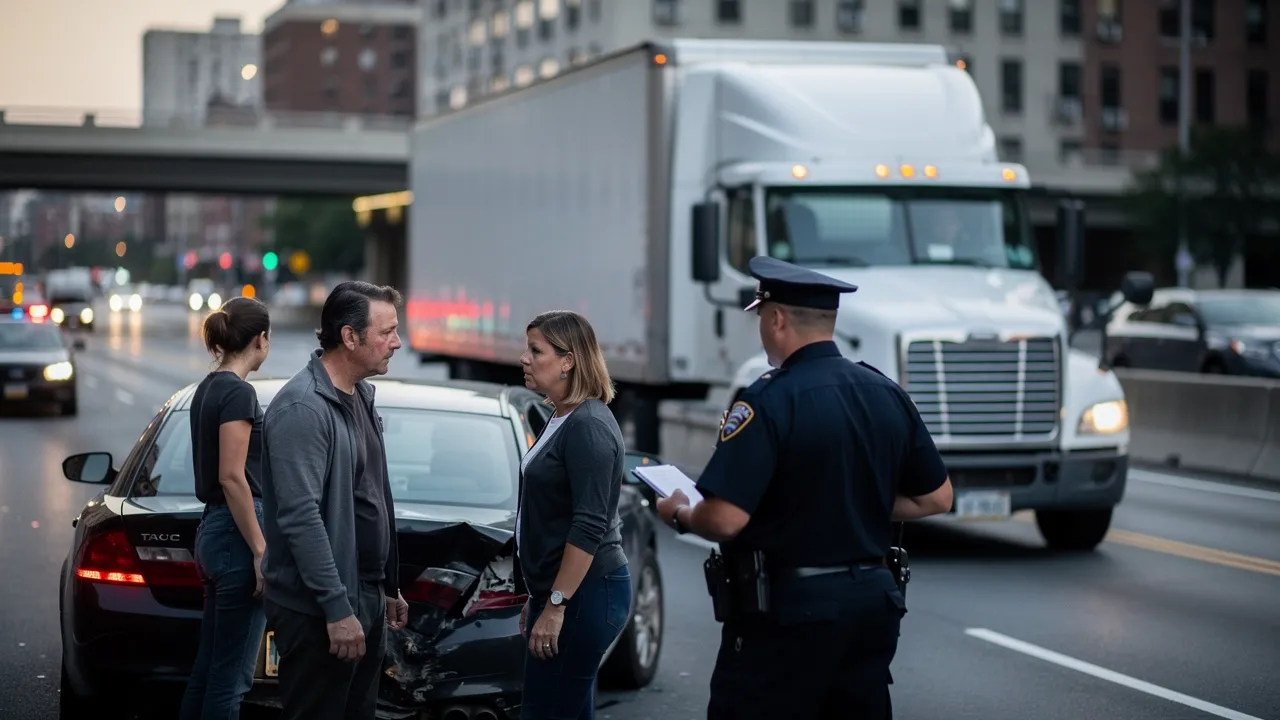
What should you understand about a semi-truck crash before taking the next step?
After a semi-truck crash in the Bronx, your first decisions should protect your health and preserve a clear account of what happened. The focus is the trucking record: the carrier and driver, cargo and maintenance questions, inspection and electronic-log records, and early preservation of evidence.
A commercial-vehicle accident involves a business-used motor vehicle that crashes on a public road. A semi-truck is one example, but commercial vehicles can include other trucks, delivery vehicles, construction vehicles, and company vehicles. Investigating a commercial-vehicle crash and sorting out responsibility can be more complex than handling a typical car-accident case.
That complexity does not determine who caused your crash. It explains why several questions may need attention at the same time:
- Who was driving the truck, and what was happening on the road?
- Who owned or operated the truck?
- Was the cargo loaded and secured properly?
- Did maintenance, a defective part, or a roadway condition matter?
- Which insurance policies and records may apply?
Commercial trucks share New York roads with drivers, cyclists, and pedestrians. Their size and weight can make collisions especially severe. If the crash happened near the Cross Bronx Expressway, a local street in Fordham, a commercial route near Hunts Point, or another New York location, begin with safety rather than conclusions.
Write down what you know while it is fresh, but do not guess about fault. Your job at the beginning is to obtain medical care, make the scene safe, report the collision, preserve available information, and get qualified guidance when the unresolved questions require it.
Which crash patterns and contributing factors should you record?
Truck crashes can involve 18-wheelers, garbage trucks, cargo trucks, and delivery vehicles. In the Bronx, the truck may be moving through a major route, making a turn on a neighborhood street, stopping near a loading area, or sharing a crowded road with pedestrians and cyclists. Record the truck type and the setting without trying to decide the legal cause.
Your description should be concrete. Note whether the truck was turning, changing lanes, stopping, backing, jackknifing, or carrying a load that appeared loose. Record the road, traffic direction, weather and lighting conditions, nearby businesses, traffic signals, lane markings, and any construction or obstruction that you personally observed. Use only what you saw or heard.
Driver conduct may also become a question. Long hours and strict deadlines can contribute to driver fatigue, which impairs judgment and slows reaction times. Texting, eating, or using GPS devices can distract a truck driver and increase crash risk. Do not confront the driver or accuse anyone at the scene. Instead, record your own observations and identify witnesses who may have seen the events.
Speed is another fact investigators may examine. Speeding factors into 29% of all traffic accidents, and a speeding truck is harder to control and usually increases crash severity. The figure describes all traffic accidents, not semi-truck crashes in the Bronx. Treat it as general context, not as a conclusion about your collision.
The truck itself may raise separate questions. Brake failures, tire blowouts, and poor maintenance can cause truck crashes. Overloaded or improperly secured cargo can shift, cause a truck to lose control, and contribute to jackknifing.
Take photographs only when you can do so safely. Capture the truck’s identifying details, visible damage, tires, cargo, license plate, company name, and any warning or inspection information that is visible from a safe position. Do not climb onto the truck, open cargo areas, move parts, or interfere with police or emergency personnel.
A truck case may involve more than the driver. Potentially responsible parties may include the driver, trucking company, parts manufacturer, cargo shipper or loader, and third-party contractor. That list identifies questions for later review; it does not establish that any particular person or business caused your crash.
Keep the distinction clear. Your scene notes describe facts. A qualified professional can later assess how those facts relate to responsibility, coverage, and the next legal step.
What should you do at the Bronx crash scene and during the first hours?
At a Bronx crash scene, put safety first and call 911 so police and EMS can come to the scene. If anyone has a serious injury, a fire risk, leaking fuel, or an unsafe position near traffic, tell the dispatcher and follow emergency instructions.
If possible, move the vehicle off the road. Protect the scene with reflectors or flares when you can do so without putting yourself in danger. Watch for leaking fuel and keep yourself and others away from oncoming traffic. Do not return to a lane, shoulder, or damaged vehicle if doing so would expose you to another collision.
New York DMV guidance addresses more than 300,000 traffic crashes in New York State each year. That statewide figure measures traffic crashes, not semi-truck crashes and not the number of injuries in your case. At your scene, the practical priority remains immediate safety.
If you can do so safely, exchange names, contact information, insurance details, and the trucking company’s information with the drivers involved. Ask witnesses for their names and contact information. Do not chase a departing vehicle or walk into traffic to obtain a photograph.
Record the police agency responding to the scene and ask how to obtain the accident report. Photograph vehicle positions, damage, skid marks, injuries, traffic controls, and the truck’s identifying details when it is safe. Your own evidence and the official NYPD accident report may be important later.
Seek medical attention the same day or soon after the crash, even if you think you are okay or only mildly hurt. Some injuries, including whiplash and concussions, are not apparent at the scene and may show symptoms later. Call 911 for emergency symptoms, or follow the direction of EMS and a qualified medical professional.
Get a prompt medical evaluation and follow your treatment recommendations. Tell the clinician that you were involved in a semi-truck crash, describe your symptoms accurately, and ask what follow-up care is needed. Medical care is a health decision, not a way to prove a legal claim.
After a truck accident, we recommend calling 911, getting medical care, photographing the truck and its details, obtaining witness information, and avoiding statements to the trucking company’s insurance adjuster before you receive qualified guidance. You can report that a crash occurred and provide basic identifying information without guessing about injuries, speed, fault, or future treatment.
Do not delete photographs, alter messages, or post a detailed account on social media. Keep your account factual and consistent. If you are too injured or disoriented to handle these steps, ask a trusted person to help preserve information while you obtain care.
How should you report the crash and begin the New York insurance process?
Report the crash promptly to your insurance company and the local police department. Give the basic facts requested for the report, including the date, location, vehicles involved, and known injuries. Keep the claim number, adjuster’s contact information, and copies of every document you send or receive.
If anyone was injured or property damage exceeds $1,000, New York Department of Financial Services guidance identifies an accident report to the Department of Motor Vehicles as a required step. The MV-104 form is usually included with claim materials from the insurer. Ask a qualified professional about your particular reporting duties if the facts are unclear.
The cited guidance identifies the NF-2 as the no-fault application and says coverage may include medical bills and lost wages up to the policy limits.
Treat 30 days as a prompt deadline question, not as a complete answer about every claim. Coverage, eligibility, exclusions, and the correct insurer can depend on how the crash happened and how you were involved. Submit information through the applicable process and ask qualified legal help about questions you cannot resolve.
Some trucking records also move through short reporting windows. A driver who receives a roadside inspection report must deliver it to the motor carrier within 24 hours. That requirement concerns the driver’s report to the carrier; it is not a deadline for you to complete your injury claim.
Keep every insurance letter, email, text message, recorded-message notice, estimate, medical bill, and request for a statement. Do not ignore a communication simply because you disagree with it. Mark the date received, save the original, and obtain guidance before giving a substantive recorded statement or signing a release.

What should you document about your injuries, treatment, and losses?
Your medical record should begin with the first evaluation and continue through follow-up care. Prompt medical care creates a record of your injuries, and you should follow your doctor’s treatment plan. Keep discharge instructions, referrals, prescriptions, imaging information, appointment dates, and notes about symptoms or changes.
Use a simple daily record. Write down pain, sleep problems, mobility limits, work restrictions, missed activities, and questions for your next appointment. Describe what you can no longer do in concrete terms. Do not exaggerate and do not minimize symptoms to reassure family members or an insurer.
Keep medical bills, receipts, and crash-related documents in one secure folder. Include pharmacy receipts, transportation costs connected to treatment, employer communications about missed work, wage records, repair estimates, towing records, and correspondence from insurers. Your records should show dates and amounts without altering the original documents.
If another person helps you, ask that person to preserve the originals and label copies clearly. Back up photographs and messages in more than one location. A short index can help you find a document quickly:
- Crash date, location, and police information
- Medical visits, providers, treatment, and restrictions
- Bills, receipts, wage records, and repair documents
- Witness names and contact details
- Insurance calls, letters, emails, and claim numbers
Document vehicle positions, damage, skid marks, injuries, and witness contact information when it is safe. If you could not photograph the scene because of emergency treatment or dangerous traffic, write down what you remember and ask whether someone else captured images.
The official NYPD accident report may be critical, and your own evidence can be valuable later. Neither source replaces the other. The report may contain information you did not see, while your photographs, treatment notes, and witness details may preserve things that are not fully described in a report.
Keep a communication log with the date, sender, phone number, subject, and a short factual summary. Save voicemails and letters instead of relying on memory. Provide requested information promptly to your attorney if you retain one, while asking questions when a request is unclear.
Do not edit a photograph, delete a message, or create a new account of events to fit a later conversation. A clean record is easier to review and less likely to confuse you when different insurers, medical offices, employers, or agencies contact you.
Which trucking records should be preserved quickly?
A truck investigation may require logbooks, maintenance records, black-box data, and available surveillance footage. It may also seek the police report, available traffic-camera footage, driver files, inspection material, cargo information, and communications about the trip. These records may sit with different businesses or agencies.
Preserve the truck’s black box, electronic logs, driver files, and maintenance records right away because much of this evidence can be lost quickly. You should not attempt to obtain or alter restricted truck data yourself. Ask a qualified professional how to request preservation.
Federal rules require covered commercial drivers to inspect vehicles and complete and sign a report at the end of each day’s work, subject to an intermodal-equipment exception. Every commercial driver must prepare a record of duty status for each 24-hour period, update each duty-status change, and avoid knowingly falsifying logs or reports.
These rules help identify the kinds of records that may exist. They do not show that a driver or carrier violated a rule in your crash. An investigation must compare the applicable records with the vehicle, route, timing, inspection history, and other facts.
A motor carrier must retain the periodic inspection report for 14 months and keep documentation of the most recent periodic inspection on the vehicle. A roadside inspection report has its own process: the driver delivers it to the carrier within 24 hours, and the carrier must sign and return the completed report within 15 days while verifying that violations were corrected. The carrier must retain a copy for 12 months after the inspection date.
These retention periods describe records held by the carrier. They are not promises that every record will remain available in a particular case. If the crash may involve maintenance, inspection, driver hours, cargo, or vehicle defects, raise preservation promptly.
Make a preservation list while the details are fresh:
- Identify the truck, carrier, trailer, driver, and cargo information shown at the scene.
- Save photographs, witness details, police information, and nearby business or traffic-camera locations.
- Record every insurer or company representative who contacts you.
- Ask qualified help about preserving electronic data, inspection reports, logs, maintenance records, and surveillance.
- Keep your own medical and employment records organized as the investigation continues.
Early action does not decide responsibility. It gives the people reviewing the crash a clearer chance to locate records before ordinary retention practices remove them.

How should you handle calls and requests from insurers?
Start by reporting the crash through the applicable insurance process. Then separate administrative communication from questions about fault, injury severity, future treatment, and responsibility for the truck. Give accurate basic information, but do not guess when you do not know an answer.
Insurance companies can affect how long a truck case takes. Some cooperate, while others may delay or dispute claims. Keep a written log of calls and ask for requests in writing when possible. Before giving a recorded statement, signing a release, or accepting a payment that may close part of a claim, obtain qualified guidance.
New York’s compulsory no-fault law may provide up to $50,000 in benefits to eligible people injured in a motor-vehicle accident, subject to stated exclusions. The $50,000 figure measures the possible no-fault benefit limit under that guidance; it is not a prediction of compensation for your semi-truck crash and does not answer every coverage question.
If you were injured by an uninsured driver, New York State Bar Association guidance advises contacting your insurance company and attorney immediately because your own policy may provide a personal-injury claim. Do not assume that the truck’s insurance is the only policy that matters.
Before a consultation or substantive insurer conversation, prepare questions such as:
- Which claim should I report, and what documents should I keep?
- What should I say if an adjuster asks for a recorded statement?
- Does the evidence suggest that more than one company or policy needs review?
- How should medical bills, lost wages, and ongoing treatment be documented?
- What records should be preserved from the truck, carrier, roadway, or nearby businesses?
- Has any proposed release or payment affected a separate injury or vehicle-damage issue?
The answers depend on your facts. Use the questions to organize the discussion, not to reach a conclusion before the records are reviewed.
How long can a semi-truck injury claim take?
A semi-truck injury claim does not have one standard timeline. A published estimate says semi-truck accident settlements typically take 6 months to 2 years. Another published estimate says less complex claims with smaller damages may resolve within six to nine months, while major injury claims involving extensive medical treatment and lost wages can take a year or longer.
These are general third-party estimates, not a New York prediction for your case. The timeline depends on injury severity, how clear responsibility is, insurer cooperation, the records that must be gathered, and whether a lawsuit must be filed. Catastrophic-injury cases often take longer because assessing the full medical prognosis and lifetime-care costs takes time.
The process often moves through overlapping stages rather than a single straight line:
- Early care and reporting: You obtain medical attention, report the crash, and organize the first documents.
- Evidence preservation: Records may be requested from the truck, carrier, insurers, police, businesses, and other sources.
- Medical evaluation: Treatment and recovery provide information about the injury and ongoing needs.
- Claim review: The parties exchange information and may discuss whether a resolution is possible.
The stages can overlap. A vehicle-damage claim may resolve separately while a personal-injury claim remains open because injury claims usually take longer to evaluate medical recovery, lost income, and future needs.
A published guidance source says claims involving severe injuries, permanent disability, or fatalities may take more time, and that insurers may conduct extensive reviews before large payouts exceeding $500,000. That figure describes the threshold discussed in the cited guidance, not the value of your claim or an expected result.
Do not rush treatment or sign a final release simply to shorten the process. At the same time, do not let an unanswered letter or preservation issue sit without attention. Ask qualified help what the next procedural step is and what information is still needed.
Plan for the possibility that the timeline will change as facts develop. A disputed responsibility question, multiple companies, missing records, continuing treatment, or an insurer dispute can add work. A clear vehicle-damage issue may move on a different schedule from your injury claim.
Track the dates of medical visits, insurer communications, document requests, and preservation efforts. That calendar will not predict the result, but it will help you see what has happened and identify the next unanswered question.

When is a consultation with a New York truck-accident lawyer useful?
Consider contacting a qualified truck-accident lawyer early, even within days of the accident, to discuss evidence, insurance communications, and next steps. Early review may be useful when you have continuing or serious injuries, several companies appear connected to the truck, an insurer requests a recorded statement, or important records may be difficult to preserve.
A truck-accident case may involve the driver, trucking company, maintenance company, cargo loader, parts manufacturer, and other parties. Sorting out responsibility can take time. A consultation can help you identify which questions require records and which immediate communications deserve attention, without deciding your eligibility, claim value, or outcome in advance.
A consultation may be useful if any of these conditions applies:
- You are receiving ongoing treatment or do not yet know the full effect of the injuries.
- You cannot identify all the truck companies, insurers, or contractors involved.
- You are worried that electronic data, inspection records, or video may disappear.
- An adjuster asks for a recorded statement, broad medical authorization, or release.
- You need help separating no-fault questions from a possible injury claim.
- You cannot travel easily because you are recovering at home or in a hospital.
These are reasons to seek qualified review, not conclusions about the legal strength of your claim.
What should you bring to the consultation?
Bring the records you already have, even if the file is incomplete. We investigate cases by gathering police reports, photos, witness statements, and medical records. Your organized materials can make the first discussion more focused and show which information still needs to be obtained.
Create one consultation folder with these sections:
- Crash: police information, report number, photographs, videos, scene notes, vehicle details, and witness contacts.
- Medical: emergency records, provider names, diagnoses, treatment dates, prescriptions, restrictions, bills, and receipts.
- Insurance: policy information, claim numbers, letters, emails, adjuster contacts, recorded-message notices, and proposed forms.
- Work and daily life: employer communications, wage records, missed work, transportation needs, and changes in household tasks.
- Truck evidence: company name, trailer or plate details, cargo observations, nearby cameras, and any inspection or maintenance information you received.
Do not delay a consultation because you are missing one document. Bring a written list of what you have requested and what you still need.
Write down questions before the meeting so pain, medication, or stress does not push them aside. Ask how the available facts should be preserved, which parties and policies may require review, how insurer communications should be handled, and what additional medical or employment records may help explain the situation.
Ask what happens next after the consultation, what information is still needed, and which decisions should wait until the records are reviewed. Take notes during the discussion and ask for plain-language explanations of unfamiliar terms.
We offer free consultations and can arrange home or hospital visits for clients who cannot travel. If you are in the Bronx and cannot reach an office because of your injuries, mention that access need when you make contact. Bring a trusted support person if you want help remembering questions and instructions.
What can you do today to keep the crash record organized?
Use a short action list instead of trying to solve every legal question at once:
- Save the police information, photographs, witness details, medical records, bills, and insurance communications in one folder.
- Write a factual timeline from the crash through each medical visit and insurer contact.
- Add every new symptom, treatment instruction, work restriction, expense, and missed appointment to your records.
- Preserve the truck’s identifying information and list possible sources of video, electronic data, inspection records, and maintenance records.
- Keep originals unchanged and back up important files.
- Write down unresolved questions for qualified review rather than guessing at the answer.
A carrier must retain a copy of a roadside inspection report for 12 months after the inspection date. That is a retention rule for the carrier’s report, not a reason to wait. Preserve your own materials and raise possible trucking evidence promptly.
Review your communication log before each call. Know the claim number, the date of the crash, the medical care you have received, and the documents already sent. Report required information accurately, but pause before giving opinions about fault, future treatment, or the full effect of your injuries.
If your health, insurance communications, missing evidence, or the number of parties makes the next step unclear, place those issues at the top of your consultation list. Organized facts help you ask a focused question without pretending that the answer is already known.

How can you request a free consultation?
After a semi-truck crash in the Bronx or elsewhere in New York, focus first on safety and medical care. Then preserve the scene information, report the crash, organize treatment and insurance records, and raise trucking evidence questions before records become harder to obtain.
The Law Offices of Evan W. Kohn offers a free consultation about the crash and possible next steps. We serve clients in the Bronx and can arrange visits at home or in the hospital when a client cannot travel. The legal information provided here is general and does not replace advice from a qualified professional, who must assess whether any particular step fits your situation.
What should you ask before discussing a semi-truck crash with a lawyer?
How long does a semi-truck crash claim usually take in New York?
General published estimates place many semi-truck settlements at about six months to two years, while major-injury cases may take longer. Medical recovery, disputed responsibility, multiple companies, missing records, insurer cooperation, and litigation can extend the timeline. These estimates are not a prediction for an individual New York claim.
Can the vehicle-damage claim resolve before the injury claim?
Yes. A vehicle-damage issue may be resolved while the personal-injury claim remains open. Injury claims often require more time to evaluate medical recovery, lost income, and future needs, so do not treat a repair payment or property settlement as resolving every injury issue.
What truck records should be preserved after a crash?
Ask qualified help to preserve electronic logging data, black-box information, driver files, inspection reports, maintenance records, cargo information, and available traffic or business video. Some trucking evidence may be lost under ordinary retention practices, so save your own photographs, witness details, police information, and insurer communications and raise preservation concerns promptly.
Hurt like this?
We handle Car Accidents cases in the Bronx.
Evan W. Kohn, Esq. — more than 35 years of Bronx personal-injury practice. Reading about it only goes so far; a free consultation tells you what actually applies to your case.