
Wrongful Death
Understanding NY Statute of Limitations for Wrongful Death Claims
Introduction
Losing a loved one is an unimaginable pain, and navigating the legal complexities of wrongful death claims in New York can feel overwhelming.
With a strict statute of limitations set at two years from the date of death, the urgency to act cannot be overstated.
We’ll explore the important details of the statute, highlighting:
- Who is eligible to file a claim
- The exceptions that may extend the timeline
- The dire consequences of missing the deadline
Let’s discuss how families can find their way through these challenges to seek the justice and support they truly deserve.
Define the Statute of Limitations for Wrongful Death Claims in New York
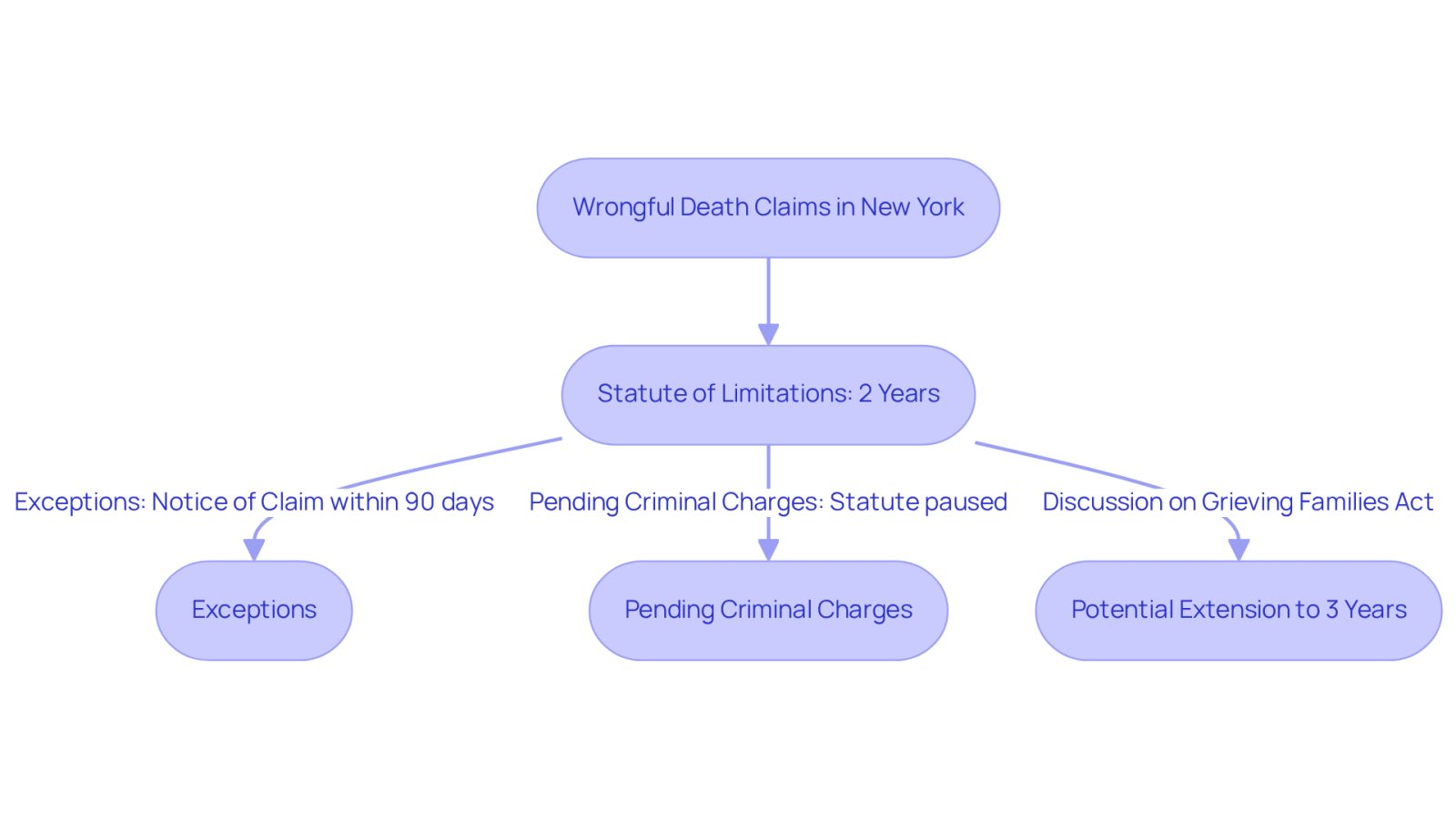
Losing a loved one is devastating, and understanding the legal timelines can feel overwhelming during such a painful time. In New York, the statute of limitations for wrongful death claims is generally set at two years from the date of the deceased’s death, as specified in the Estates, Powers and Trusts Law (EPTL) § 5-4.1. This means that families or the estate of the deceased have a two-year period to initiate legal action against the responsible party. Missing this deadline can mean losing the chance to seek justice due to the statute of limitations for wrongful death, which is why it’s so important for families to act quickly during this difficult time.
The two-year limit is strict, but there are exceptions, like when dealing with government entities, which require a Notice of Claim within 90 days after the estate representative is appointed. Additionally, if there are pending criminal charges against the defendant, the statute of limitations is paused until the conclusion of the criminal case, allowing one year to file a civil lawsuit afterward.
Recent discussions around the Grieving Families Act highlight the potential for extending the statute of limitations to three years, which could provide relatives with additional time to file claims. However, the current law remains in effect, emphasizing the critical need for timely legal consultation and action. Taking timely action can make all the difference in securing the justice and support your family deserves.
Identify Who Can File a Wrongful Death Lawsuit and Its Impact on the Statute of Limitations
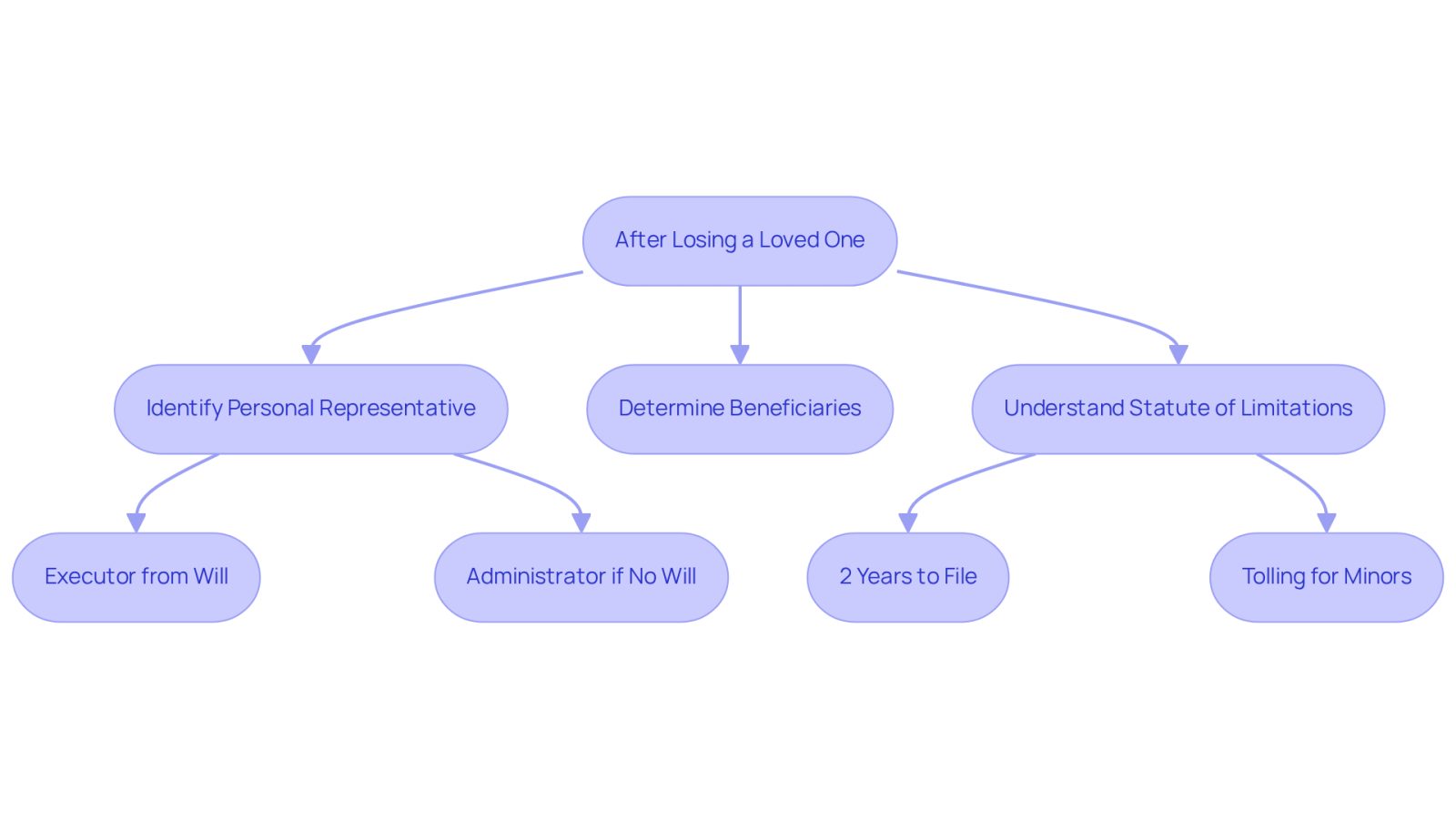
Navigating the aftermath of losing a loved one can feel like an insurmountable challenge, especially when faced with the complexities of the legal system. In New York, only the personal representative of the deceased’s estate is permitted to file a lawsuit for loss of life. This representative, often appointed by the court, may be an executor named in the deceased’s will or an administrator if no will exists. Acting on behalf of the beneficiaries – typically immediate family members like spouses, children, and parents – this role carries immense responsibility.
Losing a loved one is an unimaginable pain that can leave families feeling lost and overwhelmed. According to New York law, the NY statute of limitations for filing a negligent homicide lawsuit is two years from the date of passing. However, if the only beneficiary is a minor, the NY statute of limitations may be tolled until the minor reaches the age of 18, providing additional time to file. Without timely action, families may find themselves unable to seek the justice and compensation they deserve, compounding their grief and loss.
Understanding who can file is crucial, as it directly influences the timing and strategy of the legal action. A personal representative must ensure that all necessary documentation is prepared and submitted within the stipulated timeframe to avoid losing the right to seek compensation. Furthermore, if a request involves a municipality, a Notice of Claim must be submitted within 90 days of the decedent’s passing or the appointment of the decedent’s representative.
It’s crucial for families to act quickly, as understanding these legal nuances can be the key to finding peace and closure in a time of profound sorrow. The Law Offices of Evan W. Kohn are here to help navigate the intricacies of unjust fatality cases with expertise and care, ensuring that clients obtain the highest compensation they deserve. Additionally, grasping New York’s Pure Comparative Negligence Rule is essential, as it can significantly impact the compensation awarded in personal injury cases. If the court finds that the deceased was partially at fault for an accident, the compensation may be reduced accordingly.
Explore Exceptions to the Statute of Limitations for Wrongful Death Actions
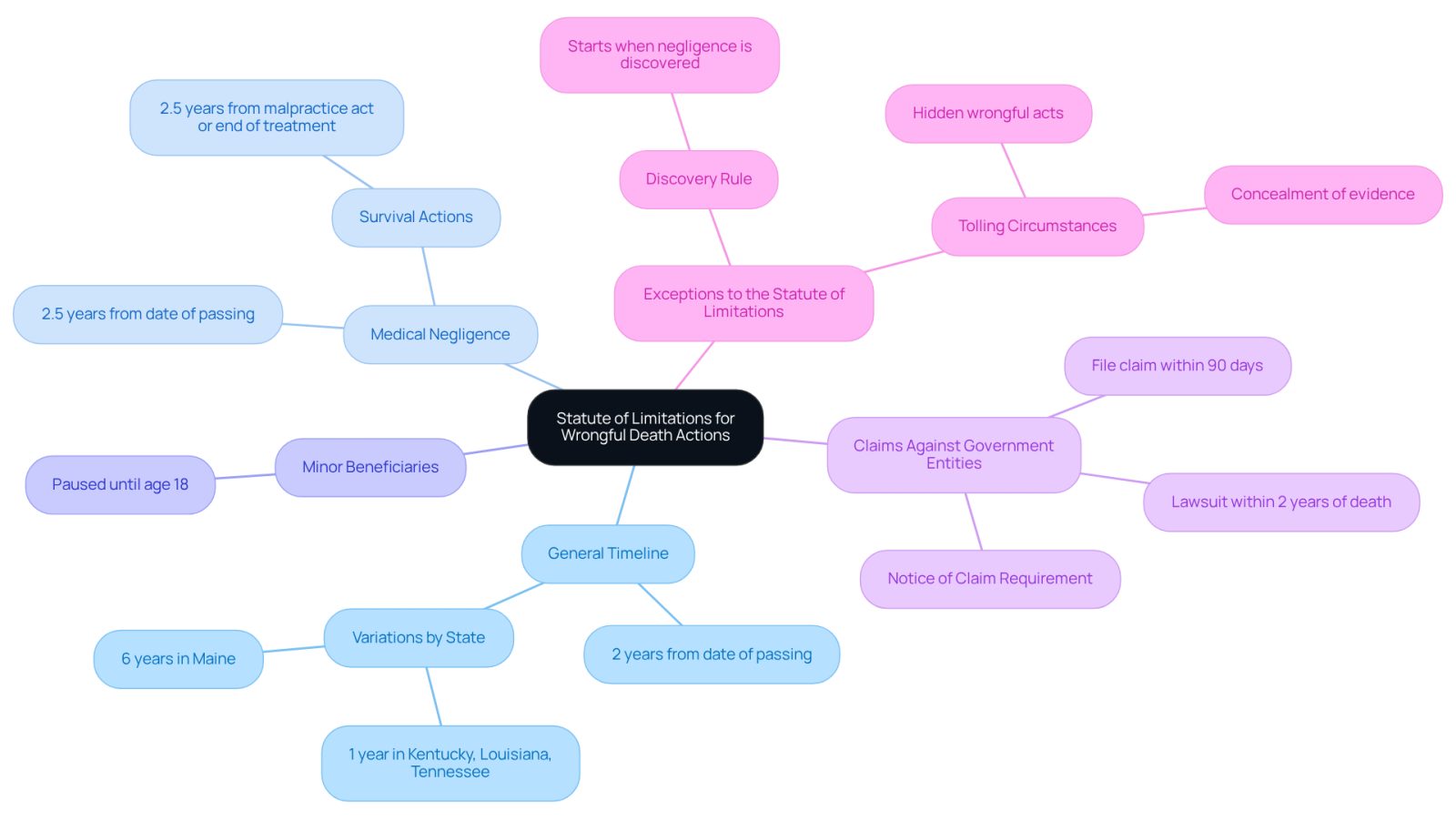
Navigating the aftermath of a loved one’s passing is never easy, especially when legal timelines add to the emotional burden. In New York, the ny statute of limitations wrongful death for unlawful fatality actions is two years from the date of passing. Yet, there are exceptions that can extend this timeline, providing families with the chance to seek the justice they deserve. For instance, wrongful death lawsuits stemming from medical negligence must be filed within 2.5 years of the date of passing, as specified by EPTL § 5-4.1. This extension gives families more time to gather evidence and build their case, particularly in complex medical situations.
In cases where the sole beneficiary of the wrongful death lawsuit is a minor, the statute of limitations can be paused until the child turns 18, allowing families to focus on healing without the pressure of tight deadlines.
Claims against government entities introduce further complexities. Families need to follow certain notice requirements, like filing a claim within 90 days of the incident, to ensure their voices are heard. Missing these requirements can mean losing the right to file a lawsuit altogether.
Grasping these exceptions is crucial, as they can greatly affect a family’s chance of receiving compensation. For example, while families usually have two years from the date of passing to file a lawsuit for negligence, this can vary significantly by state, with some regions allowing as little as one year and others extending up to six years. Missing the ny statute of limitations wrongful death can mean losing the chance for compensation, adding to the heartbreak of families already grieving.
In general, families dealing with unjust loss cases in New York should seek guidance from compassionate legal experts to ensure adherence to the ny statute of limitations wrongful death and improve their chances of a favorable outcome during such a challenging time.
Understand the Consequences of Missing the Statute of Limitations for Wrongful Death Claims
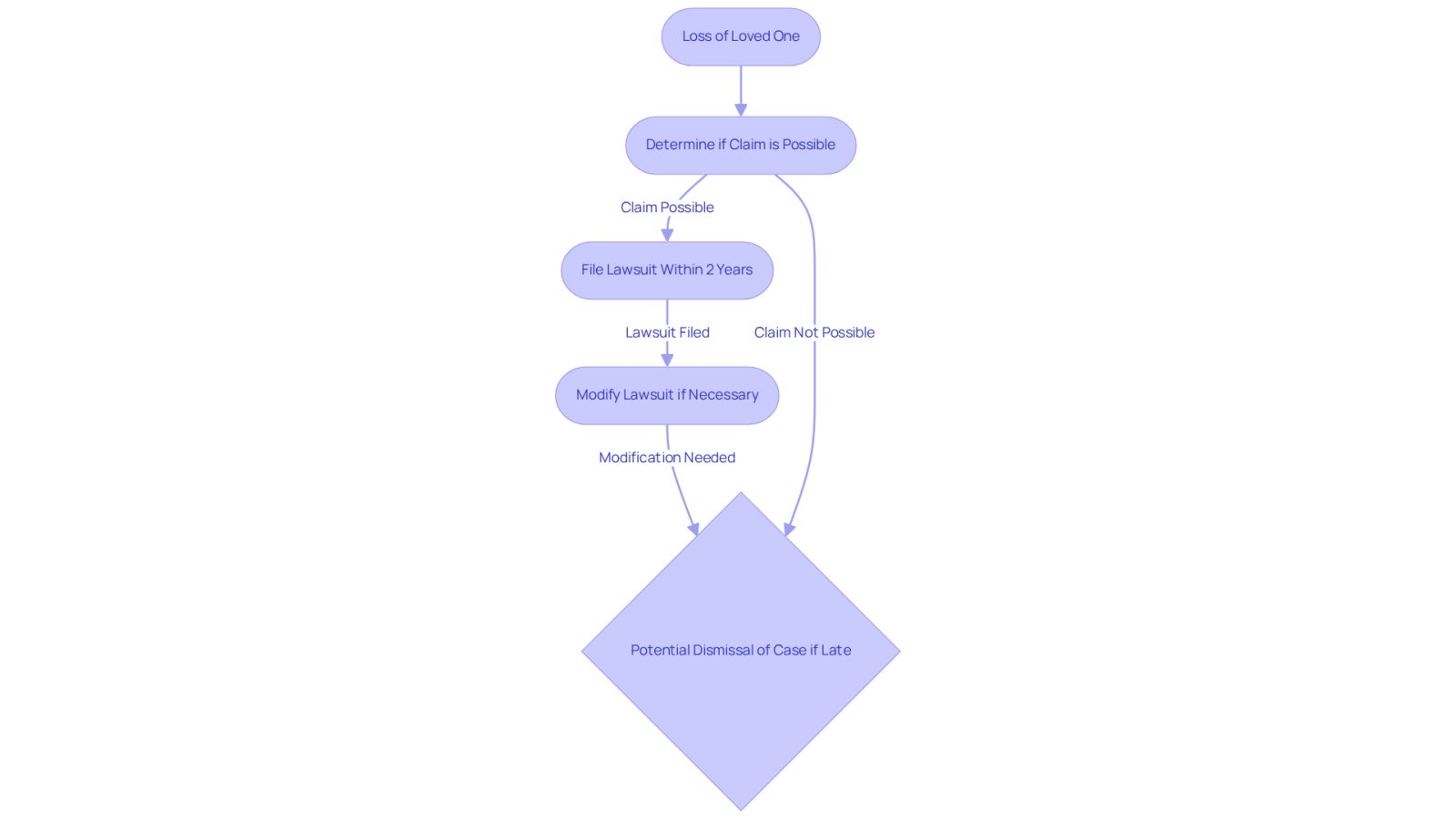
Imagine facing the heartbreaking reality of losing a loved one, only to discover that time is running out to seek justice for their loss. Missing the NY statute of limitations wrongful death claim in New York can have devastating consequences. If a lawsuit is not submitted within the two-year period set by the NY statute of limitations wrongful death, the court will dismiss the case. This means that even if the evidence is strong, families may find themselves without any legal options to pursue compensation for their grief.
The urgency of submitting requests cannot be overstated. It’s vital for families to act quickly, as every moment counts in protecting their rights and seeking justice. For instance, if a personal injury lawsuit has been initiated and the victim later passes away, the attorney may modify the lawsuit to include allegations of unlawful killing, but this must be completed within the specified time constraints.
Expert insights emphasize that each day that goes by brings households closer to losing their right to seek compensation forever. Without timely action, families risk losing their chance to honor their loved ones and secure the compensation they deserve.
Conclusion
Losing a loved one is an unimaginable pain, and understanding the statute of limitations for wrongful death claims in New York can feel like an added burden for grieving families. The law gives families a two-year window from the date of death to file a lawsuit, a timeline that can feel overwhelming during such a difficult time. This strict timeline can weigh heavily on families, making it all the more important to approach these legal waters with care and urgency.
We’ve discussed:
- How personal representatives play a vital role in filing claims
- The exceptions that might extend the statute of limitations
- The serious consequences families face if they miss these deadlines
It’s important for families to understand the nuances, like how the statute may toll for minors and the specific requirements when dealing with government entities.
Ultimately, taking swift action and seeking legal guidance can truly make a difference in securing the justice and support grieving families need during this challenging time. At The Law Offices of Evan W. Kohn, we’re here to help you navigate these tough times, offering free consultations and even home or hospital visits if needed. Understanding and following the statute of limitations isn’t just about legal requirements; it’s a vital step in honoring your loved one’s memory and ensuring their legacy lives on.
Frequently Asked Questions
What is the statute of limitations for wrongful death claims in New York?
In New York, the statute of limitations for wrongful death claims is generally set at two years from the date of the deceased’s death, as specified in the Estates, Powers and Trusts Law (EPTL) § 5-4.1.
What happens if the statute of limitations is missed?
If the statute of limitations is missed, families or the estate of the deceased may lose the chance to seek justice, as they will be barred from initiating legal action against the responsible party.
Are there any exceptions to the two-year limit for wrongful death claims?
Yes, there are exceptions. For claims involving government entities, a Notice of Claim must be filed within 90 days after the estate representative is appointed. Additionally, if there are pending criminal charges against the defendant, the statute of limitations is paused until the conclusion of the criminal case, allowing one year to file a civil lawsuit afterward.
What is the Grieving Families Act and how does it relate to the statute of limitations?
The Grieving Families Act is a recent discussion that highlights the potential for extending the statute of limitations for wrongful death claims to three years. However, as of now, the current law remains in effect, which is a two-year limit.
Why is it important to act quickly regarding wrongful death claims?
It is important to act quickly because timely legal consultation and action can make a significant difference in securing justice and support for the family during a difficult time.
List of Sources
- Define the Statute of Limitations for Wrongful Death Claims in New York
- What Is the Statute of Limitations on Wrongful Death in New York? | Lever & Ecker, PLLC
- Hochul vetoes expansion of New York’s wrongful death law
- Radical Changes to New York’s Wrongful Death Law Advocated by State Legislature
- New York State Legislature Passes Bill That Will Expand Wrongful Death Damages
- New York Statute of Limitations for Wrongful Death | Meirowitz & Wasserberg
- Identify Who Can File a Wrongful Death Lawsuit and Its Impact on the Statute of Limitations
- New York Wrongful Death Lawyer
- Wrongful Death FAQs Answered by NYC Attorneys
- Who Can File a Wrongful Death Claim in New York? A Guide to a Survivor’s Rights
- Who Can File A Wrongful Death Claim In New York
- New York Wrongful Death Claims Guide
- Explore Exceptions to the Statute of Limitations for Wrongful Death Actions
- New York Statute of Limitations for Wrongful Death | Meirowitz & Wasserberg
- Tavrn Blog | New York Medical Malpractice Statute of Limitations (2026)
- Wrongful Death Statute of Limitations: Deadlines & Exceptions | Macomb Injury Lawyers
- Wrongful Death Statute of Limitations in NYC: Complete Guide
- Understand the Consequences of Missing the Statute of Limitations for Wrongful Death Claims
- New York State Legislature Passes Bill That Will Expand Wrongful Death Damages
- NYC Wrongful Death Statute of Limitations | Douglas & London
- Wrongful Death Statute of Limitations New York Guide
- Wrongful Death Statute of Limitations in New York
- Radical Changes to New York’s Wrongful Death Law Advocated by State Legislature
Hurt like this?
We handle Wrongful Death cases in the Bronx.
Evan W. Kohn, Esq. — more than 35 years of Bronx personal-injury practice. Reading about it only goes so far; a free consultation tells you what actually applies to your case.