
Workers' Compensation
Understanding Workers Comp Settlement for Meniscus Tear Claims

Introduction
For those dealing with a torn meniscus, the journey to understanding workers’ compensation settlements can feel overwhelming and confusing. Many are struggling with the pain and limitations that come with this injury. As medical bills pile up and income is lost, it becomes crucial to understand their rights and how to navigate the claims process. Yet, figuring out how much compensation is fair can be tricky, especially with so many factors at play, like the severity of the injury and local laws.
This article will explore the essential aspects of securing a workers’ comp settlement for meniscus tear claims, offering valuable insights to empower individuals in their pursuit of justice and support.
Define Torn Meniscus Injuries and Their Impact on Workers’ Compensation
Imagine waking up one day with a sharp pain in your knee, a pain that makes even the simplest tasks feel daunting. A torn meniscus is a common knee injury that can occur from sudden twisting or rotating movements, often during activities like lifting or walking on uneven surfaces. The pain, swelling, and stiffness can make it hard to move your knee, turning everyday tasks into real challenges. This injury can lead to overwhelming medical bills and lost wages, making it crucial for you to understand your rights and how to navigate the claims process.
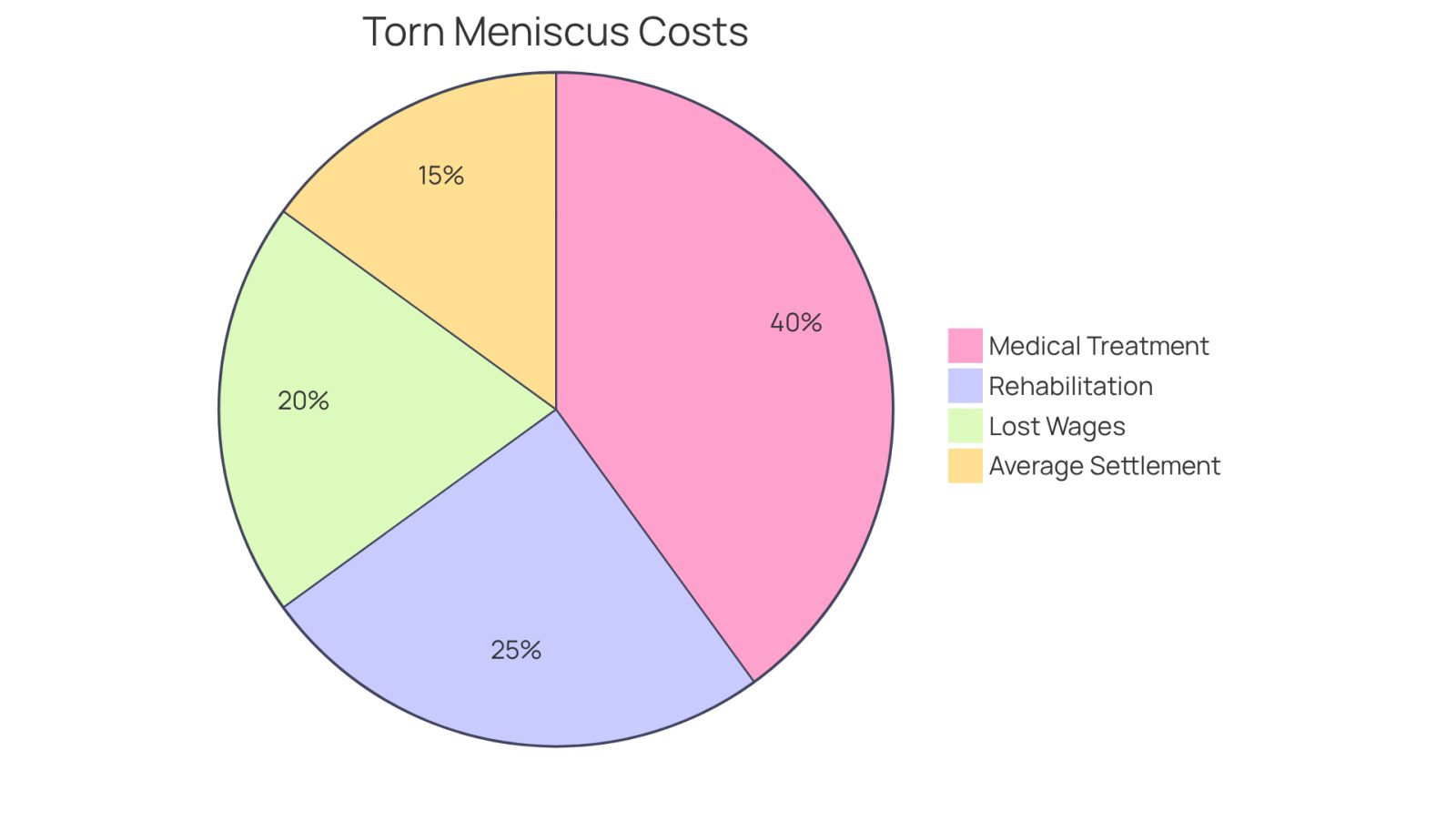
If your injury occurred while working, you might qualify for a workers comp settlement for meniscus tear, which can help cover medical treatment, rehabilitation, and lost wages. A workers comp settlement for meniscus tear can help ease the burden by covering costs like doctor visits, surgery, physical therapy, and medications. In Illinois, the workers comp settlement for meniscus tear injuries can range widely, from around $28,500 for less severe cases to over $238,000 for more complex situations, reflecting the serious impact these injuries can have on your life. The financial toll of work-related knee injuries is staggering, with average costs exceeding $33,000, which underscores the importance of understanding your options for a workers comp settlement for meniscus tear.
A torn meniscus can drastically affect your ability to work, sometimes leading to temporary or even permanent disability, which can be incredibly daunting. Returning to your previous job can be challenging, especially if your injury leads to long-term complications that affect your daily life. Understanding your injury and its effects is vital for navigating the workers comp settlement for meniscus tear process and securing the support you need to recover. It’s important to let your employer know about your injury as soon as possible to avoid complications with your claims. Consulting a workers’ compensation lawyer can also help ensure you receive the benefits you deserve.
Explore Factors Affecting Workers’ Comp Settlements for Torn Meniscus
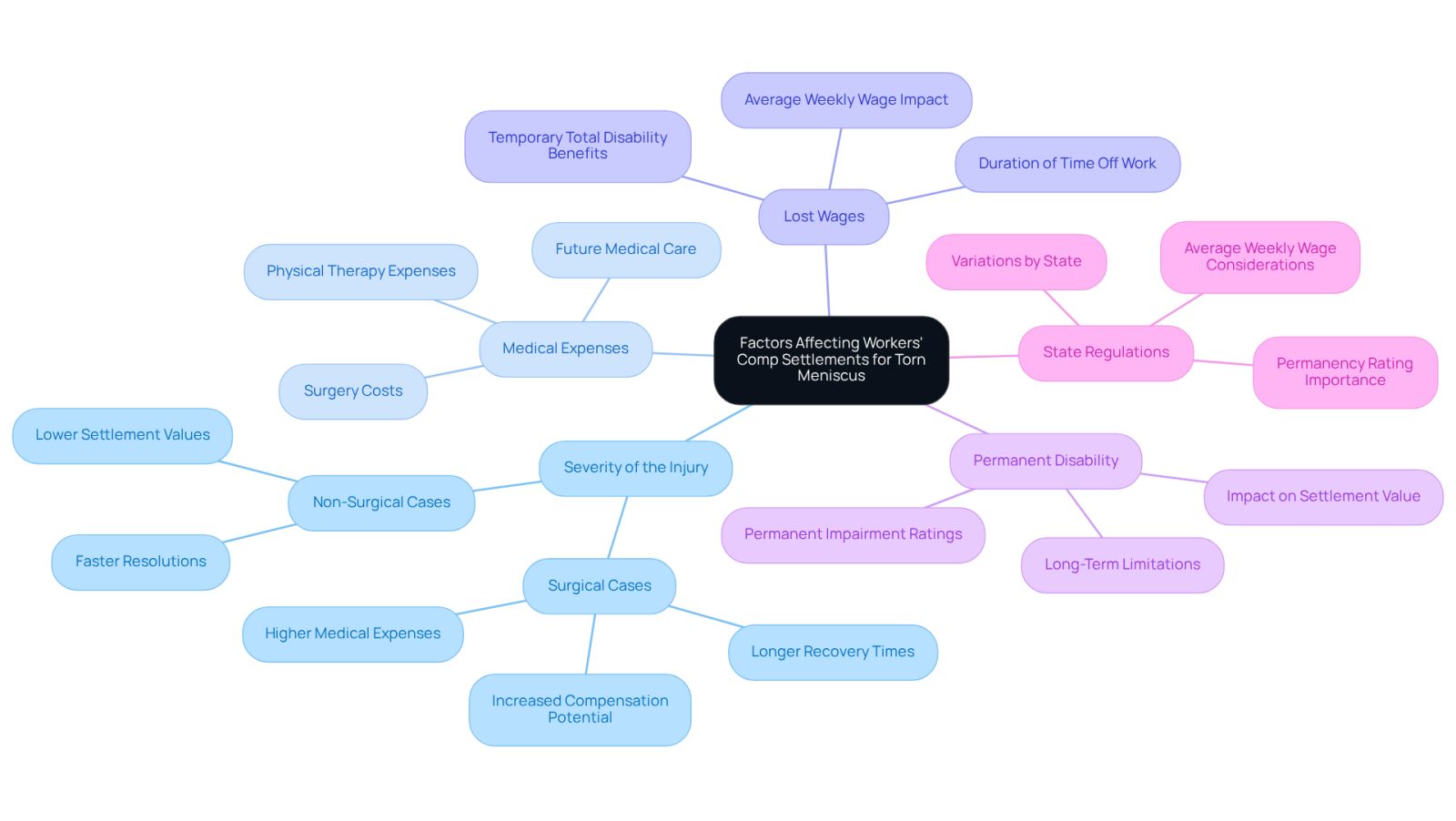
Several critical factors influence the settlement amount for a torn meniscus injury, including:
- Severity of the Injury: When a torn meniscus requires surgery, it can feel daunting, but it often leads to higher settlements due to the severity of the injury. Surgical cases typically come with higher medical expenses and longer recovery times, which can significantly boost the overall value of your compensation.
- Medical Expenses: The costs of your medical treatment, including surgeries and physical therapy, are crucial in figuring out your settlement amount. Claims related to surgery often carry more weight because they confirm the severity of your injury and can lead to higher payments through disability ratings. Increased medical expenses directly impact the total value of your claim.
- Lost Wages: Being away from work due to your injury can be tough, and it directly impacts your settlement. The longer you’re out, the more your wage loss benefits can add up, as they’re usually based on your average weekly wage.
- Permanent Disability: If your injury leads to lasting limitations, it can greatly increase the value of your settlement, which is something to keep in mind. Permanent impairment ratings from medical experts play a vital role in determining compensation and can significantly influence settlement calculations if surgery results in ongoing limitations.
- State Regulations: Each state has its own rules about employee benefits, which can affect how your settlement is handled. For example, in Illinois, the permanency rating and average weekly wage are two of the most significant factors driving the workers comp settlement for meniscus tear cases.
Understanding these critical elements can empower you in negotiations, ensuring you receive the compensation you truly deserve for your pain and suffering.
Outline the Process for Filing a Workers’ Comp Claim for a Torn Meniscus
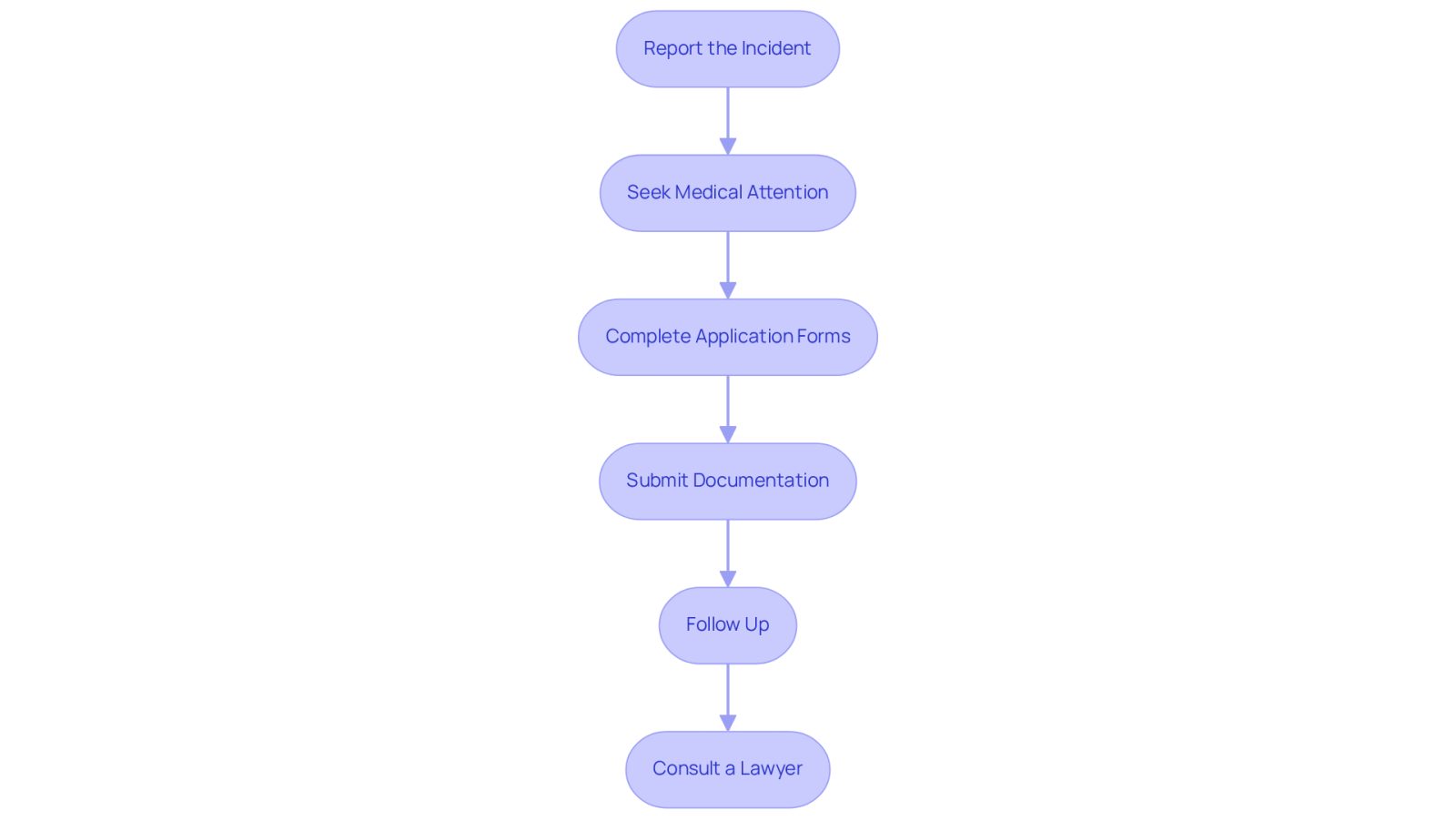
Navigating the aftermath of a torn meniscus can be daunting, especially when you’re unsure of how to secure the support you need. Here are some essential steps to help you through the workers’ compensation claim process:
- Report the Incident: Let your employer know about the incident as soon as you can; it’s an important first step in getting the help you need. Most states require this notification within a specific timeframe, usually within 45 days, to prevent denial of benefits.
- Seek Medical Attention: Getting medical attention is crucial; it not only helps you heal but also documents your injury for your claim. Make sure your physician notes the work-related aspect of your injury, as this is essential for your request.
- Complete Application Forms: Filling out the necessary application forms can feel overwhelming, but it’s essential for your claim. You’ll need to fill out forms provided by your employer or the state workers’ compensation board, such as Form CA-1 for traumatic injuries or Form CA-2 for occupational diseases.
- Submit Documentation: Make sure to include all relevant medical records and treatment plans; this documentation is vital for your claim. Many legitimate requests are initially rejected due to paperwork errors or lack of medical evidence, so thoroughness is key.
- Follow Up: Keep an eye on your request status and respond quickly to any inquiries; staying proactive can make a big difference in preventing delays in processing your request.
- Consult a Lawyer: If you encounter challenges, consider reaching out to a personal injury attorney; they can guide you through the process. Legal representation can be invaluable in navigating the complexities of claims and appealing denied requests.
By following these steps, injured workers can effectively navigate the claims process and increase their chances of securing the benefits they deserve. Remember, taking these steps not only helps you in your recovery but also ensures you’re not left to face the challenges alone. For example, workers comp settlements for meniscus tear damages can be substantial, with instances including $238,742 for a roofer and $300,000 for a truck driver who needed a total knee replacement due to a workplace accident.
Identify Common Challenges in Securing Settlements for Torn Meniscus Injuries
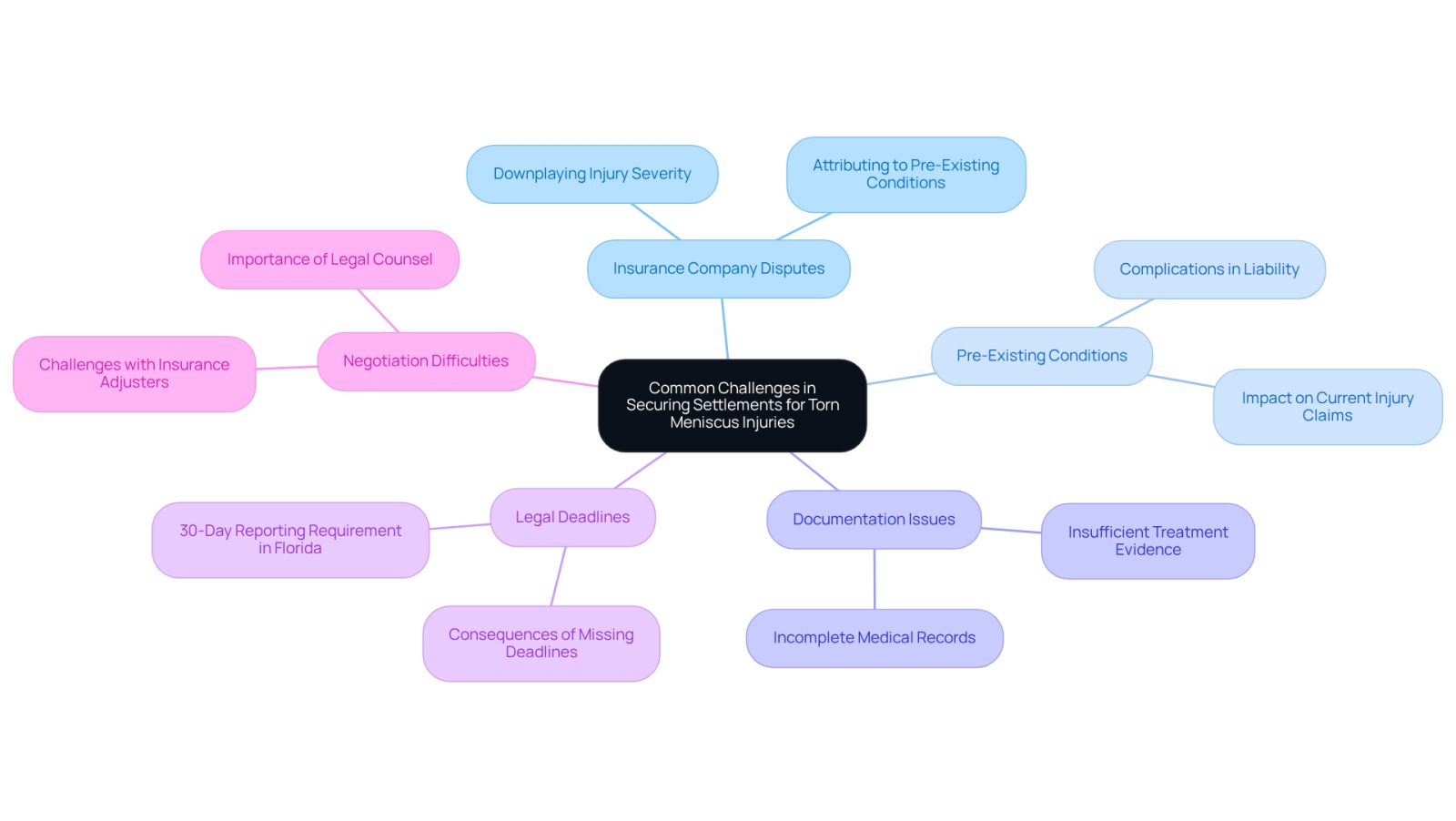
Navigating the aftermath of a torn meniscus injury can be daunting, particularly when dealing with the complexities of obtaining a workers comp settlement for meniscus tear. Unfortunately, many injured workers encounter significant hurdles along the way.
- Insurance Company Disputes: Insurers often dispute the work-related nature of the injury or downplay its severity, which can lead to lower settlement offers. For instance, a common tactic is to argue that the harm is a result of pre-existing conditions rather than a direct consequence of workplace incidents. This can leave you feeling frustrated and unheard.
- Pre-Existing Conditions: If you have a history of knee problems, insurance companies may try to associate your current injury with these previous issues, complicating the process. This can significantly impact the workers comp settlement for meniscus tear, as insurers may use this information to minimize their liability, making it feel like you’re fighting an uphill battle.
- Documentation Issues: Incomplete or insufficient medical documentation can obstruct your claim. It’s crucial to maintain thorough records of all medical visits, treatments, and any recommendations from healthcare providers to support your case effectively. Without this, you might find yourself at a disadvantage.
- Legal Deadlines: Missing deadlines for filing requests or providing required documentation can lead to denial of your claim. In Florida, for instance, injuries need to be reported within 30 days to prevent compromising requests. Understanding state-specific timelines is essential for a successful outcome, as overlooking these can jeopardize your chances.
- Negotiation Difficulties: Many claimants struggle to negotiate effectively with insurance adjusters, who are trained to minimize payouts. Pursuing legal counsel can assist in leveling the playing field, as knowledgeable lawyers can advocate for just remuneration and manage the intricacies of the process.
Without addressing these hurdles, you risk not only your compensation but also your peace of mind during recovery.
Conclusion
Facing a meniscus tear can feel overwhelming, as it disrupts not just your daily routine but also your financial stability. This painful injury can lead to significant challenges, from managing medical expenses to coping with lost wages. Knowing your rights and the options available through workers’ compensation can be a lifeline during your recovery, easing the burden of this challenging time.
Throughout this article, we’ve explored key factors that influence settlement amounts, such as:
- The severity of the injury
- Medical expenses
- Lost wages
- The potential for permanent disability
Understanding these factors can empower you to advocate for the fair compensation you deserve. We also discussed the process for filing a claim, highlighting the importance of:
- Timely reporting
- Thorough documentation
- The potential need for legal assistance to navigate the hurdles posed by insurance companies and pre-existing conditions
Ultimately, grasping the workers’ compensation process for meniscus tear claims can be your key to unlocking the support you need during this tough time. Staying proactive and informed is essential; tackling the challenges of the claims process can make a real difference in your recovery journey. By taking these important steps, you not only support your recovery but also ensure you have the backing you need as you work towards regaining your health and productivity.
Frequently Asked Questions
What is a torn meniscus injury?
A torn meniscus is a common knee injury that occurs from sudden twisting or rotating movements, often during activities like lifting or walking on uneven surfaces. It can cause sharp pain, swelling, and stiffness, making it difficult to move the knee.
How can a torn meniscus impact a person’s daily life?
A torn meniscus can make everyday tasks feel daunting due to pain and limited mobility. It can also lead to overwhelming medical bills and lost wages, significantly affecting a person’s quality of life.
What are the potential workers’ compensation benefits for a torn meniscus?
If the injury occurred while working, individuals may qualify for a workers’ compensation settlement that can cover medical treatment, rehabilitation, and lost wages, including costs for doctor visits, surgery, physical therapy, and medications.
What is the range of workers’ compensation settlements for meniscus tears in Illinois?
In Illinois, workers’ compensation settlements for meniscus tear injuries can range from approximately $28,500 for less severe cases to over $238,000 for more complex situations.
What is the average financial toll of work-related knee injuries?
The average costs of work-related knee injuries exceed $33,000, highlighting the importance of understanding options for workers’ compensation settlements.
How can a torn meniscus affect a person’s ability to work?
A torn meniscus can lead to temporary or even permanent disability, making it challenging to return to a previous job, especially if there are long-term complications affecting daily life.
What steps should be taken after sustaining a torn meniscus at work?
It is important to inform your employer about the injury as soon as possible to avoid complications with claims. Consulting a workers’ compensation lawyer can also help ensure that you receive the benefits you deserve.
List of Sources
- Define Torn Meniscus Injuries and Their Impact on Workers’ Compensation
- shebell.com
- A Guide: Torn Meniscus Workers’ Compensation Settlements | Jason Rubens, P.C.
- shebell.com
- chicagoworkcomp.com
- petrocohen.com
- Explore Factors Affecting Workers’ Comp Settlements for Torn Meniscus
- mehtamcconnell.com
- marker-law.com
- A Guide: Torn Meniscus Workers’ Compensation Settlements | Jason Rubens, P.C.
- Torn Meniscus Workers’ Compensation in Illinois: Settlement Value, Surgery & Claims
- hoffmannworkcomp.com
- Outline the Process for Filing a Workers’ Comp Claim for a Torn Meniscus
- shebell.com
- chicagoworkcomp.com
- How to File a Workers’ Compensation Claim if You Were Hurt on the Job (Federal Employees)
- chicagoworkcomp.com
- lunsfordbaskin.com
- Identify Common Challenges in Securing Settlements for Torn Meniscus Injuries
Hurt like this?
We handle Workers' Compensation cases in the Bronx.
Evan W. Kohn, Esq. — more than 35 years of Bronx personal-injury practice. Reading about it only goes so far; a free consultation tells you what actually applies to your case.