
Bus & Subway Accidents
When Is It Too Late to Change Lawyers? Signs and Steps to Act

Introduction
It can be incredibly disheartening to realize that your legal representation isn’t meeting your needs, leaving you feeling vulnerable and uncertain about your future. You might find yourself feeling frustrated and alone, wondering if your lawyer truly understands your situation or if they’re even listening to your concerns. It’s tough to know when to make a change, but recognizing the signs can help you regain your confidence and peace of mind.
In this guide, we’ll explore the signs that your lawyer may not be the right fit and share supportive steps to help you find someone who truly cares about your case.
Identify Signs Indicating It’s Time to Change Lawyers
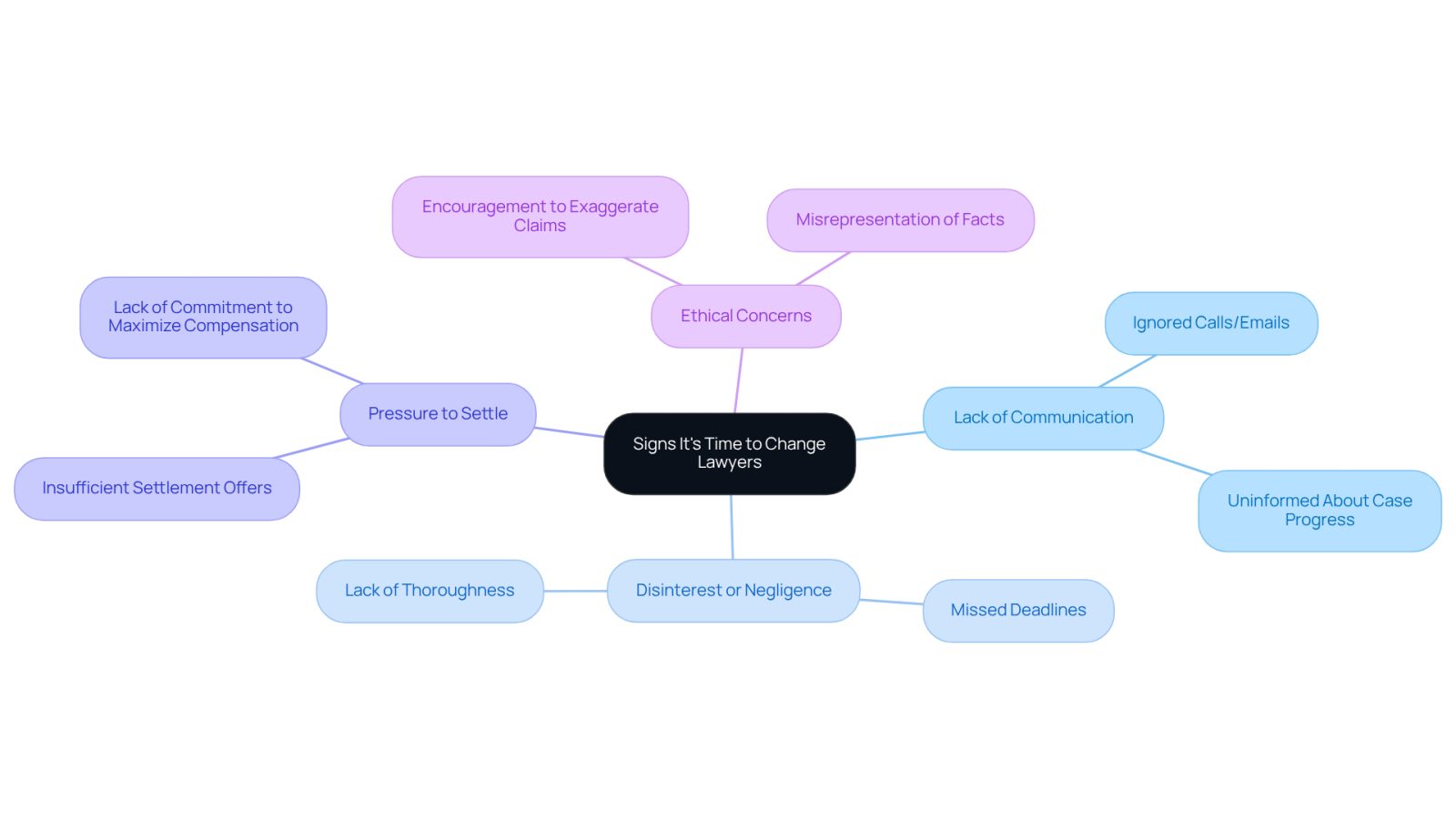
Are you feeling uncertain about your legal representation? Recognizing when is it too late to change lawyers can be vital for your peace of mind and the success of your case. Here are some key signs to look for:
- Lack of Communication: Feeling ignored by your lawyer can leave you anxious and uncertain about your future. If your lawyer frequently fails to return calls or emails, or if you find yourself in the dark about your case’s progress, this is a significant red flag.
- Disinterest or Negligence: It’s concerning if your legal representative seems disengaged or unmotivated to advocate for your interests. This can show up as missed deadlines or a lack of thoroughness in handling your case, leaving you feeling unsupported.
- Pressure to Settle: If your attorney is urging you to accept a settlement that feels insufficient, it may indicate they are not fully committed to maximizing your compensation. You deserve someone who fights for what you truly deserve.
- Ethical Concerns: Any suggestion from your legal representative to exaggerate claims or misrepresent facts should raise immediate concerns about their professionalism and ethics. Trust is essential in this relationship.
If you receive sporadic updates or only hear from your attorney when they need something from you, you might be wondering when is it too late to change lawyers. You should feel informed and involved in your case.
Many clients, about 30%, find themselves switching attorneys during personal injury cases, often due to these very concerns. Expert opinions highlight the significance of identifying these signs early to ensure your situation is managed effectively. As Gary Green observed, “A legal representative’s time and counsel are his stock in trade,” emphasizing the importance of having a committed and attentive attorney. Furthermore, instances of legal malpractice, such as situations where attorneys failed to submit required documents punctually, highlight the possible repercussions of staying with an ineffective attorney. Recognizing these signs can empower you to seek the support you truly deserve.
Evaluate Your Current Lawyer’s Performance and Communication
Navigating the aftermath of an accident can be daunting, especially when you’re unsure if your lawyer is truly advocating for you. To effectively evaluate your current lawyer, consider the following steps:
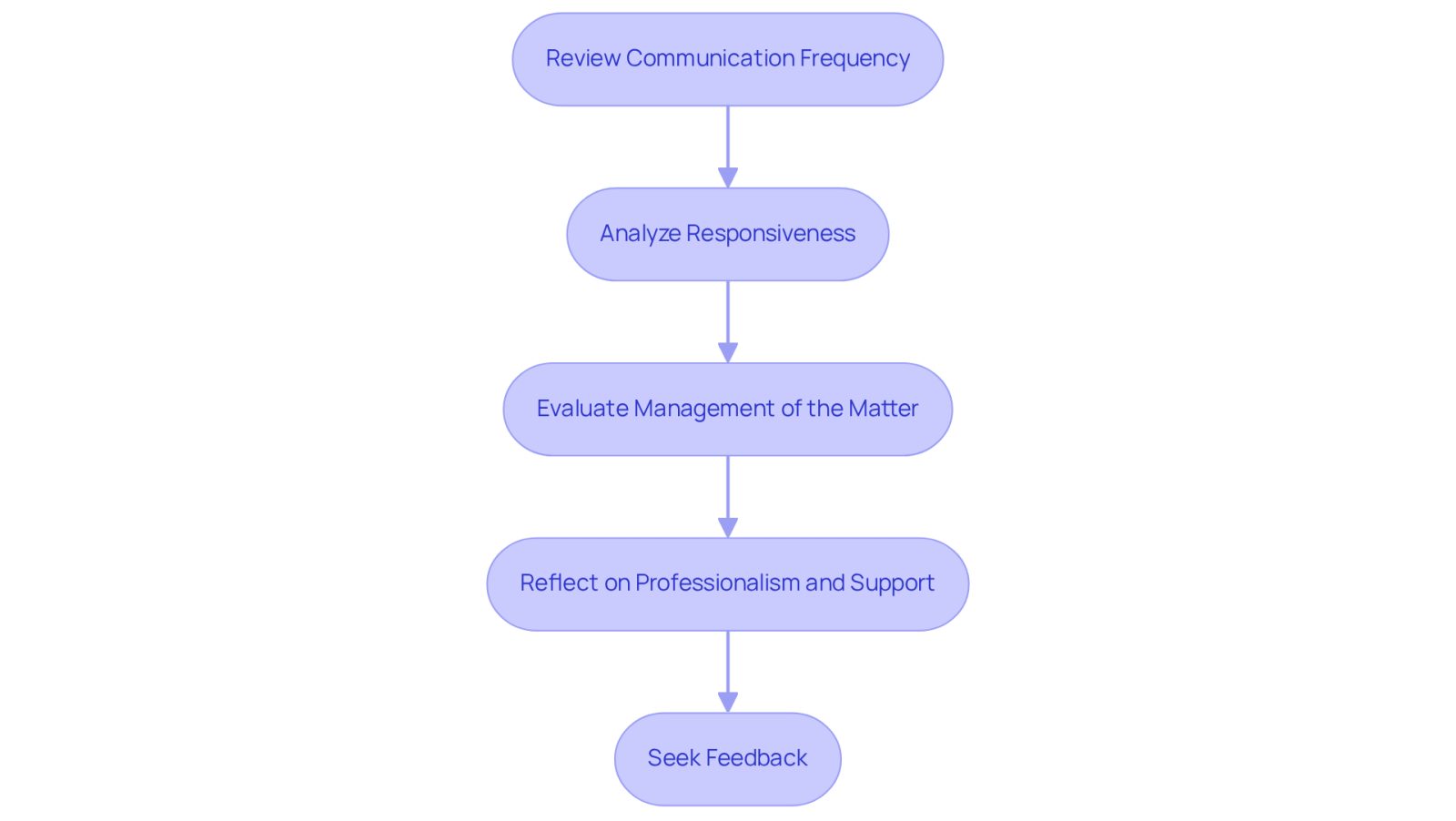
- Review Communication Frequency: Assess how often your lawyer communicates with you. Are you feeling kept in the loop with regular updates? If not, take note of any missed messages. Consistent updates are vital for managing expectations and reducing anxiety. Creating a communication timetable can help ensure you receive timely information about your situation.
- Analyze Responsiveness: Reflect on how quickly your lawyer responds to your inquiries. A lack of timely responses can leave you feeling neglected, which is especially concerning in personal injury cases where prompt action can significantly affect outcomes. Research shows that 64% of prospective clients received no follow-up at all, underscoring the importance of responsiveness.
- Evaluate Management of the Matter: Look at how your situation is being handled. Are deadlines being met? Is your lawyer proactive in gathering evidence and preparing for court? Effective case management is essential for ensuring that your interests are represented adequately. Keeping thorough records of all interactions and essential documents can help maintain clarity and accountability.
- Reflect on Your Lawyer’s Professionalism and Support: Think about how your lawyer makes you feel-do they treat you with the respect and care you deserve? Professionalism fosters trust and encourages open communication, which is crucial for a successful attorney-client relationship. Your lawyer should also simplify complex legal terms to enhance your understanding of the processes involved in your case.
- Seek Feedback: If possible, consult with peers or other clients about their experiences with the legal professional. This can provide additional insights into their performance and help you gauge their effectiveness in communication and representation. Positive feedback can reinforce effective practices, while negative feedback can highlight areas for improvement.
Taking the time to assess your lawyer’s performance can empower you to make informed decisions about your legal journey.
Take Action: Steps to Find and Transition to a New Lawyer
If you’re feeling uncertain about your current legal representation, you’re not alone; many accident victims find themselves in this difficult position. To ensure a smooth transition when changing lawyers, follow these essential steps:
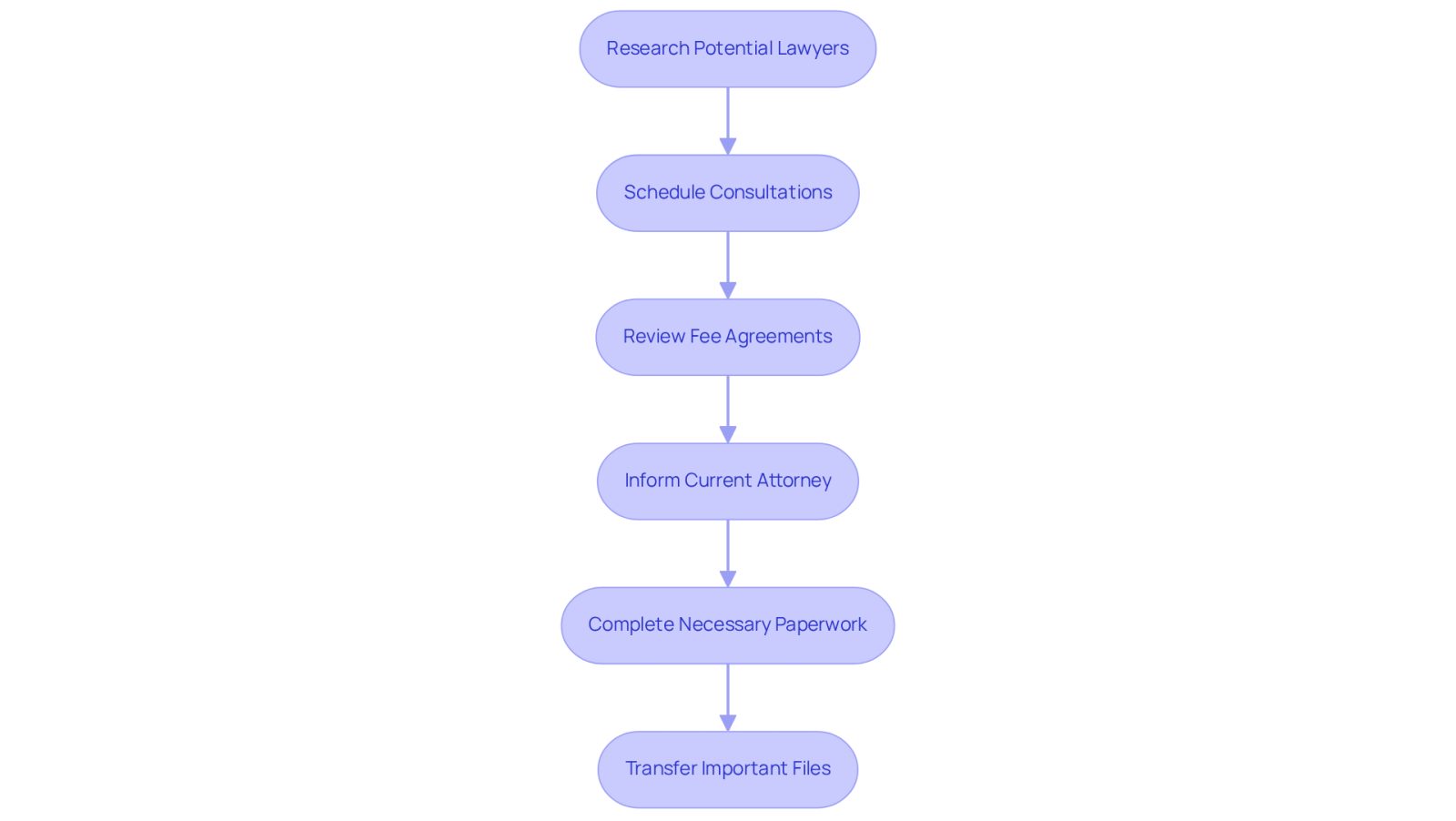
- Start by looking for lawyers who truly understand the challenges you’re facing and have a history of helping clients like you. Seek attorneys who specialize in personal injury law and have a proven track record of success. Utilize online resources, referrals, and client reviews to create a list of candidates.
- Consider scheduling consultations with potential lawyers to find someone who truly understands your needs. Arrange meetings with prospective legal representatives to discuss your case. Prepare questions regarding their experience, approach, and fee structures to assess their fit for your needs.
- Take a moment to carefully review the fee agreements with your new attorney, ensuring you feel comfortable with how costs will be managed. Before making a final decision, understand how fees will be handled during the transition to avoid unexpected costs.
- Once you’ve made your choice, gently inform your current attorney in writing about your decision to move on. This should be done professionally to maintain goodwill and ensure a respectful parting.
- Your new attorney will guide you through the necessary paperwork, helping to ease the transition and ensure everything is in order. They will typically handle the paperwork needed to formally change representation, including notifying the court and your previous attorney.
- Make sure your new attorney receives all important files from your previous lawyer, so there are no delays in your case. This ensures that your new legal representative has all pertinent files and documentation to prevent any setbacks.
By following these steps, you can effectively switch to a new attorney while protecting the integrity of your situation. Taking these steps can help you find the right support, ensuring your case is handled with the care it deserves.
Manage the Transition: Overcome Challenges When Changing Lawyers
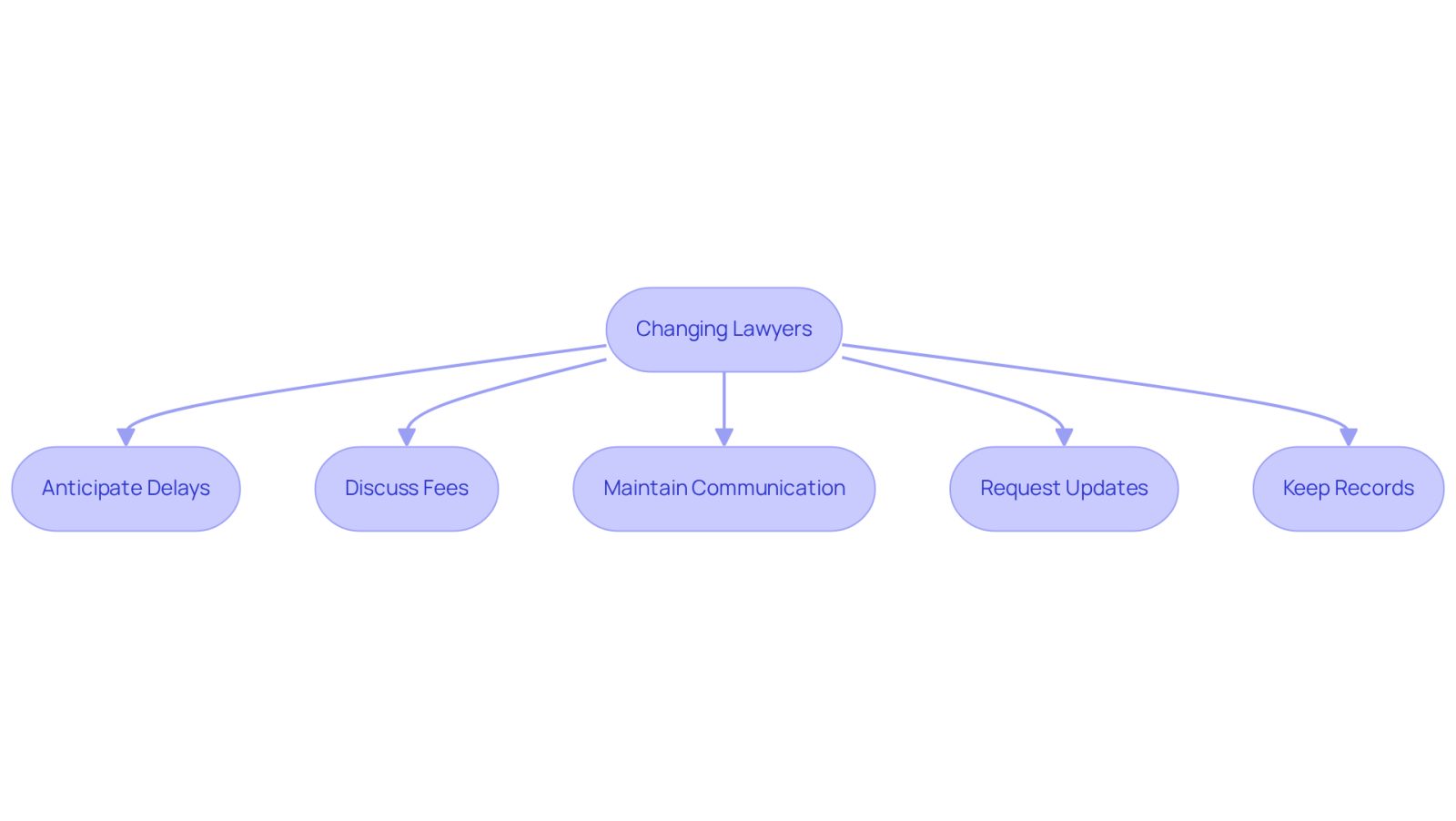
Changing lawyers can feel daunting, especially when you’re already navigating the emotional turmoil of an accident. Anticipating delays is essential; these delays can feel overwhelming, leaving you anxious about your case’s future. Transitioning to a new attorney may lead to temporary delays in your case, so it’s important to share your concerns with your new attorney about timelines, so you both can work together to ease any worries you might have.
Addressing fee disputes can be uncomfortable, but it’s essential to discuss how fees will be allocated with both attorneys to prevent misunderstandings and ensure a smooth financial transition. Your former attorney may be entitled to compensation for the work completed, and having these conversations can help you feel more secure in your decisions.
Keeping the lines of communication open with both your new and previous legal representatives is vital. This way, everyone stays informed and can work together to make your transition easier. Maintaining an open dialogue ensures that all parties are on the same page, which can alleviate some of the stress you might be feeling.
Staying engaged and asking your new lawyer for updates can help you feel more in control of your legal journey, easing any anxiety you may have. Regularly checking in will not only keep you informed but also provide reassurance during this challenging time.
Finally, keeping thorough records of all communications and agreements during this transition can provide you with peace of mind, ensuring clarity and support for your case. By effectively managing these challenges, you can ensure that your transition to a new lawyer is as smooth as possible. Taking these steps not only eases the transition but also empowers you to focus on healing and moving forward with confidence.
Conclusion
It’s not easy to know when it’s time to find a new lawyer, especially when you’re already feeling overwhelmed. It can be hard to recognize when your lawyer isn’t meeting your needs, like if communication feels off or you’re pressured to settle too soon. Acknowledging these feelings early can empower you to seek the competent representation you truly deserve.
As we’ve explored, there are important steps you can take to evaluate your lawyer’s performance:
- Assess how often you communicate
- Understand fee agreements
- Manage the transition process
Each step is vital in securing a reliable legal ally. By keeping open lines of communication and thorough records, you can ease your worries and ensure your case is handled with the care it requires.
Taking steps to address ineffective legal representation can truly make a difference in your case and your peace of mind. Transitioning to a new lawyer may seem daunting, but it’s a necessary step toward reclaiming control over your legal situation. Embracing this change not only enhances your chances of success but also fosters a sense of empowerment and confidence in the legal process. Remember, you deserve a lawyer who truly supports you and your journey.
Frequently Asked Questions
What are the signs that indicate it might be time to change lawyers?
Key signs include lack of communication, disinterest or negligence from the lawyer, pressure to settle for insufficient compensation, and ethical concerns regarding the lawyer’s conduct.
How does lack of communication from a lawyer affect a client?
Feeling ignored by your lawyer can lead to anxiety and uncertainty about your case. If your lawyer frequently fails to return calls or emails, or if you are uninformed about your case’s progress, it is a significant red flag.
What does it mean if a lawyer shows disinterest or negligence?
Disinterest or negligence may manifest as missed deadlines or a lack of thoroughness in handling your case, leaving you feeling unsupported and concerned about your legal representation.
Why is it a problem if my attorney pressures me to settle?
If your attorney urges you to accept a settlement that feels insufficient, it may indicate they are not fully committed to maximizing your compensation, which is essential for your interests.
What ethical concerns should I be aware of regarding my lawyer?
Any suggestion from your lawyer to exaggerate claims or misrepresent facts should raise immediate concerns about their professionalism and ethics, as trust is crucial in the attorney-client relationship.
How common is it for clients to switch attorneys during a personal injury case?
Approximately 30% of clients find themselves switching attorneys during personal injury cases, often due to concerns such as lack of communication, disinterest, or pressure to settle.
What are the potential repercussions of staying with an ineffective attorney?
Instances of legal malpractice, such as failing to submit required documents on time, highlight the risks of remaining with an ineffective attorney, which can negatively impact your case.
Why is it important to recognize signs of a problematic lawyer early?
Identifying these signs early can empower you to seek the support you truly deserve and ensure your legal situation is managed effectively.
List of Sources
- Identify Signs Indicating It’s Time to Change Lawyers
- Lawyer Quotes to Inspire, Amuse, and Challeng
- Famous Quotes in the Law | Law Offices of Gary Green
- 7 Client Experience Stats Lawyers Need to Know – Resourceful Lawyer
- 53+ Lawyer Statistics That Might Surprise You | Rev
- 25 Inspirational Quotes for Lawyers
- Evaluate Your Current Lawyer’s Performance and Communication
- americanbar.org
- Nearly 80% of Law Firm Clients Feel Uncared For: New Survey Reveals Major Disconnect
- One moment, please…
- Mastering Legal Communication: Best Tips & Practices for Lawyers
- Take Action: Steps to Find and Transition to a New Lawyer
- Lawyer Quotes to Inspire, Amuse, and Challeng
- 53+ Personal Injury Statistics For 2026 | Rev
- Famous Quotes in the Law | Law Offices of Gary Green
- How to Choose a Personal Injury Lawyer: A Practical Guide
- Manage the Transition: Overcome Challenges When Changing Lawyers
Hurt like this?
We handle Bus & Subway Accidents cases in the Bronx.
Evan W. Kohn, Esq. — more than 35 years of Bronx personal-injury practice. Reading about it only goes so far; a free consultation tells you what actually applies to your case.