
Motorcycle Accidents
Where can I get help for motorcycle accidents in Bronx?
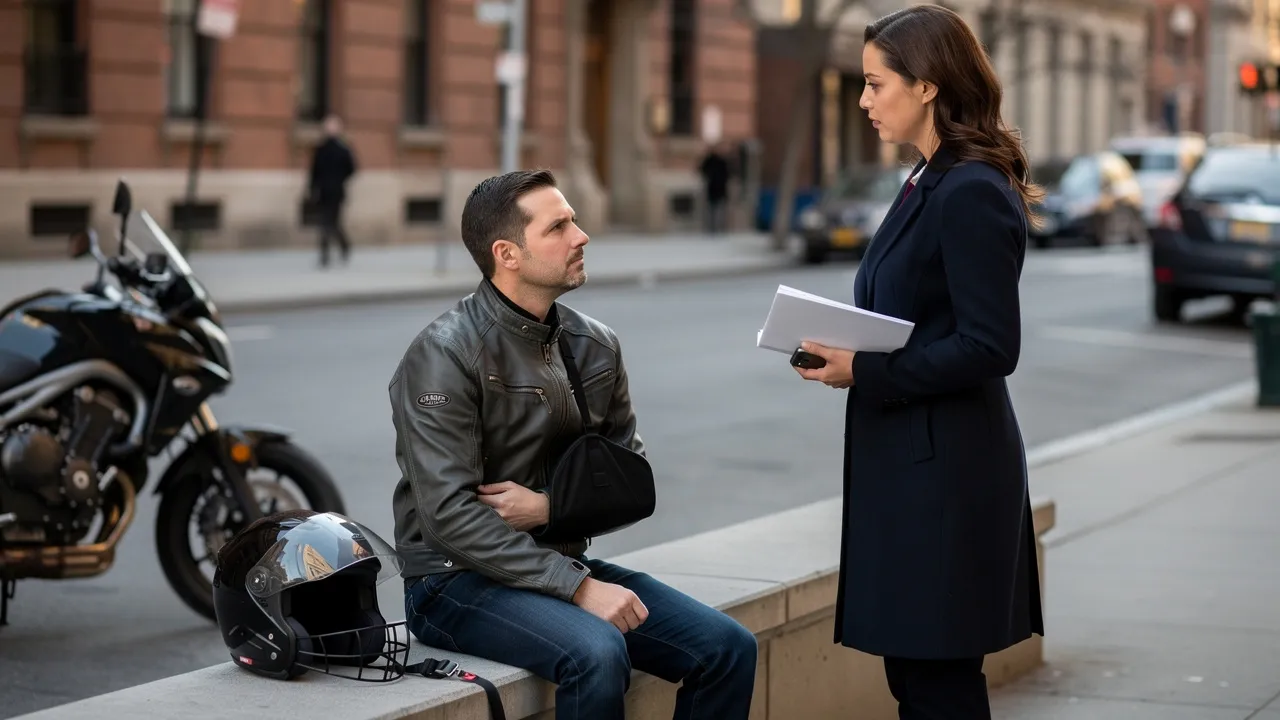
What should you do at the crash scene in the Bronx?
After a motorcycle crash on the Cross Bronx Expressway, Fordham Road, or another Bronx street, protect your health first and create a clear official record next. The key decision is which reporting and coverage path fits your role as an operator, passenger, or pedestrian.
Stay at the scene when you can do so safely. Get the medical attention you need, notify the police when required, exchange the necessary information, and avoid making private promises about payment or responsibility. A calm sequence helps you separate urgent care from later claim decisions.
You do not need to solve every legal question beside the motorcycle. Preserve what you can, keep your communications organized, and get help with the parts that require a medical, police, insurance, or legal professional.
Keep the first handoff clear. Medical care addresses injury; police assistance creates an official account; insurance contact begins a separate coverage conversation; and legal consultation addresses questions about evidence, deadlines, and possible claim paths. These forms of help can occur in sequence, but one does not replace the others.
Write down the basic facts while they are available: where the crash occurred, your role on the motorcycle, the other vehicles, police involvement, treatment received, and the information exchanged. This short account can help you answer later questions without turning an early memory into a conclusion about fault.
How do you get medical and police help before handling the claim?
Medical care and police assistance come before insurance discussions. If someone is injured or killed, you must immediately notify the police and also file a crash report. New York DMV materials also direct drivers to stop after a crash, regardless of the level of damage. Leaving a scene involving property damage is a traffic violation, while leaving a scene involving a fatality or personal injury is a criminal violation.
Get medical attention for an injury and tell the provider that it followed a motorcycle crash. At the scene, give police and the other drivers your name, address, driver license number, vehicle registration, insurance policy number, and policy effective date. Show your insurance card if requested. Exchange only the information required for the official process; do not argue about fault beside the road.
Promptly report the accident to your insurer and the local police department. Reporting the crash to an insurer does not replace the police or DMV steps. If another driver suggests handling the matter privately, do not agree before an official record exists. A police report can preserve an early account of what happened.
Motorcycle occupants need particular care with No-Fault discussions. Ask a qualified New York attorney promptly which coverage and filing rules apply to your circumstances. The driver should provide the listed vehicle and insurance information and complete any required crash report; a passenger should cooperate with police, provide identifying information, and seek medical or legal guidance about separate reporting or coverage questions.
How can an official crash record support the next steps?
An official crash record gives you a starting point for later insurance and legal discussions. A police response creates an official accident report that can become important evidence in a New York motorcycle accident claim. After a motorcycle crash, officers may document the scene, interview drivers and witnesses, record observations, and issue citations.
The report is not the only record that matters. Photographs, video, witness testimony, and physical evidence may also be important. If you can do so safely, note the intersection, travel direction, lane, traffic signal, road condition, weather, visible damage, and names or contact details for witnesses. Do not return to an unsafe location merely to collect evidence.
Ask the local police agency or precinct where the crash occurred whether the report is available and what fee applies. You can call or visit the precinct. If police or motorists’ reports have already been filed and processed by the New York DMV, you can seek PDF copies through the DMV’s crash-report process.
Keep the report with the rest of your crash file rather than sending the only copy to an insurer or lawyer. If a detail in the report appears incomplete or differs from your memory, note the difference for your consultation. Do not rewrite the report yourself or present your note as an official correction.
Use a simple source label for each new item in the file. Record whether the item is a police observation, a witness account, a photograph or video, a medical record, or your own recollection, and record the date you received it. This separation helps a lawyer compare different accounts without treating a personal note as an official finding. It also shows which parts of the story still need confirmation.
Which insurance and DMV tasks should you separate?
Insurance notification and DMV reporting are separate tasks. New York DMV guidance says to file Form MV-104 within 10 days if anyone was injured or killed, or if property damage exceeds $1,000. New York DMV guidance also describes the threshold as $1,000 or more in damage to the property of any one person. Because the wording differs at exactly $1,000, use the current DMV instructions or obtain prompt New York-specific legal guidance before relying on the threshold.
Follow this order:
- Report the crash to your insurer and the local police department.
- Find Form MV-104 and its filing instructions on the New York DMV website.
- File the DMV report within 10 days when the injury, death, or applicable property-damage condition requires it.
- Keep proof of the filing with your police report and insurance correspondence.
Telling your insurer does not complete the DMV obligation. Failure to report can be a misdemeanor and can lead to license or registration suspension or revocation. Keep the DMV task on its own checklist so an insurance call does not create a false sense that every report has been completed.
If the crash involved a vehicle registered in New York State, the three-digit insurance-company code is on the accident report. Search that code in the Department of Financial Services insurance-company-code list; the New York DMV says the search is free and provides immediate results. Use the result to identify where an insurance communication should go, not to decide fault.
Treat police reporting, DMV reporting, and insurer notification as separate records. Keep the police report, MV-104 filing proof, and insurer correspondence in different labeled folders, even when they describe the same crash. The police report concerns the early account, the DMV form concerns a reporting obligation, and insurer correspondence concerns coverage communications. Matching the date and recipient on each document can reveal a missing filing without turning one document into proof that another task was completed.

Why does a motorcycle crash require a different insurance check?
New York’s No-Fault system excludes motorcycle operators and passengers under Insurance Law Article 51, so the coverage review for a motorcycle crash differs from the review for a car crash. Motorcycle operators and passengers may sue from first-dollar loss.
Start by identifying whether the injured person operated the motorcycle, rode as a passenger, or was a pedestrian. Then identify the vehicles and insurance policies involved and ask which notice and filing rules apply to this claim.
Fault is another reason to preserve a careful account. Under New York CPLR 1411, any percentage of fault assigned to the rider reduces the recovery. That rule does not decide your percentage of fault; it explains why photographs, witness information, medical records, and a clear timeline deserve attention before an insurer’s account becomes the only account.
The No-Fault exclusion and the comparative-fault rule answer different questions. The first concerns whether a motorcycle operator or passenger receives the ordinary No-Fault benefit path. The second concerns how an assigned percentage of rider fault affects recovery. Do not use one rule as a shortcut for the other.
For the coverage review, keep the rider’s role, the vehicles, the policies, and the dates together. For the responsibility review, keep the official report, photographs, video, witness information, physical evidence, and medical records together. A lawyer can then see which question each record may help address without treating a general rule as a conclusion about this crash.
A coverage worksheet can prevent the wrong rule from being carried into the consultation. Write the injured person’s role, the motorcycle’s owner, each vehicle involved, every known policy, and whether a related household member may have an auto policy. New York guidance describes possible additional PIP or health-insurance options when basic No-Fault benefits are used up, but motorcycle operators and passengers should not assume that sequence applies because New York excludes them from ordinary No-Fault benefits. If the injured person was a pedestrian struck by a motorcycle, New York guidance generally directs that person to the insurer of the vehicle that struck them for a No-Fault claim; confirm the applicable path for the crash.

What should you place in a crash file before speaking with a lawyer?
Create one central crash file before speaking with a lawyer. Include the police report, information exchanged with the other driver, scene photographs, video, witness details, physical evidence, and every insurance letter, email, text, or claim number. Preserve evidence of your injuries and who caused the crash, including possible video surveillance from nearby cameras or businesses.
Use separate folders or clearly named digital files:
- Crash records: police report, DMV filing, photographs, video, vehicle information, and witness contacts.
- Medical records: appointment dates, provider names, treatment purpose, bills, prescription receipts, and discharge papers.
- Work records: if your injuries caused missed work, request an employer letter confirming your job title, rate of pay, and dates you were unable to work.
- Insurance communications: adjuster names, call dates, letters, emails, forms, and any request for a recorded statement.
Track medical appointments, therapies, and procedures by date, provider, and purpose. Keep copies of medical bills and prescription receipts.
It is often wise to decline a recorded statement from the other driver’s insurance adjuster until you have spoken with an attorney. You can acknowledge the contact, ask for the request in writing, and preserve the message. Do not guess about speed, distance, symptoms, or the other driver’s conduct merely to complete a call.
A described New York motorcycle-accident case found one defendant 90% at fault and the plaintiff 10% at fault for the accident. That result belongs to that case; it does not predict your outcome. Use it only as a reminder to preserve facts relevant to how responsibility might be assessed.
Preserve digital evidence in its original form when possible, and make a separate working copy for notes or sharing. For a possible camera recording, write down the nearby business or camera location, the crash date, and the approximate time shown in your notes. Keep the original photographs and video with the file. A lawyer can then distinguish the original evidence from a later description of what it appears to show.
Which lawyer-qualification checks make a consultation useful?
A useful consultation starts with a lawyer whose work fits the kind of problem you need reviewed. Consider motor-vehicle focus, documented motorcycle case results, a regional office, and experience taking cases to verdict when evaluating fitness. These are comparison points, not a promise about what any lawyer will achieve.
Check the attorney’s registration status and disciplinary history through the New York State Unified Court System’s public attorney search. Treat that check as one part of your decision. You can also ask who will handle the file, who will communicate with you, and how the office will gather records from the Bronx crash scene, hospitals, witnesses, and insurers.
Use questions that make two firms or two consultations easier to compare:
- How often does the practice handle motorcycle-injury claims in New York?
- What facts would you need before discussing possible claim paths?
- Who will investigate the crash and collect police, medical, witness, and insurance records?
- How will you receive updates, and who should you contact with new information?
- Which deadlines or public-entity issues require attention based on the crash location?
- What written fee and expense terms should you read before deciding?
A regional office can make communication and document handling more practical, but location alone does not establish suitability. Choose based on the questions the lawyer asks, the explanation of the process, and whether you understand what happens next. Do not treat a confident prediction as a substitute for a careful review of the crash facts.
Your comparison note can record each prospective lawyer’s answers in the same order. Your note can show whether each lawyer explains who will investigate, how insurer communications will be handled, which deadlines require attention, and what the written fee terms cover. A side-by-side record helps you compare the process described in each consultation without treating a prediction, office location, or confident tone as proof of suitability.
What should you prepare to discuss during a consultation?
Prepare a short consultation agenda from your crash file. Assess whether you were injured or your motorcycle was damaged, then organize the dates, locations, people, records, and communications that explain what happened. Bring questions rather than expecting yourself to know the legal label for the claim.
Discuss these subjects in order:
- The crash: location in the Bronx or New York City, date, direction of travel, vehicles involved, police response, witnesses, photographs, video, and road conditions.
- Your injuries: treatment received, current providers, symptoms, bills, prescriptions, and any change in work or daily activities.
- The motorcycle: visible damage, storage location, photographs, repair estimates, and any physical part or clothing that remains available.
- Insurance contact: policies, claim numbers, adjuster messages, requests for records, and any request for a recorded statement.
- Your goals: whether you are seeking help with medical bills, lost wages, pain and suffering, property damage, or another concern.
- The process: investigation, communication, fees, expenses, and the written agreement you would review before hiring anyone.
A New York legal source describes motorcycle-accident lawyers as typically using contingency fees, often with no upfront cost and no fee owed unless the case recovers money. The same guidance describes a typical fee as one third of the recovery; that figure is not a term to assume for every office. Read the written agreement for the percentage, expenses, what happens if no money is recovered, and any other terms before deciding.
Use the consultation to test whether the proposed process matches the questions in your file. Ask how the office would examine the motorcycle-specific insurance issue, separate medical and property records, handle insurer communications, and identify any deadline tied to a public entity or roadway. Ask who will communicate with you and what documents should follow the first conversation.
If a document or answer is missing, list it rather than filling the gap from memory. A clear list can include the police report, DMV filing, medical records, bills, wage information, photographs, video, witness contacts, insurer messages, and the motorcycle’s damage information. The consultation can then distinguish what is already documented from what still needs attention.
Build a dated consultation timeline before the meeting. Put the crash, police response, first medical treatment, insurer contact, DMV filing, requests for records, and any request for a recorded statement in chronological order. Add the document or person connected with each event and mark any missing item as a question. A timeline helps separate what happened, what a record says, and what still needs investigation.
Keep goals and facts separate in your notes. A medical bill, missed-work record, repair record, and symptom description document different parts of the situation; none should be replaced by a general estimate of the claim. Bring each category separately so a lawyer can discuss medical, wage, property, and other concerns without treating one record as proof of another.
Which facts make prompt professional evaluation worth arranging?
Prompt professional evaluation is useful when the crash raises a deadline, evidence, public-entity, or motorcycle-specific insurance question that you cannot sort out from general information. Contact a New York motorcycle-accident attorney sooner because evidence can disappear and witnesses’ memories can fade.
Arrange an early review if any of these facts apply:
- You or a passenger suffered an injury, even if the full treatment picture is not yet clear.
- The other driver, an insurer, or a witness gives an account that differs from yours.
- A city, county, town, village, public agency, government vehicle, or possible roadway defect may be involved.
- An insurer asks for a recorded statement, broad medical authorization, or a quick settlement discussion.
- You are unsure whether the motorcycle exclusion changes the insurance path or notice requirements.
For most New York motorcycle-accident personal-injury claims based on negligence, you generally have three years from the accident date to file a lawsuit. Claims involving a New York public entity can require a notice of claim within 90 days and can have different filing deadlines. These time rules are not interchangeable, so raise any public-road, public-vehicle, or agency issue at the first consultation.
Do not wait for a final repair bill or a complete medical recovery before organizing the file. Give the lawyer the information you have and identify what is still pending. A prompt review does not require you to decide immediately whether to hire anyone.
An incomplete public-entity detail should be recorded as an open question rather than omitted. Write the exact location, visible agency or vehicle information, and any road condition you observed. That gives a lawyer a starting point for identifying whether a public-entity or roadway issue needs a separate notice analysis.
What access options can a Bronx motorcycle-accident office provide?
Access options matter when pain, hospitalization, transportation, or work makes an office visit difficult. We offer free consultations for injured Bronx riders. Our office is located at 2000 White Plains Road in the Bronx, and we serve clients in the Bronx with visits at home or in the hospital when arranged.
We investigate cases by gathering police reports, photos, witness statements, and medical records. Bring the records you already have, but do not delay a conversation because one report, bill, or photograph is missing. A consultation can help you identify the next documents to request and the questions that need a closer review.
Our motorcycle-accident page states that we have over 35 years of experience helping motorcyclists in the Bronx with their treatment and holding negligent drivers accountable. That description identifies our practice’s stated experience; it does not promise a particular result in your case.
Before arranging a meeting, choose the format you can manage. You can organize a digital file for a phone discussion, ask about an in-person visit at 2000 White Plains Road, or explain if a home or hospital visit is needed. Keep your questions about the crash, treatment, insurance contact, evidence, deadlines, and written fee terms in one place so the conversation stays focused.
Access planning can be part of the intake rather than a reason to postpone it. Tell The Law Offices of Evan W. Kohn whether travel, hospitalization, or pain affects the format you can manage, and keep the crash file available in that format. Staff speak English, Spanish, Bengali, Greek, and Albanian. Ask about language support when arranging the conversation so the questions, records, and next steps are understood.

How can you request the consultation without making assumptions about representation?
Use the consultation request form to request a free consultation with The Law Offices of Evan W. Kohn after you have gathered the records you can safely obtain and written down the questions that remain.
Use the conversation to explain the crash, your injuries, the motorcycle damage, the police and DMV steps, insurer contact, missing evidence, and any possible public-entity issue. This is general information, not individualized legal advice.
What should you confirm before relying on insurance or filing guidance?
Are motorcycle riders and passengers covered by New York No-Fault insurance after a crash?
New York excludes motorcycle operators and passengers from No-Fault benefits, so the usual car-accident No-Fault process may not apply in the same way. Do not assume which policy, insurer, notice rule, or lawsuit path governs; have a qualified New York attorney review the people, vehicles, and coverage involved.
What should I do if motorcycle-crash damage is exactly $1,000 in New York?
New York DMV guidance describes the reporting threshold differently: some guidance says property damage must exceed $1,000, while another says $1,000 or more. Because the difference matters at exactly $1,000, check the current DMV instructions or obtain prompt New York-specific legal guidance before relying on the threshold. Injury or death separately requires DMV reporting.
How can I find the other driver's insurance company after a Bronx motorcycle crash?
If the other vehicle was registered in New York, find the three-digit insurance-company code on the accident report and search it in the New York Department of Financial Services insurance-company-code list. The New York DMV says that search is free and provides immediate results. This identifies the insurer; it does not determine fault or claim value.
Should I give the other driver's insurer a recorded statement after a motorcycle crash?
It is often wise to decline a recorded statement until you have spoken with an attorney. Acknowledge the request, ask for it in writing, and preserve the message. Do not guess about speed, distance, symptoms, or responsibility merely to complete the call.
Hurt like this?
We handle Motorcycle Accidents cases in the Bronx.
Evan W. Kohn, Esq. — more than 35 years of Bronx personal-injury practice. Reading about it only goes so far; a free consultation tells you what actually applies to your case.