
Car Accidents
How to Choose an Attorney for a Serious Car Accident Injury in the Bronx
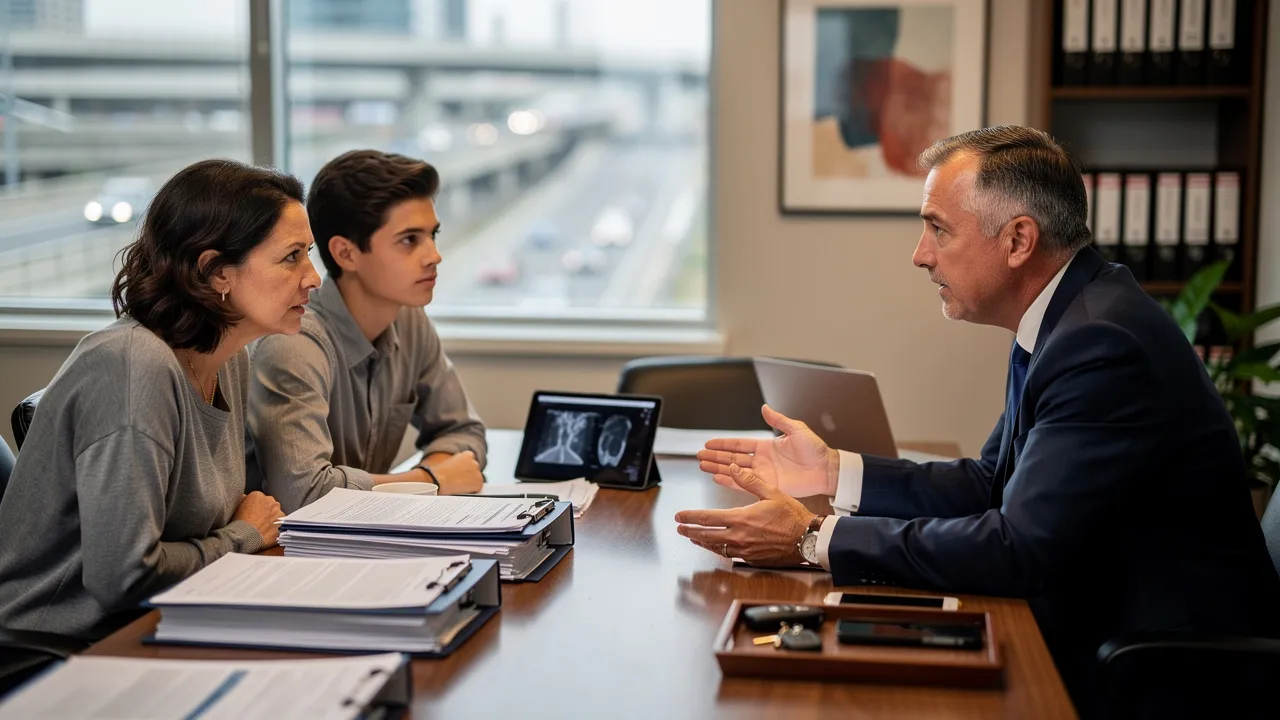
Start with the attorney-fit decision after a serious Bronx crash
This guide gives you a practical way to test whether an attorney fits the injury, evidence, insurance, communication, and fee issues in front of you.
Car accidents can produce paralysis, traumatic brain injury, fractures, bruises, lacerations, and broken bones. A serious injury creates a longer decision than simply finding someone who handles car crashes. You need to understand how the attorney will work with medical records, investigate what happened, identify the available insurance, and explain the route ahead in New York.
Use this order:
- Screen for serious-injury and New York fit.
- Protect medical, insurance, and crash evidence.
- Build a consultation file before you compare answers.
- Ask about defendants, coverage, communication, fees, and timing.
- Compare your unresolved needs with the services offered by The Law Offices of Evan W. Kohn.
You do not need to decide the value of the claim before seeking a consultation. You do need to preserve the facts that allow an attorney to evaluate it. The aim is not to rank lawyers by reputation; it is to identify the attorney whose experience, process, access, and written terms match the questions your family actually needs answered.
Run a serious-injury fit screen before comparing attorneys
Attorney fit starts with two separate questions: what kind of injury does your family member have, and what evidence will the attorney need to address it? Do not treat a diagnosis, an insurer’s position, or a dramatic description of the crash as the complete legal screen.
New York Insurance Law § 5102(d) defines serious injury as a personal injury resulting in one of eight specific outcomes. Not every injury sustained in a car accident meets New York’s serious-injury threshold. Insurance companies often dispute whether an injury qualifies, and establishing that it meets the threshold requires medical evidence. These are New York legal and evidentiary questions, not conclusions you should make from symptoms alone.
Use the consultation to test the attorney’s approach:
- Ask how the attorney would organize records for a traumatic brain injury, spinal cord injury, paralysis, fracture, or other serious condition.
- Ask which medical records, treatment notes, imaging, and rehabilitation records need to be gathered before the injury picture can be assessed.
- Ask how the attorney would investigate the collision rather than relying only on the police account or the insurer’s version.
- Ask how the attorney would handle witnesses, photographs, video, vehicle records, and the accounts of the people involved.
- Ask which New York rules affect the claim and which facts could change the route.
A useful answer should connect the injury evidence to the collision evidence and explain what remains unresolved. It should not promise that the claim qualifies, predict a recovery, or turn a consultation into a diagnosis. Ask the attorney to separate what the medical records already establish from what may require additional records or professional review.
New York credentials are another fit question. Evan W. Kohn is admitted to practice in New York, New Jersey, and the U.S. District Court for the Eastern District of New York. Ask which admission matters for the court or claim you are considering, and ask who will handle the day-to-day work.
Serious-injury experience also means asking about the practical burden on your family. Find out whether the office can work from a detailed medical chronology, communicate with a family member when the injured person cannot manage calls, and explain how treatment information will be used in the claim. A clear answer to those process questions gives you something concrete to compare.
Take the first medical and insurance steps without weakening the record
Medical care and the first insurance contact should happen before you try to build a legal theory. After a New York car accident, take these steps:
- See a doctor the same day, even if you feel okay. Adrenaline can hide injuries, and whiplash or a concussion can surface a day later. Keep the visit information and follow-up instructions with your records.
- Report the crash to your own insurer factually. Give the basic account requested by your policy, preserve the claim number, and keep copies of messages and letters.
- Do not give the other driver’s insurer a recorded statement before you have received appropriate guidance about the request and the condition of the injured person.
A factual report is different from trying to explain every medical or legal issue while the facts are still developing. Write down what you know, separate what you saw from what someone else told you, and identify questions you cannot answer. If an insurer asks for a recorded statement or materials you do not understand, place that request in the consultation file and ask how it should be handled.
Prompt care also gives you a clearer record of what was reported and when. It does not decide fault or determine whether the injury meets New York’s serious-injury threshold. Those questions require review of the actual records and circumstances.
If the injured person has difficulty communicating, designate one family contact to keep the insurer correspondence, appointment information, and questions together. That simple division of responsibility can help you avoid conflicting accounts and missed requests while the family is focused on treatment.

Preserve the crash evidence an attorney will need to review
Crash evidence can disappear while you are dealing with treatment, transportation, work, and insurance calls. Preserve what you already have, and give the attorney a clear map of where each item came from.
Start with witnesses. Record each witness’s name and contact details, when the person observed the event, what the person saw or heard, and whether the person took photographs or video. Witness statements can be valuable evidence in a car accident claim because they preserve observations that may help establish what happened and when.
Preserve visual material in its original form:
- Keep the original photographs and videos from the scene, vehicles, traffic signals, road markings, damage, and injuries.
- Save the complete dashcam file rather than only a short clip. Dashcam footage can create a visual record of what happened before, during, and immediately after the collision.
- Do not edit, crop, overwrite, or delete the original video. As a general rule, dashcam footage is admissible in a New York car accident case when it is authenticated, usually through testimony that it fairly and accurately shows the crash and has not been edited.
- If the other driver’s insurer requests the dashcam material, have a lawyer review the complete file before you send it to that insurer. An insurer may study every frame and ask for the entire file.
Preserve the digital trail as well. Relevant records can include text messages and emails, mobile-phone photographs and videos, security-camera clips, vehicle technology data, app-based records, rental-car charges, repair updates, and messages about injuries or missed work. Keep the original message threads where possible, not only screenshots without dates or context.
Create a simple evidence index with the item name, date, device or person that created it, and its storage location. Keep the original on the device or drive where you found it, and use a separate copy when sending material for review. That makes it easier to explain whether a file is an original, a copy, or an excerpt.
Do not confront a witness or try to obtain private surveillance footage yourself. Instead, note where a camera may have been located, who controlled the property, and when you noticed it. Give those details to the attorney promptly.
Build a consultation file from medical, accident, and insurance records
A consultation file turns a stressful story into a set of questions an attorney can review. Use one folder, whether paper or digital, and label each item by date and source.
Include these sections:
- Crash summary: Write the date, approximate time, Bronx or New York City location, intersection or roadway, direction of travel, traffic signal information, vehicles involved, passengers, and the sequence you remember. Mark uncertain details as uncertain instead of filling gaps with guesses.
- People and witnesses: Add names and contact information for drivers, passengers, witnesses, responding officers, and anyone who took photographs or spoke with you at the scene.
- Medical record: Collect emergency records, doctor visits, imaging, treatment instructions, rehabilitation records, prescriptions, surgery recommendations, and follow-up appointments. Keep a short chronology of what was reported and what care was recommended.
- Daily effects: Note missed work, changes in caregiving, transportation needs, household tasks that became difficult, and other practical effects. Keep related bills, receipts, and employer communications.
- Vehicle and property records: Add photographs, repair estimates, towing or storage records, rental-car charges, and repair updates.
- Insurance file: Include your insurer’s name, claim number, policy information you have, letters, emails, adjuster requests, recorded-statement requests, and communications from another driver’s insurer.
- Digital evidence: Add original photographs, videos, dashcam material, messages, emails, security-camera information, app-based records, and vehicle data. Relevant accident evidence can include these categories as well as repair and rental records.
Prepare a one-page question sheet. Write down what you want to understand about injury evidence, potential defendants, available coverage, insurer communications, the expected stages, who will communicate with you, and every fee or expense term. Bring the questions even if you think the answers are obvious.
Add a short “known, unknown, and urgent” page to the front of the file. Under known, list facts supported by a record or direct observation. Under unknown, list issues such as the identity of a witness, the location of a video, or the policy that may apply. Under urgent, list an insurer request, a possible government defendant, a medical appointment, or another matter that needs prompt attention. This gives the attorney a quick way to see where the consultation should begin.
Do not discard records because they seem repetitive. A duplicate may show when a fact was communicated, while a later record may show how the condition or claim changed. Do not alter original digital files. Give the attorney a copy or an organized index and keep the originals in your possession unless you receive specific instructions about transfer.
If several family members are helping, assign each person a task: medical records, insurance correspondence, evidence preservation, or scheduling. Keep one master chronology so that updates do not become separate and conflicting versions of the same event.

Test whether the attorney can handle coverage and defendant complexity
Coverage and defendant questions can change both the work required and the urgency of legal review. Ask who may be responsible for the vehicle, roadway, transportation service, employer, or other conduct, and ask which insurance policies may respond.
A claim against a New York government agency follows special laws that limit when and how the agency can be sued. The notice warns the agency that you intend to pursue compensation and gives it an opportunity to investigate. Missing a deadline or filing requirement can result in losing the right to recover compensation.
The filing route depends on the agency. If the crash involved a city vehicle, public transportation, a county vehicle, or a roadway condition connected to government operations, identify that possibility immediately rather than treating it as an ordinary private-driver claim.
A separate coverage question arises when the driver who caused the collision has little or no insurance. We handle uninsured or underinsured motorist claims in that situation, allowing recovery through your own coverage or a state fund. Ask which policy, endorsement, notice requirement, or coverage dispute may affect your particular circumstances; do not assume that the other driver’s policy is the only available source.
In New York, a personal-injury lawsuit against a driver for serious injuries generally must be filed within 3 years. That general period is not a substitute for calculating the deadline in your case. The date, defendant, injury, governmental status, and required procedure can change what must happen first, so raise every possible defendant during the consultation.
Ask these questions:
- Could a government entity, employer, delivery company, rideshare company, or vehicle owner be involved?
- Which insurer should receive notice, and what should you avoid sending before review?
- Is uninsured or underinsured motorist coverage relevant?
- Does any possible government involvement require a Notice of Claim or a different filing route?
- What facts are still needed to identify the proper parties?
Bring every policy page, claim letter, vehicle registration, employer detail, rideshare record, or public-agency contact you have. You do not need to label the legally responsible party yourself. Your task is to identify the people, vehicles, organizations, and communications that may matter so the attorney can examine the possible routes.
Ask consultation questions that reveal communication and investigation fit
Consultation communication should help you learn how the attorney will work with your family, not only whether the office accepts the subject matter. An attorney can manage insurer communication in a car-crash claim, so ask how that responsibility will operate in your case.
Take these questions with you:
- Who will be your regular contact after the initial meeting?
- How will you receive updates, and what kind of event will trigger a call or written update?
- Who will review the medical records and explain what additional records may be needed?
- Who will investigate the collision, locate witnesses, request reports, review photographs, and examine video?
- How will the attorney handle a recorded-statement request, a coverage question, or a communication from another insurer?
- What facts about the crash, injury, or insurance remain unresolved after the first review?
- How will the office explain a change in the case path if treatment continues, a defendant is added, or liability is disputed?
- What should you preserve or avoid discussing while the investigation is underway?
- What is the expected role of your family member, and who may answer questions if the injured person cannot manage the conversation?
Listen for a concrete process. “We will investigate” is less useful than an explanation of which records will be sought, which people will be contacted, and what question each item may help answer. You can also ask how the office will distinguish facts that are known from facts that still require investigation.
Write down the answers and compare them with your consultation file. Communication fit includes whether you understand the explanation, whether the contact plan works for your family, and whether you know where to direct a new insurer letter or medical record. It does not require a promise about the result.
Use a simple answer test after the meeting:
- Can you explain who will communicate with you?
- Can you identify the first investigative steps?
- Do you know which records or facts remain missing?
- Do you understand what to do with a new insurer request?
- Can you describe the next stage without relying on a prediction?
If you cannot answer those questions, write down the unclear points before comparing attorneys. A consultation is more useful when you leave with defined questions and responsibilities rather than a general impression.
Compare written fee terms before agreeing to representation
Fee fit depends on the written agreement, not on a quick description during a phone call. In New York personal-injury cases, a contingency-fee agreement must be in writing, and an attorney may charge a contingency fee only if you sign a written agreement that clearly outlines the terms.
Read the agreement for these points:
- What percentage applies, and what amount is used to calculate it?
- Which costs and disbursements will be deducted from a recovery?
- Are expenses deducted before or after the attorney’s percentage is calculated?
- Who pays case expenses if there is no recovery?
- Does the agreement explain what happens if the representation ends before resolution?
- Which payment structure applies if you do not use a contingency arrangement?
A New York personal-injury fee agreement must explain which costs will be deducted from the recovery and whether those costs are deducted before or after the attorney’s fee is calculated. Personal-injury lawyers in New York are not required by law to use a contingency-fee structure, so you can ask whether an alternative such as hourly billing is offered.
The percentage also requires careful wording. In most non-malpractice injury cases, one accepted description identifies the standard fee as 33⅓% of the net recovery, with the fee calculated after case expenses are deducted. Those statements describe different calculation frameworks, which is why you should read the retainer’s selected method instead of assuming that every agreement uses the same formula.
The cited rule says you select the fee-computation method in the retainer agreement or letter of engagement. Schedule B permits a percentage not exceeding 33⅓% of the sum recovered when the initial contract provides for it; the extraordinary-circumstances procedure then does not apply. Treat these schedules as terms to understand in the agreement, not as a reason to calculate your own result without reviewing the actual document.
A contingency fee means the lawyer receives a fee if money is recovered; if there is no recovery, no legal fee is due, and the written agreement should explain who pays expenses if the case loses. Ask the attorney to explain every phrase you cannot connect to a number, a cost, or a specific responsibility. Keep a copy of the signed agreement and any letter that changes or clarifies it.
Before signing, write down the answers to three practical questions: what you may owe during the case, what may be deducted from a recovery, and what happens if the case ends without money recovered. If the agreement contains a term you cannot explain in your own words, pause and ask for an explanation. The goal is to compare the actual written obligations, not a headline percentage separated from the rest of the agreement.
Use a stage-based timeline for medical treatment, litigation, and payment
A New York car-accident case does not have one standard duration. New York car-accident settlements can take months or over a year, depending on complexity and other factors. A simpler case may settle within 6 to 12 months, while a New York car-accident lawsuit that proceeds to litigation may take 1 to 3 years or longer.
Use the stages below to understand what can consume time:
- Medical treatment and stabilization. Minor injuries typically lead to faster settlements, while serious injuries may require months of treatment before damages can be fully calculated. With conservative treatment only, the medical phase typically runs 6 to 12 months. When surgery is involved, the medical phase can extend to 18 months or longer because recovery and evaluation continue afterward. A spinal fusion patient may not reach maximum medical improvement for 18 to 24 months after surgery.
- Investigation and claim discussions. The attorney may gather medical records, crash evidence, witness information, and insurance material while treatment continues. Injury severity, liability issues, insurer cooperation, and government involvement can affect the settlement timeline. A denial of fault or a comparative-negligence argument by the other driver’s insurer can make settlement take longer.
- Litigation and discovery. After a lawsuit is filed, discovery typically takes 6 to 12 months and may overlap with later medical treatment. Discovery can involve exchanging documents, written questions, and depositions. Cases involving government entities, multiple defendants with contested liability, or catastrophic injuries can take longer for different procedural or medical reasons.
- Court scheduling and trial. In New York City courts, a case ready for trial may wait 6 to 12 months before the trial date. A typical auto-accident trial runs 3 to 7 days, but the preparation and scheduling around it can take much longer.
- Payment after settlement. After settlement, receiving payment typically takes about 3 to 6 weeks, depending partly on liens, attorney fees, and government-related claims.
Additional investigation may be needed when a crash involves a delivery truck, rideshare, or company vehicle, and those matters may involve multiple insurers. Keep that possibility in mind when an attorney explains why coverage and defendant questions must be resolved before a reliable schedule can be given.
A timeline can be understood as a set of stages rather than a fixed duration. Ask which stage your file is in, what must happen before the next stage, which facts are causing delay, and whether medical treatment, a coverage dispute, a government procedure, or court scheduling is driving the timing.
At the consultation, ask for a sequence rather than a prediction. You can ask what must be collected first, what decision follows medical stabilization, when insurer negotiations may begin, what would cause litigation, and which events could move the case into another stage.

Compare the prepared case with The Law Offices of Evan W. Kohn’s stated fit
The Law Offices of Evan W. Kohn gives you stated service and access points to compare with the facts in your file. We handle rear-end crashes, intersection and left-turn crashes, hit-and-run accidents, drunk and distracted driver incidents, uninsured driver crashes, and claims for injured passengers.
We investigate cases by gathering police reports, photographs, witness statements, and medical records. Match those stated investigation steps against your own file:
- If witnesses are central, ask how their information will be preserved and followed up.
- If video or photographs are central, ask who will review the complete files and how the originals should be protected.
- If the injury record is extensive, ask how medical records will be organized and which gaps need attention.
- If the driver had little or no insurance, ask how the available coverage will be examined.
- If the crash involved an intersection, hit-and-run, passenger, or suspected impairment issue, ask which facts and records will be needed to investigate that pattern.
We offer free consultations and operate 24/7. We serve clients in the Bronx and can arrange visits at home or in the hospital for clients who cannot travel. Our office is located at 2000 White Plains Road in the Bronx.
Use these facts to identify access and process questions, not to assume that the claim qualifies or that a result is assured. Bring the same questions you would bring to any consultation: how the attorney will address the injury evidence, who may be a defendant, which coverage may apply, how insurer communications will be handled, who will update you, and what the written fee agreement says.
The fit decision becomes more specific when you place your actual records beside the stated service and access points. You can then ask about the unresolved facts instead of relying on a general description of car-accident representation.
Before the consultation ends, summarize your family’s main needs in plain language: serious brain or spinal injury records, a particular Bronx crash location, disputed insurance, a possible government or commercial defendant, difficulty traveling, or a need for a clear contact plan. Ask whether the office can address each issue and what information it needs first. That keeps the decision tied to your circumstances rather than to a general label.
Request a consultation when the unresolved issues need qualified review
An organized consultation file gives you a practical next step when serious brain or spinal injury questions remain unresolved. The conversation should address the injury evidence, crash investigation, possible defendants, available insurance, communications with insurers, fee terms, and the timeline created by treatment or litigation.
Before the conversation, place your question sheet, medical chronology, insurance communications, witness information, photographs, videos, and original digital files together. Bring unresolved questions rather than trying to answer them by guessing. If a government entity may be involved, identify that possibility at the start because special procedures can affect the route and urgency.
A qualified New York attorney must decide individual suitability for your circumstances. This guide is general information, not legal advice.
What should a Bronx family consider before a car-accident attorney consultation?
How should a family compare attorneys when a brain or spinal injury is still being evaluated?
Do not wait for a final diagnosis or treatment endpoint before asking fit questions. Compare whether the attorney can organize evolving medical records, connect them to crash evidence, investigate witnesses and video, identify possible coverage, and explain what remains uncertain without promising a result. A suitable consultation should distinguish established facts from issues that require further medical or legal review.
What should a family member do if the injured person cannot manage the consultation or travel?
Designate one family contact to organize medical records, insurer correspondence, evidence, and questions, while keeping the injured person’s information accurate and complete. Ask how the office will communicate with the family and who may answer routine questions. The Law Offices of Evan W. Kohn states that it can arrange home or hospital visits for clients who cannot travel.
When does possible government involvement make a New York car-accident review more urgent?
Raise government involvement immediately if a city, county, or state vehicle, public transportation, or roadway condition may be connected to the crash. A Notice of Claim may be required before suing a New York government agency, and special filing procedures apply. Do not assume the ordinary private-driver timeline or filing route applies; identify the possible agency and accident date for prompt qualified review.
What should I verify before signing a New York contingency-fee agreement?
Confirm in writing the percentage, the amount used to calculate it, which expenses are deducted, whether deductions occur before or after the fee calculation, and who pays expenses if there is no recovery. New York personal-injury contingency agreements must be written. Read the selected fee method in the retainer rather than assuming that every case uses the same formula.
Hurt like this?
We handle Car Accidents cases in the Bronx.
Evan W. Kohn, Esq. — more than 35 years of Bronx personal-injury practice. Reading about it only goes so far; a free consultation tells you what actually applies to your case.