
Car Accidents
Should You Contact an Injury Lawyer Near You in the Bronx? A Consultation Decision Guide

The four-part local-fit check for a first conversation
Use four categories as a local-fit check for the first conversation: access, route, records, and terms. Access asks whether the conversation is workable given your mobility, transportation, work, caregiving, language, or access-to-records needs. Route asks whether your questions involve an insurer, a property owner, a public entity, or another participant. Records asks what you can show about the incident, treatment, witnesses, and communications. Terms asks what you need to understand about fees, expenses, timing, and updates. Use the result to frame the first question you want answered.
The first decision can therefore be practical and limited: decide whether talking with a lawyer could help you organize the unknowns. You do not need to decide liability, predict compensation, or label your injury before making that choice.
A consultation may be worth considering when:
- You were injured in a vehicle crash, fall, construction incident, or pedestrian collision and important facts remain unclear.
- You are unsure which person, property owner, insurer, public agency, or other entity should receive your information.
- You have treatment papers, photographs, messages, witness details, or insurance communications but do not know how they fit together.
- Someone has asked you to sign a document or take a legal step before you understand its effect.
- You want to ask about fees, expenses, timing, and communication before deciding what to do next.
That threshold is deliberately modest. It identifies a reason to ask questions without deciding the result.
Your decision can also depend on what you can manage right now. If pain, transportation, work, caregiving, language, or access to records makes a conversation difficult, note that constraint rather than treating it as a reason to postpone every question. A useful consultation plan accounts for both the accident and the practical conditions under which you need to discuss it.
Recognize situations where legal review may be relevant
A Bronx personal injury consultation may be relevant after a car or other auto accident, a commercial-truck collision, a fall in an apartment building, a construction-site injury, or a pedestrian accident involving a crosswalk or hit-and-run. These are case types we handle at The Law Offices of Evan W. Kohn in the Bronx. The examples describe subjects for discussion; they do not establish that your facts meet any legal requirement.
Your reason for seeking legal review may be less about the label of the accident and more about what remains unsettled afterward. You may still be trying to understand the sequence, identify the relevant location or vehicle, connect the incident with treatment, or sort out communications from an insurer or another organization. Those questions can justify an initial conversation even when you are not ready to describe the matter in legal terms.
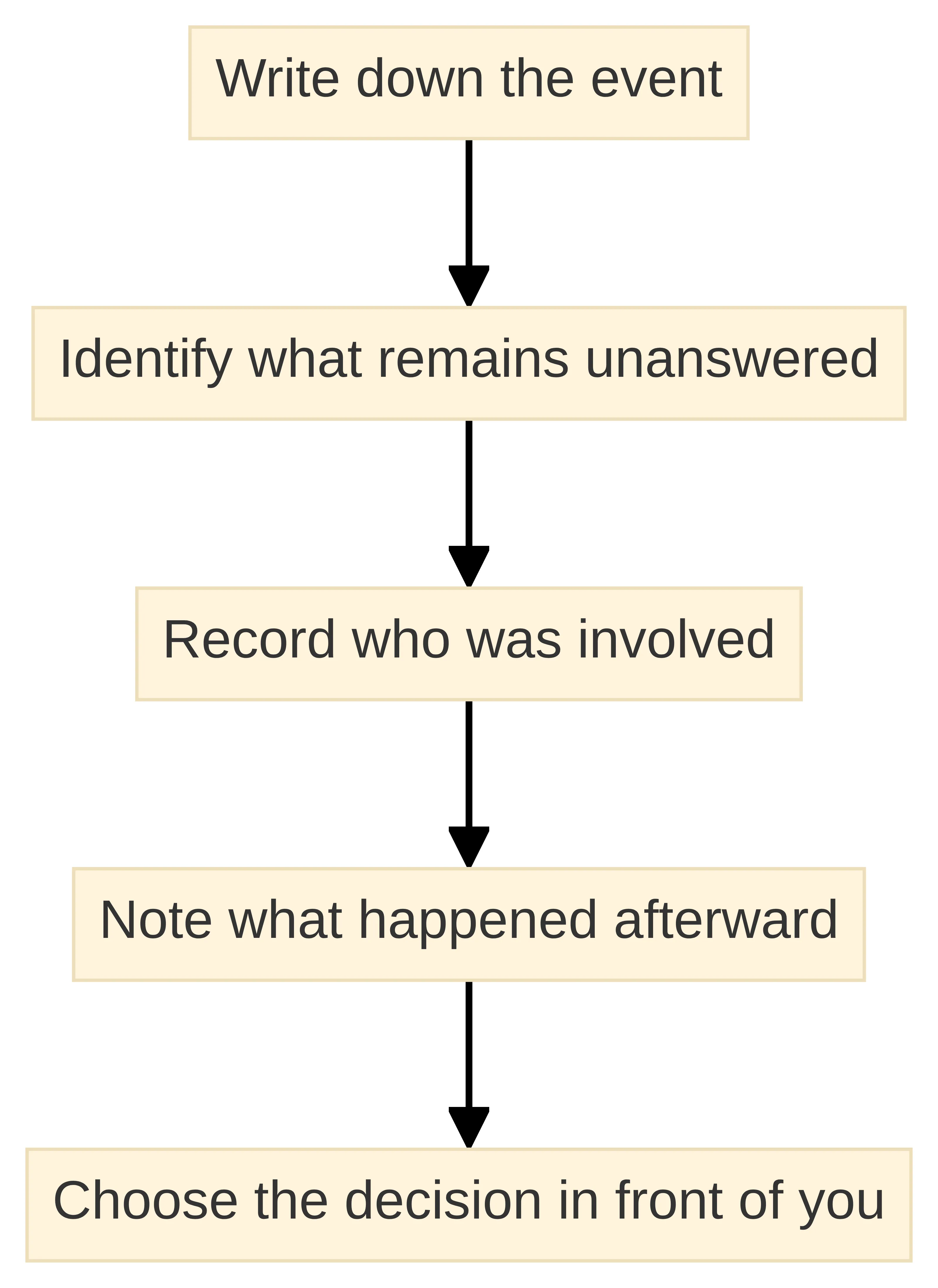
A useful screen is to separate the event from the decision you need to make. Write down the event in plain language, then ask what you cannot yet answer:
- What happened, and what part of the account is based on memory rather than a record?
- Who was involved, and who may hold information about the location, vehicle, property, or worksite?
- What happened immediately afterward, including treatment, reports, calls, messages, or missed work?
- What decision is in front of you now: gathering information, responding to a communication, signing something, or seeking legal review?
If you can answer these questions completely, you may simply need to preserve your file and decide on your next action. If several answers remain open, a consultation can give you a place to address them without treating the consultation as a case prediction.
The type of event can affect the questions you bring, but the event label should remain a starting point. A fall in an apartment building may raise different factual questions from a collision with a commercial truck, while a pedestrian crash may require you to identify the crosswalk, vehicle, witnesses, and available reports. Describe the physical setting and sequence in addition to naming the accident type. That detail gives the conversation a workable beginning.
Use unresolved facts as the consultation signal
Unresolved facts are a better consultation signal than distance from a law office. A local contact may be convenient, but convenience does not answer whether the relevant facts, procedure, records, or fee arrangement fit your situation. Start by naming the uncertainty instead of searching for a conclusion.
A public-location or public-vehicle question deserves its own line in your notes. The New York City Comptroller’s filing guidance identifies service requirements for claims involving listed public authorities and separately describes a claim-form and upload process for its eClaim system. That means you should not assume that every public-related incident follows the same recipient or filing path. Record the agency, facility, roadway, transit system, or other public connection as you understand it, then ask what current process applies.
Use this three-column method to turn uncertainty into a focused consultation agenda:
| What you know | What you do not know | What to ask |
|---|---|---|
| The incident location and date | Whether a public entity, property owner, employer, driver, or another party is relevant | Which facts identify the possible route for review? |
| The treatment or care you received | Which records best explain what happened afterward | Which papers should you organize first? |
| A call, letter, form, or message you received | Whether signing or responding could affect your options | What should you understand before taking that step? |
| Names or contact details for witnesses | What each person actually observed | Which facts should be confirmed or preserved? |
The table is a working aid, not a case assessment. Its immediate use is to keep your conversation from becoming a general retelling when one or two unresolved questions are driving your decision.
The consultation signal becomes stronger when the uncertainty affects an immediate choice. For example, you may have a document with a deadline, an insurer communication you do not understand, or a possible public-entity connection. Do not turn that uncertainty into a prediction. Put the document, date, sender, and question in your notes so the conversation can begin with something concrete.
Your uncertainty list should distinguish missing information from information that conflicts. “I do not have the incident report” calls for a search or request. “The report and my memory describe different times” calls for a careful comparison. Write both issues down, preserve the versions you have, and bring the difference to the consultation instead of choosing the version that seems more helpful.
Write the incident account before searching for answers
Your incident account should begin with the facts you remember, not with a legal theory. The New York State Bar Association advises prospective clients to write down the names, addresses, and telephone numbers of the people involved and the facts they recall before the first interview with a lawyer. Use that advice as the foundation of a short, readable account.
Create the account in the order the event unfolded:
- Identify the date, approximate time, and location as you remember them.
- Describe what you were doing immediately before the incident.
- Describe the condition, movement, impact, or event that changed what happened next.
- Note who was present, what each person did, and what you personally observed.
- Record what happened immediately afterward, including any report, call, photograph, treatment, or conversation.
- Mark details you do not know rather than filling gaps with guesses.
A simple timeline is enough. You are not trying to write a complaint, prove every point, or choose the person responsible.
Separate observation from interpretation. “I saw water near the entrance” is different from “the property owner knew about the water.” “A vehicle struck me in the crosswalk” is different from a conclusion about fault. Keeping those statements separate helps you explain what you know and what still needs examination.
A consultation account is most useful when it includes contact details and facts that may not seem favorable to you. The New York State Bar Association advises you to be honest with your lawyer about all relevant facts, including unfavorable facts, and says lawyers generally must keep those facts confidential. Put the complete account in the file instead of presenting only the parts that support your preferred interpretation.
Your timeline should show changes in the hours and days after the incident, not only the event itself. Add the first treatment or medical contact, the first report or insurance communication, changes in symptoms or ability to work as you experienced them, and any follow-up request you received. Use approximate wording when you do not know an exact time. A clear uncertainty is more useful than a precise guess.
Collect the documents that show what happened afterward
The papers relating to your case should be available for the first consultation. That is a specific preparation point from the New York State Bar Association, and it gives you a practical starting line even when your records are scattered.
Gather the records you already have into a single folder, whether it is physical or digital. Depending on your situation, that folder may include:
- Medical or treatment papers, discharge information, prescriptions, and bills.
- Photographs or videos of the location, vehicle, condition, visible injury, or property damage.
- An incident report, police information, workplace communication, building communication, or transit-related document.
- Insurance letters, claim numbers, adjuster messages, recorded-statement requests, or other communications.
- Names and contact details for witnesses, drivers, employers, building staff, agencies, or other involved parties.
- Documents you were asked to sign or forms you were asked to complete.
Do not wait for a perfect file. Put a note beside anything missing, unreadable, or uncertain so you can ask how it should be handled.
A potential New York City Comptroller claim may involve supporting documents or photographs. The Comptroller’s eClaim instructions say supporting documents or photographs may be attached individually after the form has been successfully uploaded. Treat that as a process-specific instruction, not as a rule for every accident file. If your incident may involve the City, keep the relevant photographs and documents together and ask which current filing path applies.
Use a file index at the front of the folder. List the item, its date, who sent or created it, and the question it may answer. For example, “letter from insurer received on the date shown on the letter” is more useful than a file name such as “scan004.” The index lets you find the important item without treating every paper as equally significant.
Your document folder should preserve original communications as well as your notes about them. Keep the sender, date, attachment, and method of delivery with each message or letter. If a photograph has a location or date associated with it, retain that information. Do not discard an envelope, attachment, or earlier version merely because a later message appears to replace it.
Preserve the complete account, including uncertainty
Use three labels while preparing your notes:
- Observed: what you saw, heard, felt, did, or received.
- Documented: what appears in a photograph, report, message, bill, medical paper, or other record.
- Uncertain: what you remember only partly, what another person told you, or what you have not yet confirmed.
These labels do not decide the legal significance of a fact. They prevent you from presenting a guess as a record or a memory as a certainty.
Do not delete an awkward message, rewrite an earlier account to make it cleaner, or leave out a fact because you think it weakens your position. Keep the original material and add a note explaining your current understanding. If your memory changes as you see a record, note the difference rather than silently replacing the earlier version.
The New York State Bar Association also advises speaking with a lawyer before signing legal documents or taking legal action and understanding the ramifications of what you sign. If a document is already in front of you, add it to the consultation folder with the date you received it and the action requested. Do not treat a request for your signature as proof that you should sign immediately.
Your notes should preserve the difference between what you did and what you intended to do. Record whether you contacted an insurer, employer, property manager, agency, or witness; what you were told; and what you did afterward. If you missed a call or did not complete a requested step, record that plainly. A lawyer needs the sequence, including gaps, to discuss what should happen next.
Treat public-entity questions as verification points
A public-entity connection can change the questions you need to ask. A City roadway, transit system, public hospital, housing authority, school facility, State property, or other public setting should be identified clearly in your notes before you assume that an ordinary private-party process applies.
The New York City Comptroller’s filing guidance says claims involving listed authorities should be served on the relevant authority or its designated agent rather than the Comptroller’s Office. The listed examples include the New York City Transit Authority, New York City Housing Authority, Triborough Bridge and Tunnel Authority, Port Authority of New York and New Jersey, MABSTOA, New York City School Construction Authority, New York City Health + Hospitals, Staten Island Rapid Transit Authority, MTA Bus Company, the Metropolitan Transportation Authority, and the Hugh L. Carey Battery Park City Authority. If one of those entities may be connected to your incident, record the connection and ask about the current service requirement instead of assuming the Comptroller is the correct recipient.
A dangerous-condition question has its own boundary. The New York City Comptroller’s guidance states that, before the City may be held liable for injuries or damages from a potentially dangerous condition, New York law requires notice to the City. The guidance does not turn every fall, roadway problem, or property condition into the same case. If your account involves a potentially dangerous City condition, treat notice as a question requiring current advice.
The City Comptroller’s eClaim instructions describe a particular sequence: select the appropriate form, save and complete it in Acrobat Reader, complete required fields, certify that the information is true and correct, and upload the saved form. The system may also allow supporting documents or photographs to be attached individually. If you use that system, follow its current instructions carefully and keep a copy of what you submit.
A New York State claim can raise a different examination question. For a claim against New York State, the Attorney General may, with five days’ notice, require a person who filed a notice of claim to be sworn and answer oral questions about relevant facts. That possibility is a reason to obtain current advice about the applicable requirements, not a reason to assume the same procedure applies to every New York injury.
Your public-entity note should identify the place, agency, vehicle, facility, or authority as accurately as you can, along with the date and the people who gave you that information. Save signs, notices, route details, or correspondence that identify the public connection. Do not choose a filing recipient based only on the fact that the incident happened on public property. Ask which current rule and recipient apply to the specific entity involved.
Use the consultation to test the next decision
An initial consultation should help you turn your organized account into focused questions. The New York State Bar Association advises asking a lawyer to explain the strengths and weaknesses of the matter, the steps involved, the estimated time, and how you will receive progress updates. Prepare those questions before the conversation so you can listen for concrete answers rather than trying to remember everything afterward.
Bring four groups of questions:
- Facts: Which facts need clarification, confirmation, or additional records?
- Process: What step would come next, and what would you need to provide before that step?
- Communication: Who would contact you, how would updates arrive, and what should you do if a new fact appears?
- Decision: What should you do now, what should wait, and what information would change the next choice?
Write the answer beside each question. If the answer depends on a fact you do not have, write that dependency down instead of converting it into a definite conclusion.
A useful consultation does not need to resolve every issue in one conversation. It should leave you with a clearer list of the facts to preserve, documents to locate, communications to handle, and questions that remain open. That list is the practical output you can use after the conversation.
The New York State Bar Association advises keeping a lawyer informed about new developments that may affect the matter. Add a simple update page to your folder. Record the date, what changed, who contacted you, what document arrived, and what question the change creates. This keeps later communication connected to the original account.
Your notes from the consultation should separate an answer from a condition. “Bring the incident report” is an action. “The next step depends on which authority is involved” is a condition. Record both, along with any date or document connected to them. This gives you a usable plan without turning a conversation into a promise about the result.
Clarify fees and expenses in writing
A fee discussion should cover more than the percentage. New York rules allow a civil fee to be contingent on the outcome unless a statute, court rule, or other law prohibits it in that matter. The rule also addresses written information about how the fee will be determined and how litigation and other expenses will be handled.
After a lawyer is hired for a contingent-fee matter in New York, the lawyer must promptly provide a writing explaining the method of calculation, applicable percentages, deductions for litigation and other expenses, and costs you may owe regardless of whether you prevail. Ask for those terms in writing and read them before moving forward. A consultation about fees is not a substitute for understanding the agreement that would govern the representation.
Use a short fee checklist during the conversation:
- What percentage or percentages would apply at different stages?
- Which expenses would be deducted, and when would they be deducted?
- Which costs could you owe regardless of the outcome?
- What services or steps would the arrangement cover?
- What document would state the terms, and when would you receive it?
Do not compare fee percentages in isolation. The expense rules, calculation method, and written terms are part of the decision.
A free initial conversation, where offered, does not by itself answer what a later fee arrangement would contain. Keep the questions separate: first ask whether the firm will discuss your situation without a charge, then ask what written terms would apply if you were hired.
Your fee notes should capture the answer in the same terms used during the discussion. Write down whether the percentage changes by settlement, trial, or appeal; how expenses are treated; and which costs remain your responsibility. If an explanation is unclear, ask for the term to be stated in the written agreement rather than relying on memory.
Choose an accessible Bronx-area contact option
A Bronx location can make contact easier, but local proximity remains only one factor in your decision. Match the contact option to your circumstances, the records you can access, and the questions you need answered. You do not have to treat an office address as proof that a practice is suitable for your matter.
Our office, The Law Offices of Evan W. Kohn, is located at 2000 White Plains Road in the Bronx. We serve clients in all five boroughs, Westchester, Putnam, Rockland, Nassau, and New Jersey. Those service areas give you a geographic starting point if you live in the Bronx or one of the surrounding areas identified by the firm.
At The Law Offices of Evan W. Kohn, we offer free consultations and operate 24/7. We can arrange home or hospital visits for clients who cannot travel. If travel, treatment, work, or mobility makes an office visit difficult, include that fact when you make contact so the available option can be discussed.
At The Law Offices of Evan W. Kohn, we help individuals injured by commercial trucks. If your event falls within one of those descriptions, state the event plainly in your summary. A description helps start the conversation; it does not decide the legal questions.
Your contact plan should include the way you want to communicate, the times you are available, and any access need that affects the conversation. Have the short incident summary nearby when you make contact, but do not delay simply because every record has not arrived. You can explain what you have, identify what is missing, and ask what to prepare next.
Request the consultation with a concise summary
A concise consultation summary should tell the essential story without trying to argue the result. Include the incident type, location, approximate date and time, people or entities involved, treatment or other immediate aftermath, documents you have, communications you received, and the questions that remain unanswered.
Your final preparation should distinguish known facts from uncertainty, flag any public-entity connection, and identify any document you have been asked to sign or any response you have been asked to make. Keep the summary and supporting papers together as you begin the conversation.
Your summary can fit on one page if it follows a consistent order: what happened, where and when it happened, who was involved, what happened afterward, what records you have, and what you need to understand. End with the two or three questions that matter most to your next decision. A focused summary gives you a practical way to begin without claiming that the answer is already known.
Questions to clarify before requesting a consultation
What types of situations may warrant contacting a personal injury lawyer in the Bronx?
You may want to consult a personal injury lawyer if you’ve been involved in a car accident, a fall in an apartment building, a construction site injury, or a pedestrian accident, especially if important facts remain unclear.
What should I prepare before my initial consultation with a lawyer?
Before your consultation, gather relevant documents such as medical records, photographs of the incident, insurance communications, and any witness contact information. Having these materials organized will help facilitate the discussion.
How should I document the details of my incident before meeting with a lawyer?
Document the incident by writing down the date, time, location, and a detailed account of what happened, including any witnesses and the immediate aftermath. Be honest about all relevant facts, even those that may seem unfavorable.
What are the fee arrangements I should discuss with a personal injury lawyer?
Discuss the percentage fee structure, any potential expenses that may be deducted from your recovery, and ensure you receive a written agreement outlining these terms before proceeding.
How can I contact The Law Offices of Evan W. Kohn for a consultation?
You can contact The Law Offices of Evan W. Kohn, located at 2000 White Plains Road in the Bronx, for a free consultation. They offer 24/7 availability and can arrange home or hospital visits if needed.
What should I do if my case involves a public entity or authority?
If your case involves a public entity, make sure to identify the specific agency and understand the filing requirements, as claims against public authorities may have different procedures compared to private claims.
Hurt like this?
We handle Car Accidents cases in the Bronx.
Evan W. Kohn, Esq. — more than 35 years of Bronx personal-injury practice. Reading about it only goes so far; a free consultation tells you what actually applies to your case.