
Truck Accidents
Reported Semi-Truck Accident in the Bronx: How to Verify Reports and What to Do Next
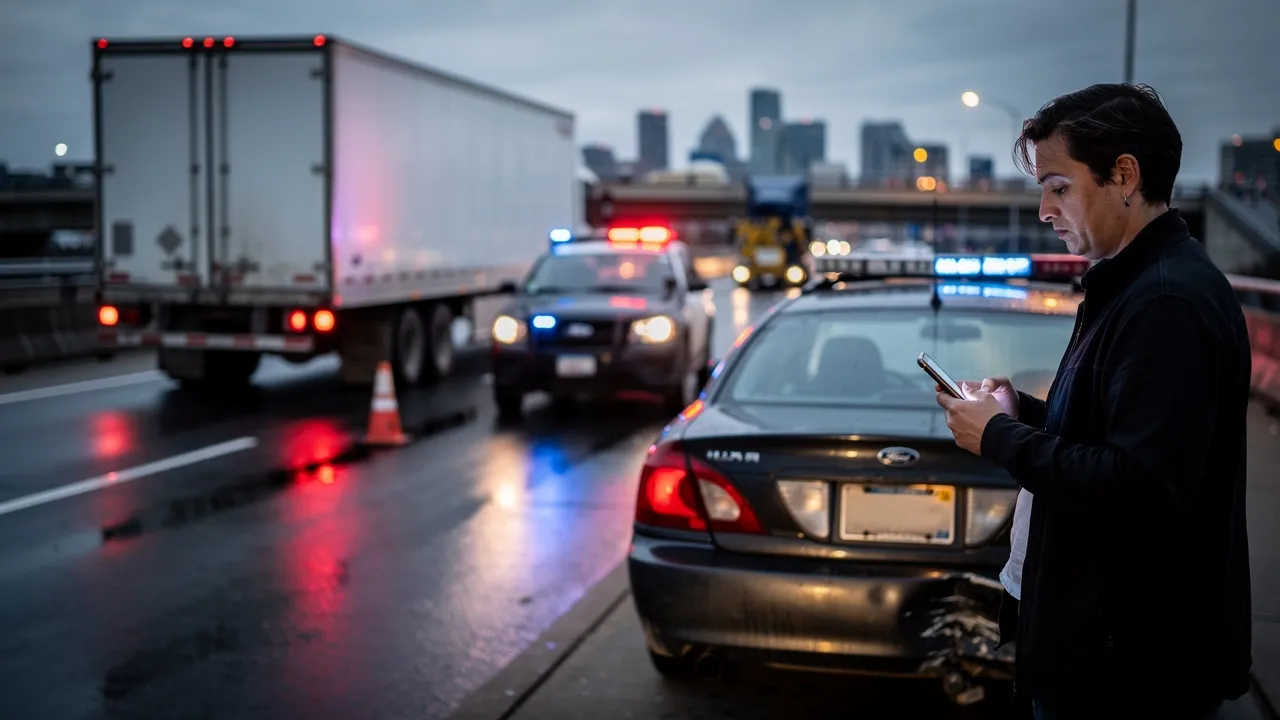
What is actually confirmed about the reported semi-truck accident today?
This guide helps you verify the latest official information, stay away from danger, and decide what to do if you or a family member was involved.
A report labeled “today” can still be old, incomplete, or about another crash. Start with the exact date, time, location, and agency named in the report. Do not fill gaps with guesses about injuries, fault, road closures, or the vehicles involved.
Use a simple confirmation check:
- Look for a current update from an official New York City or New York State public-safety agency.
- Match the reported date and location against the agency’s update, rather than relying on a photograph or post timestamp.
- Compare more than one official update when the incident is still developing.
- Treat social posts, scanner comments, forwarded messages, and recycled images as unconfirmed until an official source identifies the same crash.
- Save the link or screenshot showing the time and wording you relied on.
The NYPD provides collision-report information and a retrieval process, while New York State public-safety officials publish roadway-response information. Those resources can help you separate an official record from a circulating description, but a report about an earlier crash does not confirm an event on November 9, 2026.
An official record should be read for what it actually identifies. A selected NYPD report contains September 2026 Bronx collision records, so it cannot establish what happened today. If you are trying to determine whether your family member, passenger, or vehicle was involved, use direct contact and emergency services for immediate danger rather than driving toward an active scene.
How can you stay safe near an active Bronx crash scene?
An active Bronx crash scene can contain moving traffic, damaged vehicles, roadway debris, and emergency workers. Stay away from the scene unless an official directs you to approach, and do not block lanes, follow responders, or confront a driver or trucking company representative.
When you see crash responders, slow down and move over if you can do so safely. Traffic incident responders help crash victims, clear roadway hazards, and prevent secondary crashes, but they can face fatal or life-altering injuries. Give them room to work.
Your vehicle’s condition and the presence of injuries determine whether you should exit. If your vehicle is operable and no one inside is injured, move to a secure location before exiting to assess the situation. A secure location can include the nearest shoulder, median, or rightmost lane when that move can be made safely.
If anyone is injured, or the vehicle cannot be moved safely, remain out of traffic as far as conditions allow and call 911. Do not leave the vehicle merely to get a closer look at the truck, roadway, or emergency response.
Keep your attention on traffic rather than on recording the scene. Do not walk along the shoulder, enter a closed lane, or return to collect photographs after you have reached safety. If you are passing the crash, follow police directions and leave space for emergency vehicles. Your role is to avoid a second collision, not to investigate the first one.
What should you do first if you were involved?
Your first actions after a truck crash should protect immediate safety and medical care. We recommend this order:
- Call 911 when there is immediate danger or serious injury.
- Get medical care, even if the first symptoms seem limited.
- Move to a safe place when the vehicle can be moved and doing so will not create another hazard.
- Photograph the truck and its visible identifying details from a safe position.
- Get witness information when you can do so without entering danger.
- Avoid giving statements to the trucking company’s insurance adjuster before you understand what is being requested.
Do not delay emergency care to collect evidence. A photograph or witness name is useful only after you are safe.
New York law makes leaving a collision scene before exchanging information with other motorists illegal. Remain at the scene when conditions permit, exchange the required information, and follow police instructions. If you must leave for emergency medical treatment, tell emergency personnel or police what happened and where you are going.
The rule is about remaining and exchanging information, not about standing in an unsafe lane. Move to safety first when you can, and let emergency workers manage traffic.
An insurance adjuster for the trucking company may contact you after the crash. Do not give that adjuster a statement before you understand the purpose and consequences of the conversation. Keep the contact information, note when the call occurred, and direct urgent questions about your rights or next steps to a qualified New York personal injury professional.

What details should you preserve safely after a truck crash?
Your accident file should preserve what you saw, what you received, and what you did afterward. From a safe location, record the truck’s visible identifying details, the surrounding roadway, and any damage you can photograph without returning to an active lane. Get witness names and contact information if you can do that safely.
Keep copies of the police report, photographs, witness statements, medical records, discharge instructions, bills, and messages about the crash. We investigate cases by gathering police reports, photos, witness statements and medical records. Organized records make it easier to explain the sequence of events during a later discussion.
Do not wait to identify the records or video that may matter to your account of the crash.
You should not try to obtain restricted trucking-company records yourself or return to a dangerous location for video. Save the records already in your possession, note where additional footage may exist, and raise those details during qualified professional guidance.
Use this short checklist while the details are fresh:
- Write down the approximate time and place you remember.
- Preserve the official messages or posts that led you to the crash report.
- Keep the names and contact details of witnesses.
- Save every medical record and bill connected with the crash.
- Record each insurer’s name, phone number, claim number, and contact date.
Do not edit photographs or delete messages. Keep the original files and add notes separately.
Which New York crash reports and deadlines should you check?
New York DMV reporting depends on what the crash caused. In New York, you must report a crash to the DMV if it involves a fatality or personal injury. You must also report a crash when damage to one person’s property is $1,000 or more; that dollar amount measures damage to the property of any one person, not the combined damage from every vehicle or item.
These triggers can apply even when the crash description circulating online is incomplete. Gather the police information, medical information, and property-damage details you have, then determine which reporting requirement fits the actual event.
New York’s Report of Motor Vehicle Crash, MV-104, is available at motor vehicle offices, most insurance agents, and the DMV website. You can submit the New York MV-104 crash report online through the DMV’s “File a Motorist Crash Report” webpage.
The report concerns your crash, not the accuracy of a social-media post. Use the information from the incident and keep a copy of anything you submit.
For a collision that caused more than $1,000 in damage to one person’s property, New York requires the MV-104 to be filed with the DMV within 10 days of the collision. The 10-day period in this instruction applies to that property-damage condition; do not assume it answers every injury-related deadline question.
Write down the collision date and the date you submit the form. If you are unsure which reporting requirement applies, ask a qualified professional rather than guessing or waiting for an online collision report to appear.

How can you obtain an NYPD collision report?
An NYPD collision report may not be available immediately after a crash. You can request an NYPD collision report online, but it may take up to seven business days from the incident date to become accessible. The online portal covers collision reports taken after September 30, 2016, which is the date defining the portal’s stated coverage.
Use the incident date, location, and other identifying details carefully. A search result that is not available yet does not establish that no report exists, and an old result does not establish that it describes today’s crash.
You may request a collision report at the precinct where the collision occurred during the first 30 days after the report was filed. The NYPD instructions call for two completed copies of the request form, which you may mail or deliver to the precinct of occurrence.
The 30-day period is measured from when the report was filed, not necessarily from the moment of impact. Keep track of both dates when you have them, and do not approach an active scene to locate a precinct.
A selected NYPD report lists September 2026 Bronx records. In that report, Beach Avenue and Gleason Avenue is listed with a large commercial vehicle described as having 6 or more tires and a passenger vehicle. The “6 or more tires” description measures the vehicle category used in that report; it does not prove that a semi-truck accident occurred at that intersection today.
Read every report for its date and location before connecting it to the event you are trying to verify.
Why can a semi-truck accident claim take different amounts of time?
A semi-truck claim does not have one reliable timetable. Published estimates vary: the range for semi-truck claims includes 6 months to 2 years, 9 to 18 months, and several months to a year or more. These ranges come from sources discussing general claims, South Carolina, and Texas; they do not establish a New York-specific timeline.
Use those figures only as broad context, not as a promise about your claim. The date of the crash alone cannot tell you when a claim will resolve.
A truck-accident claim’s timeline depends on several conditions:
- Injury severity and how long medical assessment takes.
- The complexity of the crash and the number of potentially involved parties.
- Whether the available evidence makes fault clear or liability is disputed.
- Whether the matter resolves through settlement or proceeds toward trial.
- Whether the insurer is willing to negotiate.
A claim may move differently from another claim even when both involve commercial trucks.
Catastrophic injuries can require longer medical assessment and longer overall claim timelines. That delay relates to understanding the injury and its future effects, not simply to the size or type of truck involved.
Focus first on medical care and preserving records. A qualified New York professional can discuss how the unresolved facts in your situation affect the next step without turning a general range into an individual prediction.
When should you seek a qualified New York personal injury evaluation?
A qualified New York personal injury evaluation may help when the crash caused serious injury, the insurer is asking for a statement, or you cannot tell which records and deadlines matter. Truck accident cases are often more complex than typical car accident claims because multiple parties and federal trucking regulations may be involved.
Bring the facts you have rather than waiting for a complete file. Include the crash date and location, photographs, witness information, medical records, police materials, insurer contacts, and any official report you found.
New York’s three-year period is a separate deadline issue. In New York, a personal injury lawsuit against a driver for serious injuries generally must be filed within 3 years. That period measures the general filing window for that type of lawsuit; it does not answer every deadline question involving a truck, an insurer, a public entity, or a different defendant.
Do not calculate a filing deadline from a general article alone. Record the crash date and seek guidance when a serious injury or unresolved responsibility is involved.
We offer free consultations and can arrange home or hospital visits for clients who cannot travel. That option may be useful when an injury, hospitalization, or mobility problem makes an office visit impractical.
Bring only records you can obtain safely. Emergency services and medical care come before any consultation.
What should you do next with the information you have?
Your next step is to organize the facts before you make a decision. Keep one folder with:
- The confirmed date, location, and official updates you found.
- Photographs, witness details, police materials, and medical records.
- Insurance names, claim numbers, and contact dates.
- The MV-104 information and any deadline you are tracking.
- Questions about the truck, the insurer, injury treatment, or missing records.
If the crash involved serious injury, a family member cannot travel, or the responsibility and reporting questions remain unresolved, bring that organized information to qualified New York guidance. The Law Offices of Evan W. Kohn operates 24/7.
This article provides general information, not legal advice. A qualified professional must assess your particular facts, records, injuries, and deadlines before advising you about an individual next step.
What should you know before requesting guidance after a Bronx truck crash?
What should you do if a semi truck accident today has not been confirmed by an official source?
Treat the report as unconfirmed. Check current NYPD or New York State public-safety updates, compare the date and location, and do not rely on social posts, scanner comments, forwarded messages, or recycled images. Do not drive toward an active scene; call 911 for immediate danger or serious injury.
Can an older NYPD collision report confirm what happened today?
No. An NYPD report must match the incident’s date and location before it can support your understanding of a crash. A report may also take up to seven business days to become available online, so a missing report does not prove that no collision occurred.
How long does a semi-truck accident claim usually take?
Published estimates vary from several months to two years or more, but those figures are general and do not establish a New York-specific prediction. Timing depends on injury severity, medical assessment, case complexity, disputed responsibility, settlement or trial, and the insurer’s response. Catastrophic injuries may require more time to evaluate.
What if an injured family member cannot travel after a Bronx truck crash?
Put emergency care and medical treatment first, then preserve the records that can be obtained safely. A qualified New York personal injury professional can review the situation, and The Law Offices of Evan W. Kohn offers free consultations and can arrange a home or hospital visit for someone who cannot travel.
Hurt like this?
We handle Truck Accidents cases in the Bronx.
Evan W. Kohn, Esq. — more than 35 years of Bronx personal-injury practice. Reading about it only goes so far; a free consultation tells you what actually applies to your case.