
Slip & Fall
Slip-and-Fall Settlements Without Surgery in New York: What Affects Your Claim
Why a Bronx slip-and-fall claim can matter without surgery
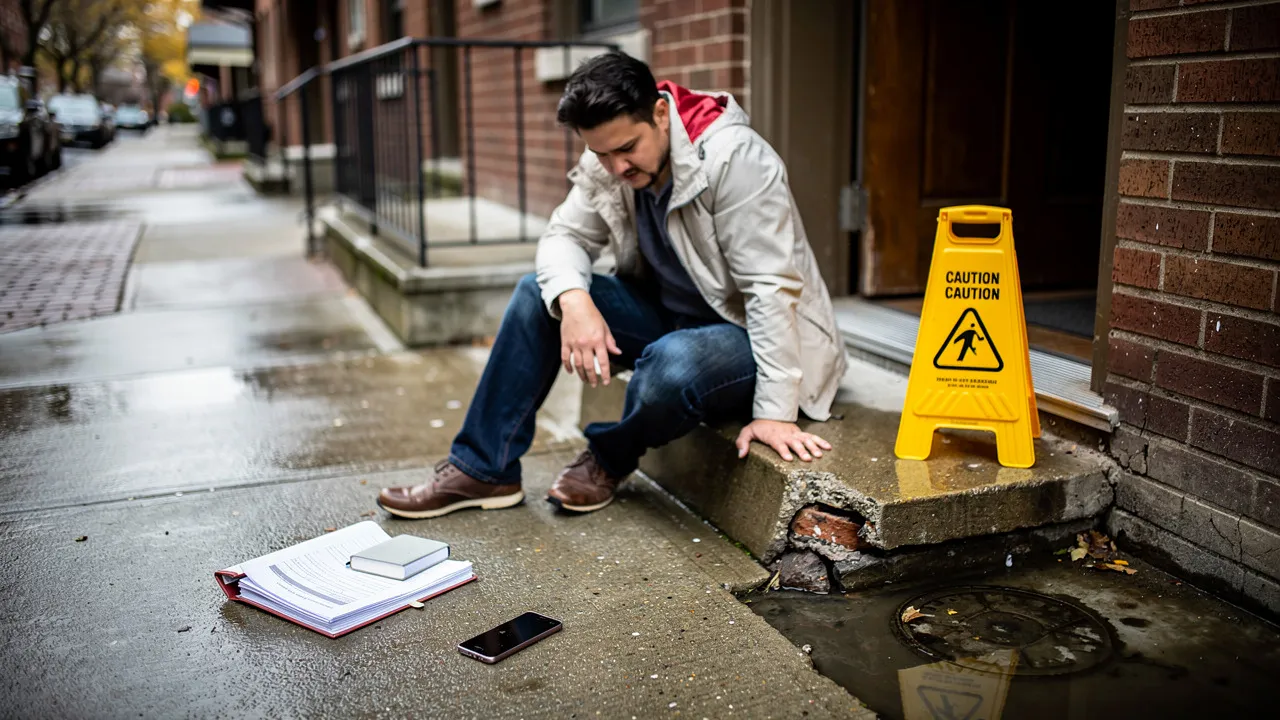
A Bronx slip-and-fall claim may begin with you sitting outside a Bronx building after a wet entryway, broken step, or other surface hazard sent you to the ground. This guide helps you separate four questions: what injury you suffered, what losses followed, whether a property owner may be responsible, and what evidence remains.
Surgery is not a legal requirement, and a nonsurgical case can rely on imaging, consistent treatment, medical narratives, and credible testimony about changes to your daily life. The absence of an operation therefore does not answer whether your injury matters or whether a claim has potential.
A surgery label also cannot produce a reliable dollar figure. Start with the facts that can be documented: your diagnosis, treatment course, recovery, work and household effects, the condition that caused the fall, and the proof connecting that condition to the property owner.
What a nonsurgical fall injury can still involve
A nonsurgical fall injury can take several forms:
- A torn ligament, deep tissue bruising or bleeding, a fracture that does not require surgical readjustment, or a painful sprain or strain with a long recovery.
- A wrist, ankle, rib, or minor hip fracture treated with a cast, splint, or immobilization rather than surgery.
- Significant pain, weeks away from work, or a lasting loss of strength or range of motion, even when treatment does not include an operation.
These categories do not tell you what your claim is worth. They tell you what to document and what questions your medical records need to answer.
A nonsurgical injury is easier to understand when your records show the full timeline rather than only the first diagnosis. Gather the initial examination, imaging, referrals, therapy notes, follow-up visits, prescriptions, restrictions, and later assessments. Consistency matters because the claim may depend on the medical narrative and on credible evidence of how the injury changed your daily life.
Describe functional changes plainly. Note whether you had difficulty walking through a Bronx subway station, climbing stairs, carrying groceries, standing at work, or completing ordinary household tasks. Your notes do not replace medical records, but they help preserve the practical effect of the injury while the experience is still clear.
How treatment, losses, and daily-life impact shape the evaluation
A nonsurgical slip-and-fall claim may be affected by medical treatment, recovery duration, lost income, limited mobility, chronic discomfort, and emotional strain. Pain-and-suffering damages address physical pain and emotional distress, including conditions such as chronic pain, anxiety, PTSD, and loss of enjoyment of life.
Organize the evaluation around separate categories instead of asking whether surgery occurred:
- Injury and treatment: identify the diagnosis, imaging, therapy, follow-up care, prescriptions, and continuing restrictions.
- Recovery: record how long symptoms lasted, whether improvement was gradual, and whether limitations remained.
- Financial effect: identify missed work, reduced hours, medical expenses, transportation costs, and paid help during recovery.
- Daily life: describe mobility limits, discomfort, sleep problems, household changes, and activities you could no longer perform in the same way.
- Documentation: connect each category to a record, receipt, note, witness, or medical statement where possible.
Medical expenses can continue even without surgery. Physical therapy, imaging such as MRIs or X-rays, and follow-up care can add to treatment expenses. Keep each bill, explanation of benefits, prescription record, and appointment-related receipt with the medical timeline.
Recovery duration also deserves a clear record. Write down the date of the fall, the dates of treatment, the periods when work or ordinary activities became difficult, and the point at which each restriction changed. Avoid rounding a long recovery into a single sentence; specific dates and records make the sequence easier to assess.
Pain-and-suffering evaluation may consider severity and permanence, recovery duration, daily-life impact, age, pre-existing conditions, documentation quality, and witness testimony. Medical records, therapy notes, prescription histories, and personal pain journals can help document suffering.
Separate what changed after the fall from symptoms or limitations that existed before it. Tell medical providers about both the prior condition and the new change so the record addresses the complete timeline.
Why injury severity and property-owner fault are separate questions
Property-owner responsibility is a separate question from injury severity. A serious injury alone does not establish that another person or property owner was legally at fault.
For your claim, identify the condition that caused the fall, where it existed, how long it may have been present, who controlled the property, and what records or witnesses can address those points. A strong medical record cannot substitute for proof about the premises, just as a photograph of a hazard cannot by itself describe the full medical effect.
New York premises-liability rules can involve creation of the dangerous condition and notice of that condition. In a New York premises-liability case, a property owner seeking summary judgment initially must show that it did not create the dangerous condition and lacked actual or constructive notice of it.
That makes details about maintenance, inspections, prior complaints, repairs, cleaning, and the condition of the area potentially significant. Preserve the names of employees, building staff, nearby businesses, and witnesses who may know what happened before or after your fall.
Weather and visibility can create additional legal questions. Under New York’s storm-in-progress doctrine, a landowner generally is not liable for an icy condition arising during an ongoing storm or for a reasonable time afterward. An open and obvious danger may not require a warning, but that does not eliminate a property owner’s duty to maintain reasonably safe premises.
Record what you observed rather than deciding the legal result yourself. Note whether the hazard was visible, whether lighting or obstructions affected your view, whether precipitation was occurring, and whether the area appeared to have been cleaned or repaired. Those facts help identify which liability questions need individual review.
Preserve the Bronx accident scene before evidence disappears
Evidence at a Bronx accident scene can disappear quickly. A spill may be cleaned, a broken step may be repaired, or a business may overwrite surveillance footage. The condition you saw immediately after the fall may not look the same when someone later inspects the location.
If you are able, preserve the scene as soon as practical:
- Photograph or record the hazard from more than one angle, along with the surrounding area.
- Write down the exact location, nearby entrances or businesses, and what you observed about the surface.
- Identify witnesses and preserve their names and contact information.
- Ask whether an incident report was created and keep any copy or related communication.
- Note the location of cameras and preserve communications about surveillance or the condition of the property.
Do not rely on a later memory of what the floor, sidewalk, step, or entryway looked like. Use the earliest available record.
The scene record should connect the hazard to your account of the fall without embellishment. Write a short chronology while the sequence is fresh: where you entered, what you noticed, where your foot or body made contact, what happened immediately afterward, and who responded. Add the photographs and communications to the same file.
This process does not decide liability by itself. It gives you a concrete starting point for comparing the physical condition, witness accounts, incident report, and later repairs.

Build a complete slip-and-fall evidence file
A slip-and-fall evidence file should contain the materials that describe the hazard, your injury, your losses, and the surrounding communications. Preserve:
- Photos or video of the dangerous condition and the surrounding area.
- Photographs of visible injuries.
- Names and contact information for witnesses.
- A store, property, or business incident report.
- Surveillance footage or information identifying where cameras were located.
- The shoes and clothing you wore during the accident.
- Medical records and bills.
- Pay stubs and documentation of missed work.
- Receipts for accident-related expenses.
- Notes about what happened and how your condition changed.
- Communications with the property owner or insurance company.
- Maintenance, inspection, or cleaning records obtained during an investigation.
Keep original files when possible. Save photographs in their original form, retain email threads rather than only screenshots, and label copies with the date and what they show.
Use a simple structure so you can find each item quickly:
- Place the accident chronology, location information, photographs, videos, and witness details together.
- Place medical records, bills, prescriptions, therapy notes, and injury photographs in a medical folder.
- Place pay records, expense receipts, and work communications in a loss folder.
- Place incident reports, insurer communications, property-owner messages, and repair or maintenance material in a liability folder.
Add a short description beside each file. A practical evidence file is useful because it shows what you have, what is missing, and which questions still require individual attention. It is an organizing tool, not a substitute for assessing the facts of your claim.
Document pain, income loss, and recovery expenses
Lost income and recovery expenses belong in the same file as your medical records. Use pay stubs, employment letters, or tax returns to document lost income, and keep invoices for transportation or hiring help during recovery.
Gather records that show your normal work schedule, missed days, reduced hours, and any change in earnings. Keep receipts for transportation to appointments, household help, or other paid assistance connected to the recovery period. Write the date, amount, purpose, and payment method beside each receipt.
Do not combine medical bills, lost wages, and out-of-pocket expenses into a single total before the underlying records are organized. Separate categories make it easier to identify missing documents and explain how the fall affected your finances.

Use the organized records to decide what needs individual review
An organized file helps you decide whether the next discussion should focus on medical proof, financial losses, premises evidence, or more than one issue. Individual review is especially practical when:
- Treatment continues or your mobility, strength, range of motion, work, or daily activities remain limited.
- The property owner or insurer disputes what caused the fall, whether the condition existed long enough to be known, or how the condition affected you.
- Lost income, treatment expenses, transportation costs, or paid help are substantial or disputed.
- Important evidence is incomplete, including missing photographs, witness details, incident reports, surveillance, or maintenance information.
- A pre-existing condition makes it necessary to separate your earlier baseline from the change after the fall.
Bring the medical timeline, daily-life notes, financial records, hazard photographs, witness information, and insurer communications. Mark each unresolved question instead of trying to answer it with a settlement estimate.
Compare the file across five connected threads:
- Injury: What was diagnosed, what treatment occurred, and what limitations remain?
- Loss: What income and expenses can be documented, and for which dates?
- Condition: What exactly caused the fall, and what shows the location as it appeared?
- Responsibility: Who controlled the property, and what evidence addresses creation, notice, maintenance, weather, or visibility?
- Proof: Which witnesses, records, photographs, videos, or communications still need to be located?
This comparison gives you a focused agenda for an individualized discussion. It also keeps the absence of surgery from becoming the only fact you consider.
At The Law Offices of Evan W. Kohn, we offer free consultations and operate 24/7; we can arrange home or hospital visits for clients who cannot travel. We investigate cases by gathering police reports, photographs, witness statements, and medical records.
Bring the records you have, identify what is missing, and explain the questions that remain about the Bronx property, your treatment, your losses, or the insurance communications.
Bring your preserved records to the next case discussion
Your next step is to assemble a short accident chronology and place it beside your medical, financial, property-condition, witness, and communication records. Use that file to identify the facts that are clear, the evidence that may have disappeared, and the questions that remain about injury, losses, notice, and property-owner responsibility. Surgery status alone cannot answer those questions.
This article provides general information, not legal advice. Bring the organized records and unresolved questions to an individualized case discussion rather than relying on a guessed settlement amount.
Questions to ask when reviewing a nonsurgical Bronx slip-and-fall claim
Can slip and fall settlements without surgery still involve significant injuries?
Yes. Surgery is not a legal requirement, and the absence of an operation does not establish that an injury is minor. Imaging, consistent treatment, medical narratives, recovery length, work limitations, and changes to daily life can help show the injury’s effect.
What should I save to document lost wages and recovery expenses?
Keep pay stubs, employment letters, tax records, and documentation of missed or reduced work. Also preserve medical bills, appointment-related transportation receipts, invoices for household help, and other receipts tied to recovery. Record the date, amount, and purpose for each expense.
How does New York notice affect a Bronx premises-liability claim?
The claim may require evidence about whether the property owner created the dangerous condition or had actual or constructive notice of it. Preserve photographs, witness details, incident reports, maintenance or inspection information, and communications that may show how long the condition existed or who knew about it.
Does a pre-existing condition prevent recovery after a slip and fall?
Not necessarily. If the fall aggravated an earlier condition, the relevant issue is generally the change or worsening after the accident rather than the prior baseline. Medical records should clearly distinguish earlier symptoms and limitations from what changed after the fall.
What happens if snow or ice caused the fall during an ongoing storm?
New York’s storm-in-progress doctrine can limit liability for an icy condition arising during an ongoing storm or for a reasonable time afterward. Document the weather, timing, surface condition, lighting, and any cleanup or maintenance facts because the specific circumstances require individual review.
Hurt like this?
We handle Slip & Fall cases in the Bronx.
Evan W. Kohn, Esq. — more than 35 years of Bronx personal-injury practice. Reading about it only goes so far; a free consultation tells you what actually applies to your case.