
Slip & Fall
What Is Tort Law? A Bronx Guide to Unsafe-Premises and Injury Claims
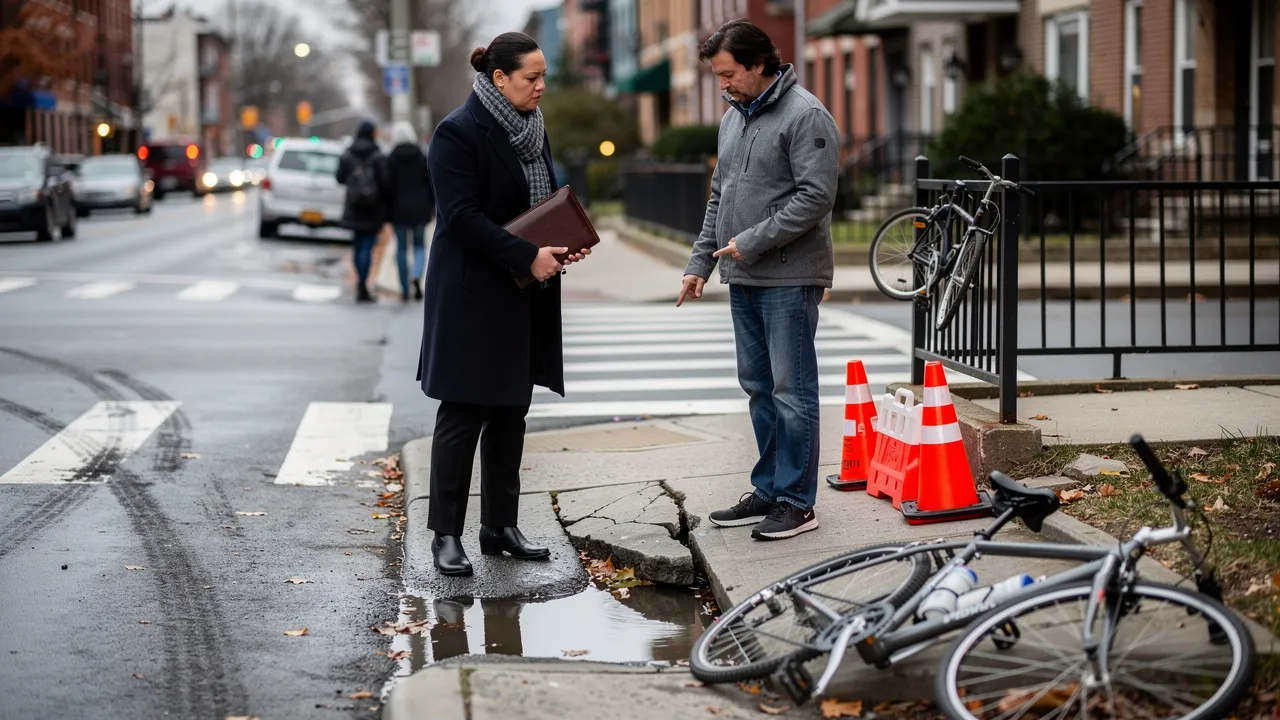
What tort law means for an injured Bronx resident
Tort law is a practical framework for asking whether another person’s conduct or a property condition may have caused you a legally recognizable injury. For a Bronx resident who slipped in a wet lobby, fell on a broken sidewalk, or was hit while crossing a New York City street, the first question is usually not “What legal label fits?” It is “What happened, who may have been responsible, and what connects that event to my injury?”
This guide uses tort law to describe the civil side of an injury question. It is not a criminal-prosecution guide, and it does not treat an injury dispute as a disagreement about whether a promised contract term was performed. The focus is narrower: conduct or a condition, responsibility for it, an injury, and the connection between the two. Those facts can support a focused legal review without deciding the result for you.
Negligence-based claims are one common part of this framework. Other tort categories involve intentional conduct, including assault, battery, trespass, and false imprisonment. You do not need to decide which category applies before describing the event. A clear account of the condition, conduct, location, injury, and available evidence gives a lawyer something concrete to assess.
Use the article as a screening guide, not as a ruling on your circumstances. If the facts are uncertain, preserve what you can and organize the questions that remain. That approach is especially useful when a fall happened in a store, apartment building, commercial property, or on a sidewalk, or when a car struck you while you were walking or riding in the Bronx or elsewhere in New York City.
The initial screen: condition or conduct, responsibility, injury, and connection
A negligence claim generally turns on duty, breach, causation, and a legally cognizable injury. In plain language, that means you can begin with four connected questions:
- What conduct or condition is at issue? Identify the wet floor, broken pavement, dark stairway, moving vehicle, or other event as specifically as you can.
- What responsibility may have existed? Ask who controlled the place, created the condition, operated the vehicle, or otherwise had a relevant duty in the circumstances.
- What injury did you suffer? Record the physical injury and the medical care connected with it.
- How does the conduct or condition connect to the injury? Explain how the event led to your fall, collision, and resulting harm.
These questions organize facts for review. They do not establish that another party is legally responsible.
The duty question depends on the circumstances. Motorists, for example, owe pedestrians and other drivers a duty of reasonable care. In a Bronx crosswalk, that makes the roadway setting, traffic movement, point of impact, and available records relevant facts. A property-related event raises a different set of questions about the condition, the location, and the party connected with that place.
A breach question asks whether the conduct or condition fell below the duty that applied. You are not expected to answer that conclusively from memory at the scene. Instead, preserve the facts that let a review examine what happened: the exact place, what you saw, what changed, who was present, whether the condition was reported, and how the injury followed.
Keep the four questions separate when you review the account. A description of a wet floor, broken sidewalk, or moving vehicle identifies the event; it does not by itself answer who had the relevant responsibility or whether a duty was breached. Likewise, a medical diagnosis records an injury but does not, standing alone, establish which condition or conduct caused it. Separating these points helps show which fact is known and which question still needs review.
The injury component also needs a concrete account. Note when pain began, where you received care, what symptoms or diagnosis were recorded, and how the event was described to medical providers. Medical documentation does not replace the location and condition evidence. The four parts work together, so a clear injury record still leaves questions about responsibility and causation, while a detailed scene record does not by itself establish an injury.

Negligence is common, but the reader need not name the tort
Negligence is the carelessness-based path most closely connected to the duty, breach, injury, and causation screen. You can describe it without using the word. For example, you might explain that you walked through a Bronx apartment lobby, encountered water on the floor, fell, and later received treatment for an injury. You might also explain that a driver struck you while you were in a crosswalk. The facts come first; the legal classification follows review.
Intentional-tort categories involve a different kind of alleged conduct. Intentional-tort categories include assault, battery, trespass, false imprisonment, and intentional infliction of emotional distress. That distinction can help you describe what happened, but it does not require you to make a final classification. A deliberate contact, a threat, or unauthorized use of property may raise different questions from a wet floor or a driver’s alleged lack of care.
Use ordinary words when you prepare your account:
- What were you doing immediately before the event?
- What did you see, hear, or feel?
- What happened next?
- Who or what was involved?
- What injury and treatment followed?
If you cannot answer every question, mark the uncertainty rather than filling it with a guess. A consultation can then focus on the missing fact, the available record, and the possible paths for further review.
Use a fact-and-conclusion split when preparing the account. Write “I saw water near the elevator” rather than “the owner was negligent”; write “the car contacted me in the crosswalk” rather than “the driver caused all of my injuries.” This keeps the description tied to what you personally observed and leaves responsibility and causation questions for review. It also gives you a place to identify what came from a witness, medical record, or later conversation rather than blending it with your own memory.
Do not reject a possible claim merely because you cannot name the tort. Do not assume that an injury automatically proves negligence either. Your task at this stage is to preserve a reliable account and identify the questions that need legal analysis.
How the screen applies to Bronx falls and pedestrian injuries
A Bronx premises event can involve a wet lobby floor, a broken sidewalk, a dark stairway in an apartment building, an unsafe store area, or another condition in a commercial property. The useful screening facts are concrete: the address or building, the precise place where you fell, the condition underfoot or around you, who appeared to control the location, and the injury that followed. The Law Offices of Evan W. Kohn handles slip-and-fall cases involving unsafe conditions in stores, commercial properties, broken or overcrowded sidewalks, wet lobby floors, broken sidewalks, and dark stairways in apartment buildings.
A pedestrian event begins with a different physical sequence. You may have been crossing a street, standing in a crosswalk, or walking near traffic when a car struck you. Record the intersection, direction of travel, traffic signal or crosswalk setting, vehicle information, witnesses, police response, and medical treatment if those details are available. The Law Offices of Evan W. Kohn handles pedestrian accident cases, including incidents in which someone is hit by a car while crossing a street or in a crosswalk.
If you were riding a bicycle, e-bike, or scooter, preserve the same kind of event map: where you were traveling, what the other person or vehicle did, what surface or traffic condition mattered, where the impact occurred, and what happened immediately afterward. Do not turn an uncertain detail into a conclusion about fault. A precise account helps separate a roadway event from a premises condition and identifies which records may answer the remaining questions.
Across these situations, apply the same sequence: identify the condition or conduct, connect it to a possible responsible party, document the injury, and preserve the facts linking the event to the harm. A sidewalk fall and a crosswalk collision are not the same factual problem, even when both leave you with medical bills and lost time. Keep the event description specific.

Causation requires more than showing that an accident occurred
A slip-and-fall claim requires evidence linking the hazardous condition to the fall and the resulting injury. If you slipped on water in a lobby and broke your ankle, the review would need to connect the water to the fall and the fall to the ankle injury. The fact that you fell is one part of the account. The condition and the injury must be placed in the same sequence.
More than one condition may matter. A New York slip-and-fall discussion gives the example of liquid on a staircase combined with a missing or defective handrail. Even if the liquid’s origin is disputed, the handrail may be considered as a possible contributing condition when investigating how the fall occurred. That possibility does not decide responsibility; it shows why you should record every condition that affected your movement, balance, or ability to stop the fall.
When you write your account, avoid compressing the event into “I fell.” Instead, describe the sequence:
- Where your feet, bicycle, or body were positioned.
- What condition or conduct you encountered.
- How your movement changed or contact occurred.
- What part of your body was injured.
- When and where you first sought care.
Photos, witness accounts, medical records, and a clear location description can help preserve that sequence. If memory is incomplete, say so and separate what you personally observed from what someone later told you.
The same sequence can be used to test a proposed connection without treating it as a legal conclusion. For a fall, identify the body movement or contact that followed the hazard; for a collision, identify where you were, what the vehicle did, and when pain or treatment was first noted. If one link is based only on assumption, mark it as an open question. That is different from saying the injury is unrelated; it preserves the difference between an observed event and a conclusion about causation.
Why the precise place and condition matter
New York authority illustrates why a general description may not answer the notice question. General awareness that litter or another dangerous condition might be present does not necessarily establish constructive notice of the particular condition that caused a fall. “There are often hazards here” is different from identifying the paper, liquid, defect, step, or other condition involved in your fall.
Evidence about the specific location and condition can matter both to constructive notice and to causation. The exact step, section of sidewalk, lobby area, store aisle, curb, or crosswalk position may therefore matter more than a broad address alone. Record the closest usable description, including landmarks, entrances, stairs, direction of travel, and the surface or object involved.
Preserve the condition as you found it when that can be done safely and lawfully. Photograph the surrounding area as well as the immediate hazard, and note the date and approximate time from your own records. If the condition changed before you could document it, write down what you observed and who may have seen it. Do not claim that a photo proves who created the condition or how long it existed; it preserves one part of the factual picture.
Use that limitation as a reason to pair an image with a short description: what the camera is aimed at, where you were in relation to it, and whether the condition had already changed. Keep the original image with the date and surrounding photographs when available, rather than relying only on a cropped copy. This preserves context without treating the photograph as proof of every part of a claim.
You do not have to prove constructive notice before seeking a review. You do need to recognize that a vague location or general awareness may leave the central questions unresolved. Preserve the particular place and condition, then let the legal analysis address what those facts may establish.
Preserve the facts before they disappear
Your health comes first. If you need urgent medical attention, obtain it before trying to photograph a floor, sidewalk, stairway, vehicle, or other evidence. Once immediate needs are addressed, create a simple record while the details remain available.
After a fall, we recommend the following steps:
- Photograph the hazard.
- Report the fall to the appropriate authority. Keep a copy or note of the report, the date, the person contacted, and what you were told.
- Collect witness names and phone numbers. Write down what each witness saw without asking anyone to adopt your version of events.
- Save the shoes and clothes you wore. Do not clean, repair, discard, or alter them before legal review.
- See a doctor. Tell the provider when and how the event happened and keep the resulting records.
- Speak with a lawyer before talking to an insurance company. Preserve letters, emails, text messages, claim numbers, recorded-statement requests, and other insurance communications.
A consultation file can include the incident report, photographs, witness information, medical records, police reports when applicable, and insurance communications. At The Law Offices of Evan W. Kohn, we investigate cases by gathering police reports, photographs, witness statements, and medical records. Put those materials in date order when possible, and label each item with what it shows rather than guessing what it proves.
For a sidewalk or building event, write the exact address, entrance, floor, stairway, aisle, or sidewalk segment. For a pedestrian or cyclist event, record the intersection, crosswalk, direction of travel, vehicle description, and any available witness or police information. If you cannot obtain a document, note who may have it and when you asked for it. A missing item becomes a question to address, not a reason to invent an answer.
To make the packet easier to review, arrange it by question as well as by document type: keep scene materials with the location description, witness details with the event sequence, medical records with the injury timeline, and insurance messages in a dated group. Then note what each group cannot answer. Scene photos may show a condition without identifying who controlled the location; medical records may document an injury without describing the hazard; insurance communications may preserve what was asked without resolving responsibility. A complete packet is still not the same as a legal conclusion.
Keep every insurance communication together, including messages that seem routine or unfavorable. Do not guess about coverage, accept a legal conclusion from a form, or discard a request because you are unsure what it means. Preserving the communication lets a legal review consider its wording, timing, and relationship to the incident.
What a consultation can and cannot decide
A consultation may be sensible when you have an injury and an unresolved question about the condition, conduct, responsible party, causation, or available evidence. Bring the facts that allow the discussion to test the usual negligence screen: duty, breach, causation, and legally cognizable injury. For a fall, include the evidence linking the hazard to the fall and the resulting injury.
An incomplete packet is not a legal answer. It can nevertheless show which part of the screen is documented and which part remains open. If the condition has changed, a report is unavailable, or an insurance communication needs explanation, bring that gap to the review rather than filling it with an assumption. The purpose of the consultation is to assess the known facts and identify what additional information may matter.
Use the meeting to identify the questions that remain open. For example:
- Is the precise condition identified, or only the general area?
- What evidence shows where it was and how it affected the event?
- Is there information about who controlled or maintained the location?
- Does the account connect the condition or conduct to the injury?
- Are witness, medical, report, or insurance records still missing?
General awareness of a possible hazard may not establish constructive notice of the particular condition that caused a fall, so ask what the available facts show about the specific location and condition.
It should not be treated as a prediction of liability, coverage, eligibility, deadlines, or recovery. Those questions can depend on facts that are not yet known, documents that have not been obtained, and legal rules whose application varies with the circumstances. Bring favorable and unfavorable facts alike.
The practical decision is therefore modest: if the event caused an injury and meaningful questions remain about the condition, conduct, responsibility, or connection to the harm, organize your records and seek a fact-specific review. If you have no injury, no identifiable event, or no information connecting the event to the harm, preserve what you do know and recognize that a review may begin with those gaps.
Request a prepared, fact-specific review
The Law Offices of Evan W. Kohn offers free consultations and is available 24/7. We serve Bronx clients and can arrange visits at home or in the hospital when traveling is not practical. Those access options can help when an injury makes an office visit difficult.
A qualified New York lawyer must decide how the law applies to your particular facts. You can make that review more useful by preserving the condition, describing the event precisely, collecting the records tied to the injury, and bringing the questions you cannot answer on your own.
If a Bronx or New York City fall, pedestrian collision, or cycling incident left you injured and the responsibility or causation questions remain unresolved, the prepared information above gives you a practical starting point.
Hurt like this?
We handle Slip & Fall cases in the Bronx.
Evan W. Kohn, Esq. — more than 35 years of Bronx personal-injury practice. Reading about it only goes so far; a free consultation tells you what actually applies to your case.