
Medical Malpractice
What Is Medical Malpractice? Understanding When a Medical Outcome May Warrant Review

Define Medical Malpractice Through Four Concepts
Medical malpractice is evaluated through four related concepts: professional duty, departure from accepted medical practice, causation, and harm. A review asks how those concepts relate in the care at issue; each is a separate part of the analysis, and general information cannot determine how they apply to a particular case.
Studies of adverse events may use independent reviews by two clinically experienced reviewers to assess whether an event occurred and whether it was preventable. Even experienced reviewers may disagree about both questions, with agreement usually only moderate.
Filing time matters because deadlines vary by jurisdiction and may depend on the facts. Medical records also have access limits and exceptions, so request the information you can obtain rather than assume that every note will be released. The goal is a disciplined review: separate what you know, what your records show, and what still requires professional analysis.
Define Malpractice Without Collapsing Outcome and Cause
Medical malpractice is a claim that professional medical care fell below the applicable standard and that the departure caused harm. For an initial review, write three separate statements rather than one conclusion:
- Outcome: what injury, symptom, additional treatment, or functional change occurred.
- Care question: what provider, service, treatment, act, or omission is being examined and what standard may apply.
- Connection: how the care may relate to the harm, while accounting for the underlying illness, accident, or expected progression.
An unsuccessful treatment or complication belongs in the outcome lane, but it does not answer the care question by itself. A complaint about communication, bedside manner, or the result may be relevant context, yet it does not establish that professional care fell below the applicable standard. The fact that an event occurred also does not establish that it caused the injury.
The evidence map preserves these distinctions. It lets you identify what is documented, what comes from your account, and what remains an unresolved question instead of turning a troubling outcome into a case-specific legal conclusion.
New York court decisions describe the review in terms of departure from accepted medical practice and whether the alleged departure was a proximate cause of the injury. That language does not turn every poor outcome into a claim, and it does not let you decide the medical standard from the outcome alone. It identifies the questions that need focused review.
Use an Evidence Map for the Four Review Questions
Once the three lanes are separated, examine four connected questions. They are questions for review, not four conclusions that can be reached from the outcome alone.
- What professional duty and applicable standard governed the care? Identify the provider, service or treatment, condition being addressed, and point in time. The relevant standard may depend on those facts.
- What care may have departed from that standard? Identify an act, omission, failure to recognize a condition, or other specific event that can be compared with the applicable practice. A general feeling that something went wrong does not describe a departure with enough precision for review.
- What causal link connects the care to the harm? Compare what happened before the disputed care, what happened afterward, and what other conditions could have contributed. A claimed departure must be connected to the injury rather than merely occurring before it.
- What harm resulted? Describe the physical injury, additional treatment, continuing symptoms, functional limits, or financial effects in concrete terms. Harm and a possible departure are separate issues, and each needs its own support.
Keep the lanes from answering for one another. A document may establish that treatment occurred without showing whether it met the applicable standard. A serious injury may show the consequence without showing what caused it. Records and medical opinions can clarify different parts of the map while leaving other questions unresolved.
A four-column note can help you keep those issues separate. Label the columns duty and standard, possible departure, causation, and harm. Place facts or documents under the column they actually support. If a document only shows that a treatment occurred, do not use it as if it proved why the treatment occurred or whether it met the applicable standard. Add a question mark beside any entry based only on memory or an incomplete explanation. That discipline helps keep an initial review factual rather than accusatory.
Why an Adverse Event Does Not Prove a Departure
An adverse event, even when it occurs during medical care or afterward, does not by itself answer whether the harm was preventable or whether professional care fell below the applicable standard. Medical review can be difficult even for experienced reviewers. The cited patient-safety material explains that reviewers may show only moderate agreement about whether an adverse event occurred and may also disagree about whether it was preventable.
That uncertainty has a practical consequence for you. The severity of the outcome should guide you to document the event, but it should not lead you to label the care before the underlying facts are examined. A complication may be anticipated, unavoidable, or unrelated to a departure. A preventable event may still require a separate analysis of the standard, causation, and harm. Those are related questions, not interchangeable labels.
Ask what the care team expected to happen, what actually happened, when the difference became known, and what response followed. Keep the answers attributed to the person or record that provided them. If you remember only a general statement such as “the procedure went wrong,” write that down as your understanding and identify what record or conversation might clarify it.
A provisional description is safer than an accusation: “After the procedure on this date, I developed this symptom; I received this follow-up treatment; I do not yet know whether the complication was expected or preventable.” That wording preserves the concern without treating it as a conclusion. Add the source of each detail, such as your memory, a discharge instruction, or a later provider’s note.
How Conflicting Medical Opinions Affect the Review
Conflicting medical opinions belong in the disputed column of the evidence map, not in a final conclusion. Providers may interpret the same records, symptoms, or treatment choices differently. A disagreement does not by itself establish which view is correct or that care was improper. It identifies an issue that needs comparison.
A New York court passage said that conflicting medical-expert opinions may raise questions about whether care departed from accepted medical practice and whether that departure proximately caused an injury. The passage illustrates why a disputed entry may need further evaluation rather than an early conclusion.
Use separate entries for firsthand facts, explanations, and medical opinions. Records may show the date of treatment, symptoms, instructions, test results, and follow-up. A provider may explain why a decision was made. A medical expert may later assess whether that decision fit the applicable standard and whether it caused the harm. Mark what each source establishes and leave the remaining professional assessment disputed or unresolved.
A focused disagreement is more useful than a broad statement that the providers disagree. Write down whether the dispute concerns the diagnosis, timing, treatment choice, response to a symptom, interpretation of a test, or claimed cause of the injury. Note which person or record supports each side. That description gives the open issue a form that can be examined.
Use Warning Signs to Identify Unresolved Questions
Warning signs are useful for identifying which lane of the evidence map needs prompt attention. They do not establish that malpractice occurred.
- A serious or continuing injury followed the care. Add the change, later treatment, and remaining limitations to the effect lane. The outcome is a reason to investigate, not proof of a departure.
- The explanation changed or remains incomplete. Put each explanation, its date, and its source in the event lane, then mark the unanswered practice question.
- The care was followed by additional treatment or a new diagnosis. Add the dates and providers so the sequence can be evaluated rather than inferred.
- You cannot obtain part of the record. Mark the missing item as a documentary gap and ask what information is being withheld and why. New York guidance identifies categories that may be excluded from disclosure, including some personal notes, confidential information, and records governed by separate rules.
- A possible filing deadline is approaching or unclear. Put the timing issue on a separate legal-question list. Deadlines vary by jurisdiction and facts, and a court typically dismisses a case filed after the applicable period regardless of its merits.
Prompt review means preserving what you can and identifying the unresolved lane before a timing or records issue becomes harder to address. It does not mean deciding from these warning signs that a provider departed from accepted practice.
A timing question deserves attention even while you are still seeking records. You can continue gathering documents while raising the deadline issue, because the period may depend on the jurisdiction, the event, the treatment history, and other facts.
Map the Care Sequence Without Assigning Blame
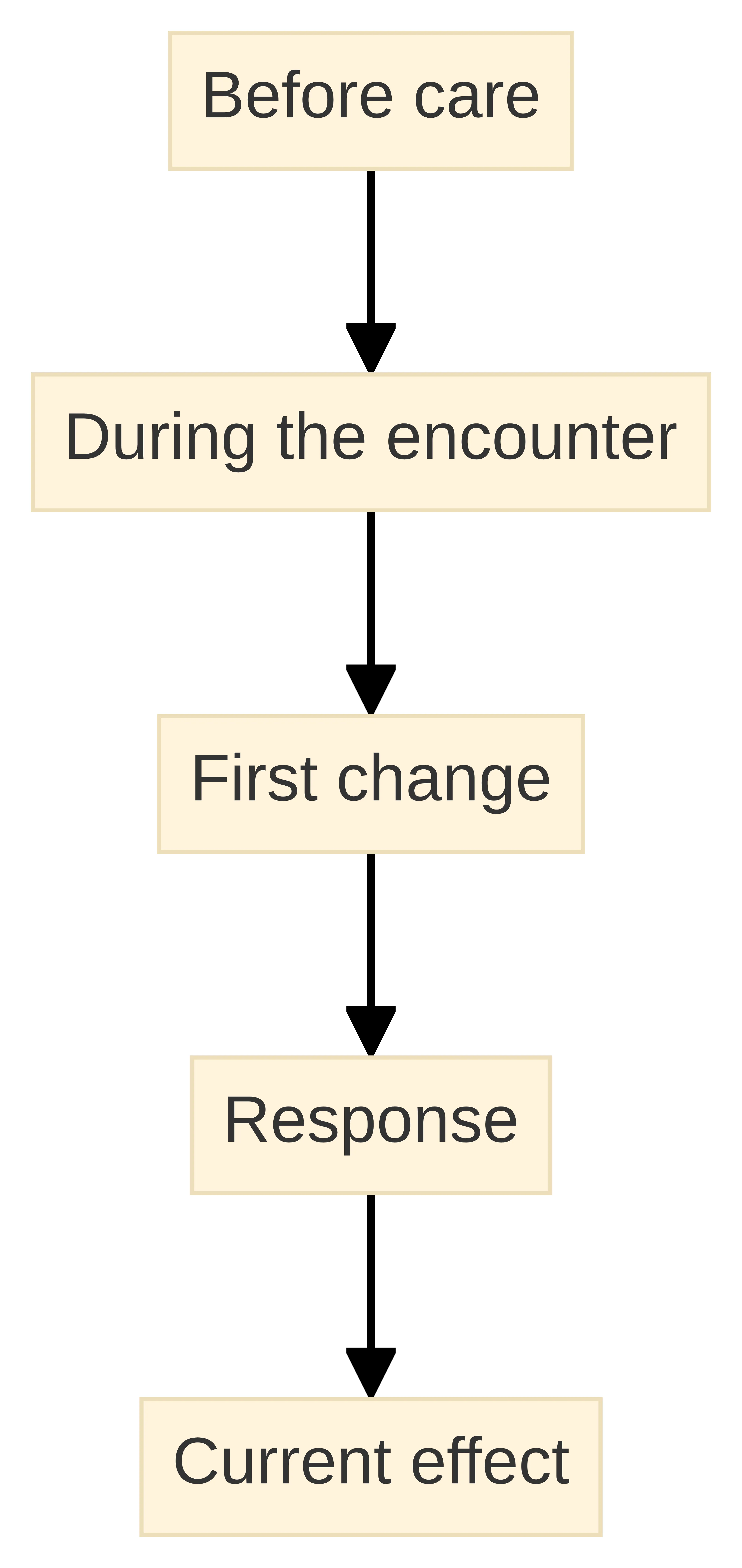
A medical-care timeline turns a distressing sequence into a set of dates and transitions. Start with the condition or event that led you to seek care, then continue through treatment, symptoms, communications, follow-up, and your present status. Use approximate dates when necessary and mark them as approximate rather than filling gaps with guesses.
Build the timeline in short entries:
- Before care: note the symptoms, injury, diagnosis, medications, prior treatment, and functional limits you had before the disputed care.
- During the encounter: record the facility or practice, provider, procedure or treatment, instructions, tests, and statements you remember.
- First change: identify when you first noticed a new symptom, worsening condition, unexpected result, or failure to improve.
- Response: list calls, portal messages, urgent visits, emergency treatment, referrals, repeat procedures, medication changes, and explanations.
- Current effect: describe continuing symptoms, restrictions, additional care, missed work, out-of-pocket costs, and questions that remain open.
Keep each entry factual. “I called the office on this date and was told to return” is stronger for review than “the office ignored me” unless you can identify the facts supporting that description.
A document index can sit beside the timeline. Add the document that supports each entry, such as a bill, discharge instruction, appointment record, message, or note. If no document supports an entry, label it as your memory. Mark dates that come from different accounts rather than silently choosing one. This distinction helps identify where a record request may fill a gap and where your recollection may need clarification.
Sort Accessible Records From Record Gaps
Records primarily anchor the event lane of the evidence map. Medical records from the practices, facilities, laboratories, imaging centers, and other providers involved in your care can help establish the sequence you are reviewing, but a record showing that treatment occurred may not answer whether it met the applicable standard or caused the injury. Keep each request, the date you made it, the response, and the materials you receive. Preserve original electronic files when you can, and keep a separate working copy for notes.
Your file may include:
- office and hospital records;
- test, imaging, and pathology reports;
- medication lists and prescriptions;
- discharge instructions and follow-up plans;
- bills, insurance explanations, and payment records;
- portal messages, emails, and letters;
- referrals and records from later providers; and
- photographs or personal notes that show changes over time.
New York patient-record guidance identifies categories of information that may be excluded from disclosure. These include some personal notes and observations maintained by a practitioner, information kept confidential, information that may substantially harm you or another person, and certain substance-abuse or mental-health records governed by separate rules. Information obtained from another treating practitioner may also need to be requested from that practitioner directly. Mark a missing document as a gap in the event lane and record the reason given, rather than treating its absence as proof of what it would have shown.
A preserved original should remain unchanged. If you annotate a document, make a duplicate first and keep the original intact. Create folders by provider or date, then place the evidence map beside the records rather than writing conclusions across the records themselves.
Keep Facts, Memories, and Questions Separate
Keep your account and supporting materials together without forcing them to answer the same question. Your account can supply context that a chart does not capture, while records can provide dates and clinical details that memory may not preserve. Organize the file around the evidence map:
- Event facts: state why you sought care, what treatment occurred, what changed, and which documents or memories support each point.
- Practice questions: list the duty, applicable standard, possible departure, and questions that may require medical review.
- Effect and connection: describe the injury, additional treatment, continuing symptoms, functional limits, and the facts that may connect them to the care.
- Open questions: record missing documents, conflicting accounts, timing issues, and matters you want clarified in a consultation.
Use neutral descriptions. Write “the discharge instruction says to return for worsening symptoms” rather than assigning a conclusion before the relevant records and circumstances have been reviewed. If your recollection differs from a record, preserve both versions and identify the difference. That conflict is an open question for professional review, not a reason to discard either version.
Confidential information about another person should not be circulated casually. Keep the file limited to what relates to your care and the questions you need answered. If a record includes material about someone else, separate it from your working file and ask how it should be handled.
Treat Timing as a Separate Legal Question
Timing is a separate legal question in the evidence map. It should be recorded even when the event, practice, and effect lanes are still incomplete. The deadline for a medical-malpractice lawsuit varies by jurisdiction and may depend on the facts. If a lawsuit is not initiated within the applicable statute-of-limitations period, a court typically dismisses it regardless of the merits.
Record:
- the date of the act, omission, or failure you are concerned about;
- the date of the last treatment connected with the same condition;
- the date you first learned of the injury or possible problem;
- the dates of later treatment and any continuing-care relationship; and
- the jurisdictions that may relate to the provider, facility, care, or injury.
Do not choose a deadline by counting backward from a general internet statement. The trigger, exceptions, continuous-treatment facts, and governing jurisdiction can change the analysis. Do not assume that a record request, a complaint to a licensing body, or an insurance conversation starts or stops a court filing period unless a lawyer addresses that specific issue.
A timing discussion can occur while you are still seeking records or recovering from treatment. Tell the legal professional which dates are certain, which are approximate, and which documents are missing. That keeps the timing question visible without treating it as a conclusion about the merits.
A prompt timing discussion can occur even while you are still seeking records or recovering from treatment. Tell the legal professional which dates are certain, which are approximate, and which documents are still missing. That keeps the timing issue from being buried under the rest of the investigation.
Use New York Law as a Fact-Dependent Checkpoint
New York CPLR § 214-a generally states that an action for medical, dental, or podiatric malpractice must be commenced within two years and six months of the act, omission, or failure at issue. For continuous treatment of the same illness, injury, or condition, the statute refers to the last treatment, and it contains stated exceptions. As of October 28, 2026, that statutory language is a starting checkpoint, not a conclusion about your deadline.
The facts may affect which date matters. You may need to distinguish the original treatment from later treatment for the same condition, identify when a specific issue was discovered, and determine whether another provision applies. The law also addresses specific circumstances, including foreign objects and certain diagnosis-related situations, but the relevant exception depends on the facts and governing law. Do not select an exception because it sounds similar to your situation.
Use a New York timing worksheet with three columns: date, what happened, and document supporting the date. Then add a fourth column for uncertainty. Bring that worksheet to legal review and ask which event controls, whether any exception may apply, and what must be done before the applicable period expires.
Cross-state care can make the timing question less straightforward. If your care occurred in the Bronx or elsewhere in New York, do not treat a general rule from another state as controlling. If care, providers, or events cross state lines, identify every relevant location at the outset. The jurisdiction and facts can change the timing analysis.
Gather the Information for an Initial Consultation
An initial consultation does not require you to solve the legal question beforehand. It does require a clear account of what happened and the information available to support it. Prepare these materials:
- a short description of why you sought care;
- the names and locations of providers and facilities, if known;
- the date range for treatment and follow-up;
- your medical-care timeline;
- records, reports, instructions, messages, and bills in your possession;
- the names of later providers who treated the condition;
- a description of the injury, additional treatment, and continuing effects;
- the dates you requested records and any items you could not obtain; and
- your questions about professional duty, possible departure, causation, harm, and filing time.
Bring uncertainty with you. Say when a date is approximate, when a document is missing, or when two accounts conflict. A complete file is not the same as a persuasive file, and an incomplete file is not a reason to invent missing details. The point is to give the professional enough structure to identify what requires further investigation.
Focused questions can keep the conversation separate from accusations. For example: “Which records would clarify the treatment decision?” “What date may control the filing period?” “Could another condition explain the injury?” and “What information is still needed to assess causation?” These questions invite a fact-based review and help you notice what remains unresolved. Keep a short list of the answers and documents requested so you can follow up without relying on memory.
Use the Consultation to Resolve the Open Questions
An initial consultation can test the structure of your concern, not just the outcome. Start with the timeline, identify the harm, and then walk through the four review questions. Ask which facts support a possible departure, which facts point to another explanation, what additional records may matter, and how causation would need to be evaluated.
If the available medical opinions conflict, ask what the disagreement is actually about. It may concern the applicable practice, the meaning of a test, the timing of a symptom, the choice of treatment, or the cause of the injury. New York authority recognizes that conflicting expert opinions can raise issues about departure and proximate cause. That does not tell you how your matter will be assessed; it tells you why a careful review may need to isolate the precise disagreement.
Ask timing questions early:
- Which jurisdiction and filing period may apply?
- What event may start the period?
- Does continuous treatment or another fact change the analysis?
- What should you do while records or medical opinions remain outstanding?
Write down the answers and any next documents requested. If the review cannot be completed from the material you brought, leave with a specific list of what must be obtained or clarified rather than a vague instruction to keep looking.
A general article cannot determine whether your care met the applicable standard, whether a departure caused your injury, or which filing rule controls. Those conclusions depend on the individual records, medical opinions, jurisdiction, and dates in your matter.
Take the Prepared Information to a Free Consultation
A bad outcome deserves attention, but it does not answer the legal question by itself. Your clearest next step is to preserve the timeline, gather the records you can access, identify the harm and unresolved facts, and raise timing before the file is complete. That preparation gives a qualified professional a usable starting point without asking you to decide liability on your own. General information cannot determine whether your care met the applicable standard or whether a claim can proceed; a qualified professional must assess your individual facts, records, jurisdiction, and timing.
We offer free consultations and operate 24/7. We serve clients in the Bronx and can arrange home or hospital visits.
Questions to Ask Before Requesting a Malpractice Review
What is medical malpractice?
Medical malpractice refers to a claim that professional medical care fell below the applicable standard, resulting in harm to the patient. It involves evaluating whether a healthcare provider had a duty to the patient, whether the care deviated from accepted practices, and whether that deviation caused injury.
What should I do if I suspect medical malpractice?
If you suspect medical malpractice, it’s important to document your care, preserve relevant records, and identify any unclear aspects of your treatment. Consider seeking a consultation with a qualified attorney who can help assess your situation.
How long do I have to file a medical malpractice lawsuit in New York?
In New York, the statute of limitations for filing a medical malpractice lawsuit is generally two years and six months from the date of the alleged malpractice or the last treatment for a continuous condition. However, specific circumstances may affect this timeline.
What information should I gather for an initial consultation about a potential malpractice claim?
For an initial consultation, prepare a brief description of your medical issue, the names and locations of healthcare providers, a timeline of events, any relevant medical records, and a list of questions regarding your case.
What are some warning signs that may indicate a need for prompt legal review?
Warning signs include experiencing a serious or ongoing injury after treatment, receiving conflicting explanations about your care, undergoing additional treatments or diagnoses, or facing difficulties obtaining your medical records.
Can an adverse medical outcome automatically be considered malpractice?
No, an adverse medical outcome does not automatically indicate malpractice. Each case requires a thorough review to determine if there was a deviation from accepted medical standards and whether that deviation caused harm.
What steps can I take to preserve evidence related to a potential malpractice claim?
To preserve evidence, document the sequence of events, keep copies of all medical records and communications, note any relevant dates, and maintain a timeline of your treatment and symptoms.
Hurt like this?
We handle Medical Malpractice cases in the Bronx.
Evan W. Kohn, Esq. — more than 35 years of Bronx personal-injury practice. Reading about it only goes so far; a free consultation tells you what actually applies to your case.